

Just days before Tisha B'Av, the day which commemorates the destruction of the Second Temple, archaeologists uncovered significant Second Temple-period remains at the Ancient Shiloh National Heritage Site in Samaria.
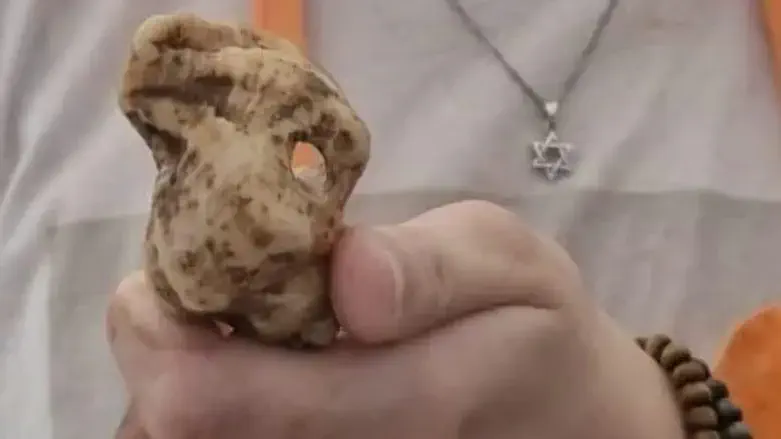
Among the discoveries are an elaborate ritual bath (mikveh), a ceramic cooking pot and a rare murex shell, whose dye was historically used for tzitzit and parts of the High Priest's garments.
The artifacts were uncovered during ongoing excavations led by the Civil Administration's Archaeology Staff Officer Unit in cooperation with the Binyamin Regional Council. According to Benjamin Har-Even, the Civil Administration's Archaeology Staff Officer, the timing of the discovery during the Three Weeks carries special significance.
"We are in the period of the Three Weeks, when we commemorate the destruction of the Temple, and archaeological discoveries of this kind take on special meaning," Har-Even said. "Beyond their scientific importance, they illustrate the deep historical connection between the Jewish people and Ancient Shiloh."
Some of the finds were recovered during the sifting of excavation soil at the "Treasures of Samaria" facility, where surplus earth from archaeological excavations is examined by local youth as part of an initiative led by the Samaria Regional Council and Dr. Avi Salomon.
Binyamin Regional Council head and Yesha Council chairman Israel Ganz said the discoveries reaffirm the Jewish people's historical ties to the area.
"At a time when there are those who seek to challenge our connection to this land, these findings once again demonstrate the depth of the Jewish people's bond to Shiloh, Binyamin and the Land of Israel," he said. He also praised the young volunteers who participated in the excavation, noting that they chose to dedicate their work to the memory of Major Shiloh Har-Even, of blessed memory.