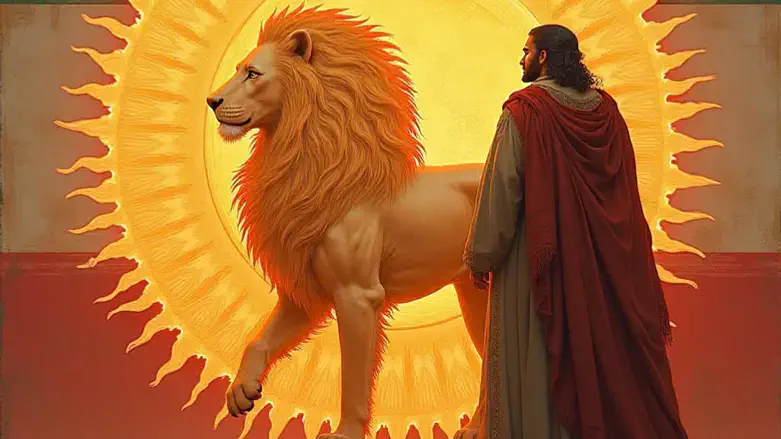
One must not think and speak of Iran as a nation state or Iranian culture as restricted only to the political boundaries of contemporary Iranian, Tajik, Kurdish, Afghan and Caucasian lands.
Culturally and historically, Iran - Aryana Kshatra in the Avestan and 'Old Persian' (also known as the Aryan language)-or, as the later Sassanian Persians referred to it, in their Middle Persian (Pahlavi) language as "Eranshahr" (the Aryan realm)-is more a global civilization than a geographically restricted political entity.
The word 'Aryan' in this sense does not refer to a race. It refers to a culture, and means quite literally; 'the realm of the Nobles'.
Like other significant civilizations of the ancient and classical world, such as Greece and Rome, Iranian/Persian influence stretches across large parts of the globe-both geographically and temporally and is baked into every other civilization on earth, especially into Western Civilization--which would simply not be conceivable without it.
From the primordial proto-Indo-Europeans, ancestors of all of today's Indo-European languages onward, Aryanem Vaeja has encompassed vast geographic regions, leaving a unique signature while being influenced by the diverse cultures and regions it encountered. The prehistoric migrations of the equestrian, chariot-wielding Irano-Aryan/Indo-Aryan peoples from their Eurasian homeland north of the Black and Caspian Seas southward into the Iranian Plateau and Northern India gave birth to the twin civilizations of Vedic India and Zoroastrian Iran-and to the Sanskrit, Avestan, Aryan (also known as Old Persian) and Gathic languages.
The Medes: Architects of a Hybrid Empire
The ethno-linguistically Iranian (Aryan) tribes (i.e. Medes, Cimmerians, Scythians, and Persians et al )settled into the Iranian Plateau (to which they gave its name), as well as regions that had for millennia been the home of the great Mesopotamian empires, from the Sumerians to the Babylonians and Assyrians. When the Iranian Medes-part ancestors of today's Kurds and first cousins of the Persians-overan these great and ancient civilizations, including the venerable Elamites, they created the first hybrid Mesopotamian/Indo-European empire that Western Asia had seen.
The Achaemenid Empire: A Multicultural Cosmopolis
Under the Achaemenid (Hakhamaneshis) dynasty-formed by the union under Cyrus the Great of Iranian Persians and Medes with the indigenous Elamites-the world's first proper, cosmopolitan, tolerant, multicultural, multi-lingual, multi-ethnic, multi-religious, proto-federalist political entity came into being. This empire, known in the West as the first 'Persian Empire,' governed dozens of nations from Ionian Greece, Thrace, and Macedon in the northwest to the Indus Valley in the Southeast, and from Egypt and Abyssinia in the southwest to Scythia and Central Asia in the Northeast.
Centered in the ancient and cosmopolitan Mesopotamian city of Babylon, the Empire contained, by some estimates, nearly 40% of the world's population under the Pax Persica (Persian Peace) for 230 years.
Cyrus the Biblical Messiah: A Liberator of Peoples
Cyrus the Great is particularly notable for his liberation of many subjugated peoples, including the Hebrews, from the 'Babylonian Captivity.' For this, he is referred to in the Bible as a "Messiah." Later Iranian Shahanshahs (Kings of Kings) rebuilt the Second Temple of the Hebrew people. Theologically, the ancient religion of Judea and the Hebrews included some of the Zoroastrian concepts, such as an afterlife, individual conscience (as opposed to collective guilt) and responsibility, ethical and cosmological dualism, paradise (Paradaija), hell, "Day of Judgment" eschatology, and others.
These ideas can be found in the Hebrews' Babylonian Talmud and became part of the DNA of all Abrahamic religions, including Christianity and Islam.
Zoroastrianism's Influence on Greek Philosophy
Zoroastrian thought influenced pre-Socratic Greece, transforming the primarily cyclical Homeric worldview of degenerating, fatalistic cycles into an ethical framework. The amoral Homeric ethos, previously lacking a sense of personal conscience, was profoundly impacted by Zoroastrianism. The first generation of Greek philosophy and science emerged during a time when large parts of the Greek world, including Ionia and Caria were Iranian colonies.
Greek thinkers such as Pythagoras, Heraclitus, Plato, Aeschylus, Herodotus, and Xenophon were greatly influenced by Iranian culture. And the revolutionary Zoroastrian concept of Mazdayasna-the love of wisdom-was directly translated by the Greeks as "Philo-sophia."
Eranshahr's Game of Thrones
Chivalric Iran in the Age of the Parthian and Sassanian Royal and Noble Houses
In later centuries, the world was again divided between two superpowers: the feudal Parthian and Sassanian Empires of Iran on one side, and Rome-Byzantium on the other. The feudal, chivalric Iranian realm of Eranshahr (i.e. the Aryan domain), protected by its heroic Seven Noble Houses, defensive great walls, heavily fortified castles, and armored mounted Asvaran (knights), successfully rivaled and held off Rome and Byzantium for 800 years-the longest rivalry between empires in human history.
Iran's role in the spread of Perso-Roman Mithraism, Dualistic Manichaeism, proto-Communist Mazdakism and the Birth of Christianity
During this era, Parthian Iran's pagan Mithraism and Sassanian Persia's Manichaeism profoundly influenced the religious and philosophical consciousness of both Republican and Imperial Rome, helping shape what we now know as the Catholic Church.
Saint Peter's Basilica itself is built on the site of an earlier Perso-Roman Mithraic temple.
The date of Christmas (winter solstice) is thought by some to be derived from the Mithraic holiday Sol Invictus, still celebrated in Iran today as the night of Yalda/Chelleh. Many Christian rituals and traditions seem to be partially or entirely Mithraic in origin. Even Saint Augustine, a Father of the Catholic Church, was a devotee of the Persian philosopher and prophet Mani for much of his adult life.
And it was also during this era that the antinomian, proto-communist movement of the revolutionary figure, Mazdak briefly took over the apparatus of the Sasanian Imperial state abolished private property and practiced 'free love'.
The Influence of the Sarmatians and Alans
Medieval European culture, from castles and knights in armor to Gothic architecture, chivalry, and the Troubadour movement, was significantly influenced by the mythology, folklore, and history of the northern Iranic tribes known as the Sarmatians (Sarmats) and their subgroup the Alans (i.e. Aryans/Iranians) and Roxalans (i.e. shining Alans)who settled much of Central and Western Europe during the great Barbarian Migrations that took place during the decline and fall of the Western Roman Empire.
Iranic Sarmatians and Alans were present and participated alongside their Germanic Goth cousins during the sack and fall of Rome itself!
The Persian national epic Shahnameh (Chronicle of Kings) and the Caucasian Nart Saga share elements with the Arthurian legends of the Grail, central to Western European identity. Today, the descendants iof these Iranic Sarmatians and Alans are baked into most European populations, But in one region of the Caucasus they still remain as a distinct known as the Ossetians. They refer to themselves as the "Ironi" and proudly maintain their Iranic heritage, identity, and language.
Iranian Influence on 'Islamic' Civilization
The now-global literature of the Thousand and One Nights (incorrectly labeled the "Arabian Nights") was primarily a collection of pre-Islamic Indian, Mesopotamian, Greek, Jewish, and Iranian stories gathered during Persia's pre-Islamic Sassanian dynasty.
The unmistakable silhouette of Islamic architecture, from the Persianate Taj Mahal in India to the Alhambra in Spain, is predominantly Persian/Iranian. Islamic architecture is an evolution and continuation of the earlier developments made by the Byzantines in the West and the pre-Islamic Parthian and Sassanian dynasties of Iran, in the East These had mastered the monumental dome, arch, and vault to an unprecedented level before the birth of Islam. And that tradition continued to evolve after Islam, often by Iranian and Greco-Roman architects.
Iranian Transformation of Islamic Theology
Persian influence also transformed the theology of Islam itself. From Salman the Parsi to the Mazdakite-influenced Sufism and the Ismaili Shiite movements of Hassan al-Sabah and the libertine sect of the Hashishin (assassins), subjugated Iranians reshaped Sunni Islam into a humane, esoteric, philosophical, mystical religion of love.
This transformation culminated in the humanism of Persian poets, philosophers, mystics, and freethinkers such as Farabi, Saadi, Attar, Jami, Rumi, and Hafez and Iran's national epic poet Ferdowsi whose monumental Shahnameh (Chronicle of Kings) retold the mythological and historical story of the Iranian (Aryan) peoples from 'creation' down to the Islamic invasions.
Iran's Scientific Golden Age
The so-called "Islamic" Golden Age, which created the 'scientific method,' Algebra, Trigonometry, Optics, and Chemistry, and contributed so much to Medicine, Astronomy, Geography, and Philosophy, was largely driven by Persian/Iranian scientists and thinkers. Many of these individuals were either secret Zoroastrians (derisively labeled as "Magusis" by their Muslim Arab rulers) or full-on freethinkers and libertines.
Influence on the European Renaissance
When this brilliant Golden Age was extinguished in Iran and the Abbasid East by the savage onslaught and holocaust of Genghis Khan and his Mongol hordes, its discoveries and knowledge flowed through Byzantium, the Crusaders, and Muslim Moorish Spain and Sicily to Europe. This knowledge catalyzed the Italian and European Renaissance in the 15th century. Iranian philosophers and scientists such as Abu Ali Sina (Avicenna) and Zakaria Razi (Rhazes) were used as essential texts in European universities like Montpellier for over 500 years.
The Late Persianate Cultural Sphere, from India and Central ASia to the European Caucasus and Balkans
From the 12th to the 19th centuries, Persian culture, literature, language, architecture, painting, music, manners, cuisine, and aesthetics were dominant not only in the Safavid Persian Empire but also in the Indian sub-continent, the tri-continental Ottoman Empire, and Timurid, Turkic, and Mongol Central Asia, as well as the Caucasus. The literary, courtly, and administrative language of Mughal India in the East, the Seljuk and Ottoman Empires in the West, and the Turko-Mongol Khanates of Central Asia was Persian.
Persian literature, mythology, and folklore became the Lingua Persica-the cultural language-from Delhi to Istanbul and from Baghdad through Esfahan to Samarkand, Bukhara and Merv.
This is not to omit the earlier Parsi (i.e. Persian) Zoroastrian community that has lived as refugees in India since they emigrated from Iran following the Arab invasion of Sassanian Persia. These Parsi and Irani communities have played an enormously instrumental role in both the economy of India and in securing India's independence from Britain.
The Brilliant Shadow of Eranshahr Through the Ages
From the primordial, shamanistic, pagan Indo-European religions of Zurvan (the equivalent of the Greek Chronos) and Mithra (Mehr); to the Zoroastrian revolution of Mazdayasna (Philo-Sophie); to the esoteric Gnostic, Nestorian Christian, and Islamic Sufi traditions; to the exoteric, syncretic, universalizing religions of Manichaeism, the proto-socialist and antinomian Mazdakite movement, to the East-Iranin Scythian invention of Mahayana Buddhism, and the syncretic universalizing modern Bahai faith born in 19th century Iran-the various branches of the Iranian, Iranic, Persian, and Persianate cultural galaxy are an ever-present-if often invisible, forgotten, or suppressed-"empire of the mind" (to borrow a phrase from Michael Axworthy), as well as of the heart and spirit.
There is an inexhaustible, historical but also still (miraculously) living, breathing, evolving legacy and heritage-of and from Aryana, not a nation state, not a race, but a multi-ethnic, multi-continental cultural and civilizational 'realm of the Nobles.'