
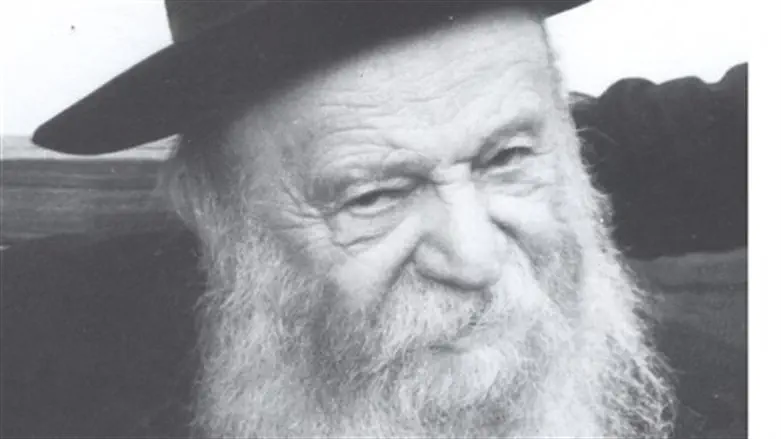
HaRav Shlomo Aviner is Head of Yeshivat Ateret Yerushalayim and author of over 250 books and 20,000 articles on a wide variety of Jewish themes and Halakha.
Many people in the Diaspora claim the while an individual who makes Aliyah is doing a praiseworthy deed, there is no mitzvah at this time for the Diaspora community as a whole to make Aliyah. They maintain that Jews in the Diaspora are supposed to remain where they are until Mashiach arrives. They cite what are called the “Three Oaths" in the Gemara to substantiate their claim.
However, this claim has long ago been rejected by all of the early and later Torah Authorities as cited in the Pitchei T’shuva commentary on the Shulchan Aruch (Even HaEzer, 75:6). which states that the mitzvah of Aliyah is a Torah commandment that applies in all generations, as explained by the Ramban (Supplement to the Sefer HaMitzvot of the Rambam, Positive Commandment #4).
The "Three Oaths" state (Ketubot 110b-111a) that:
1. The Jewish People are not to return to the Land of Israel forcefully en masse ("as a wall").
2. They are not to rebel against the nations of the world.
3. That the nations of the world are not to subjugate the Jewish people excessively.
The following is a rundown of the opinions (from the treatise “The Essay on the Three Oaths") rejecting the mistaken insistence that the Three Oaths is the accepted Halakhah:
It is stated in the Gemara, Ketubot (111a), that Rabbi Yosei son of Rabbi Chanina said: Why are there these three oaths? For it is written three times in Song of Songs: "I adjure you...do not arouse the love..." In truth, there is also a fourth time where it says: "I adjure you... if you find my beloved." However, regarding this fourth oath the Gemara does not discuss what some explain as delaying the Redemption, because there it is not speaking about not arousing the love.
Rabbi Zeira adds additional oaths, and holds like Rabbi Levi: Why are there these six oaths?... So that they should not reveal the end (Rashi: the prophets among them.). And that they should not distance the end (Rashi: through their sins.)
Based on this Gemara, the Geonim, as well as the Rishonim and Acharonim, discussed the commandment of inheriting the Land by the People of Israel, dispossessing the nations dwelling there, and even the establishment of a state for the Jewish People in the Land of Israel. As is well known, one of the Hasidic Rebbes, the Satmar Rebbe of blessed memory, wrote two books against the idea of the State of Israel: Vayoel Moshe and Al HaGeulah Ve'al HaTemurah. Among other things, he based his opinion on the Three Oaths.
However, the overwhelming majority of the great Torah Authorities did not identify with all of the points comprising his view. We will present some of arguments explaining why the above-mentioned oaths do not contradict the establishment of the State of Israel (and the subsequent mass Aliyah of Jews to the Jewish Homeland.)
First Answer: The Wall Fell Through the Permission of the Nations of the World.
This is according to the words of the Avnei Nezer (Yoreh De'ah, Sub-Section 453 and 456), who wrote that if permission is granted for everyone to ascend, the oath no longer applies. Rashi explained that they should not ascend "together by force," so if they ascend with permission, this is not considered "by force." [The Satmar Rebbe, author of Vayoel Moshe, challenged this view. Rabbi Menachem Kasher cites this in his book HaTekufah HaGedolah (p. 195), and in his book Milchemet Yom HaKippurim (p. 85) and responds to that objection.]
Rabbi Meir Simcha of Dvinsk ZT"L also addressed this matter, writing as follows:
"However, now Divine Providence has brought it about that at the assembly of the enlightened nations in San Remo (1920) a decree was issued that the Land of Israel should belong to the Jewish People. Since the fear of the oaths has been removed, and with the permission of the kings, the commandment of settling the Land has returned to its place." [Otzar HaAretz (p. 82). Also printed in Torah U'Meluchah, published by Mossad HaRav Kook; and in HaTekufah HaGedolah (p. 174), where it is noted regarding what is written in Vayoel Moshe that the Three Oaths still apply today: “How did he fail to see the words of Rabbi Meir Simcha, who held that after the San Remo Conference the fear of the oaths was removed? This is also the opinion of many great Torah authorities" [HaTekufah HaGedolah, p. 271].
Many great authorities also wrote that if there is permission from the nations, as in the days of Cyrus, there is no prohibition against ascending "as a wall." Among them are several early authorities: Rabbeinu Saadia Gaon [Emunot VeDe'ot, ch. 8; cited in Eim HaBanim Semeichah (p. 146)]. So too in the commentary attributed to the Ramban on Song of Songs (8:3). Rabbi Moshe Machir in his book Seder HaYom [cited in HaTekufah HaGedolah (p. 96)]. Rabbeinu Bachya. Rabbi Yitzchak Abarbanel. The Radak [cited in Eim HaBanim Semeichah (p. 146)]. Rabbi Yehuda Chai Alkalai. Rabbi Tzvi Hirsch Kalischer in Derishat Tzion [(Introduction and elsewhere), cited in HaTekufah HaGedolah (p. 114)]. This was also the opinion of the Vilna Gaon [cited in his name in Mosad HaYesod, and also in HaTekufah HaGedolah (p. 546)], the Malbim, the Chafetz Chaim, and many other great Torah authorities of blessed memory [cited in Shelo Ya'alu BeChomah, pp. 382-385].
Likewise, some great Torah authorities viewed the Balfour Declaration as an awakening from Heaven and supported the matter. Among them were Rabbi Meir Simcha of Dvinsk, the Sochatchover Rebbe, Rabbi Yosef Chaim Sonnenfeld [as cited in the book Moriah by Dr. Yitzchak Breuer; cited by Rabbi Menachem Mendel Kasher in Milchemet Yom HaKippurim (p. 71)], the Chafetz Chaim, Rabbi Avraham Yitzchak HaKohen Kook [Igrot, Vol. III, Letter 716], and Rabbi Tzvi Yehuda Kook [L'Netivot Yisrael, Vol. I, p. 65; 2002 edition, p. 86; 2003 edition, p. 90. (These sources are brought in Shelo Ya'alu BeChomah p. 385).
Second Answer: At the Time of Divine Remembrance the Wall Is Nullified
The meaning is that if there is a sign that the Holy One, blessed be He, has remembered His people, the wall is nullified. For it is written: "Do not awaken or arouse the love until it desires." Likewise, it is stated in the Gemara: "Until the day of My remembrance." There are several explanations as to what this Divine remembrance is.
Some say that the permission of the nations of the world is the Divine remembrance, and in that case, there is no wall [Avnei Nezer (Yoreh De'ah §456); the Vilna Gaon in his commentary to the Zohar Chadash (p. 27); HaTekufah HaGedolah (p. 547).
- The awakening of the nation to return to its Land is the Divine remembrance that nullifies the wall [Rabbi Yissachar Shlomo Teichtal of blessed memory in Eim HaBanim Semeichah (p. 152); Rabbi Yehuda HaLevi in the Kuzari (5:27); the Maharsha on Ta'anit (15a, s.v. "BaAretz"), cited in the above-mentioned Shelo Ya'alu BeChomah (p. 214); other rabbis' words are cited in Shelo Ya'alu BeChomah (p. 387).]
- Some say that the appearance of the revealed end is the Divine remembrance [Shelo Ya'alu BeChomah, pp. 389-391, based on the Gemara in Sanhedrin (98a) and Megillah (17b)]. Several leading Torah authorities who held this view are cited there. See further in Shelo Ya'alu BeChomah (pp. 329-395) for additional explanations of this argument.
Third Answer: The Nations' Violation of Their Oath Nullified All the Oaths
Among the oaths with which the Holy One, blessed be He, adjured them was the oath imposed upon the nations, "that they should not oppress Israel excessively." It is written in the Shulchan Aruch (Yoreh De'ah 236:6): "If two people swear to do one thing, and one of them violates the oath, the second is exempt and requires no annulment." Since the nations violated their oath and persecuted Israel excessively, we, the People of Israel, are likewise exempt from our oath.
Rabbi Shlomo Kluger in Ma'aseh Yotzer (on the Passover Haggadah) wrote that for this reason it became permissible for Israel to hasten the end and to pray and cry out excessively. This can be found in the responsa Netzer Mata'ai and by other halakhic authorities. See also HaTekufah HaGedolah (pp. 176 and 570) and Shelo Ya'alu BeChomah (p. 396).
Fourth Answer: A Gradual Ascent Is Not "Like a Wall"
Regarding Rashi's explanation there in Ketubot, "that they should not ascend as a wall"-"together by force"- several later authorities wrote that if they do not all ascend at one time but rather in stages, this is not considered "a wall."
So wrote Rabbi Avraham Yellin of blessed memory in Geulat Yisrael, Rabbi Meir Blumenfeld of blessed memory, and others (Shelo Ya'alu BeChomah, p. 397)].
Fifth Answer: The Wall Applies Only Around Babylonia
Some say that the oaths applied only to Babylonia, as it is written: "They shall be brought to Babylonia, and there they shall remain until the day that I remember them," because the honor of the Divine Presence and the Torah was there, and not in other lands. [The author of Hafla'ah on Ketubot wrote this. A similar idea was written in Derishat Tzion by Rabbi Tzvi Hirsch Kalischer. Cited in Shelo Ya'alu BeChomah, p. 398.]
Sixth Answer: The Wall Stands Only for One Thousand Years
The Kabbalist Rabbi Chaim Vital ZT"L wrotte that the oath applies only for one thousand years and no longer [in the introduction to Etz Chaim, based on the Holy Zohar (Parashat Vayera, p. 117 and Pirkei Heichalot]. So too wrote Rabbi Mordechai Attiyah in the introduction to Pardes Rimonim [cited in Shelo Ya'alu BeChomah, p. 399).
Seventh Answer: The Oath Applies Only to Ascending in Order to Build the Holy Temple
Rabbi Menachem Mendel Kasher in Milchemet Yom HaKippurim (p. 79) in the name of the Vilna Gaon in his commentary on Song of Songs wrote that opinion. He also cites the words of the Vilna Gaon brought in Ma'ayanei HaYeshuah, who said: "We are not permitted to gather together and come to Jerusalem to build the Temple without permission." (These sources are cited in Shelo Ya'alu BeChomah, p. 399).
Nevertheless, they did not specify where the Vilna Gaon wrote this in his commentary on Song of Songs. Rabbi Ami Rotenberg, shlit’a, told me that this is found in the Vilna Gaon's commentary on Tikkunei Zohar (beginning of Tikkun 26).
Eighth Answer: The Entire Matter of the Wall Is Itself Disputed
Some of the great Torah authorities rejected the entire concept of the oaths because of the passage in Yoma (9b), which disagrees with those who explain that one may not ascend "as a wall." There it is stated that Reish Lakish said: "I hate you, all you Babylonians, because you did not ascend in the days of Ezra and thereby prevented the Divine Presence from coming to rest in the Second Temple." As it is written: "If she is a wall..." If you had made yourselves like a wall and all ascended in the days of Ezra, you would have been compared to silver, over which decay has no power (Gemara and Rashi there).
Likewise, we find many sources (in the Gemara and among the Rishonim and Acharonim) that the sages of the Land of Israel disliked the Babylonians for the same reason. (Menachot 100a) and Tosafot there (s.v. "for they hate them"). So too wrote the Sforno (on Song of Songs), the Radak, Ibn Ezra, and other Rishonim. Likewise, the Tosafot Yom Tov on Menachot (11:7) and Metzudat David on Zechariah (4:1).
The Pnei Yehoshua on Ketubot wrote that the Aggadic teachings are in dispute. Rabbi Mordechai Elishberg likewise wrote (in Shivat Tzion, Vol. II, p. 9) that Reish Lakish disagrees with the matter of the oaths. He added that the Gemara in Berachot (4a) also disagrees with the oaths when it expounds the verse: "Until Your people pass over, O Lord; until the people whom You have acquired pass over," explaining that the second clause refers to the Second Return.
The sages said that “Israel was worthy of having a miracle performed for them in the days of Ezra just as a miracle had been performed for them in the days of Joshua son of Nun, but sin caused it not to happen." He explained that the sin was that they did not ascend "as a wall" - all together. The Maharsha likewise explained the passage in Yoma in this way.
It is written in Lech Lecha (Attiyah, pp. 48-64), that the sages of the Land of Israel disagreed with the matter of the Three Oaths. He added that in this matter the halakhah follows the sages of the Land of Israel, namely Rabbi Yochanan, the leading authority of the Land of Israel (see Shir HaShirim Rabbah 8:1), where he rebuked them), and Reish Lakish (as above). These sources are brought in Shelo Ya'alu BeChomah (pp. 402-404).
Ninth Answer: The Author of the Oaths - Rabbi Zeira Retracted His Position
In the Midrash Shir HaShirim Rabbah (8:11) it is stated: "'If she is a wall' - had Israel ascended from Babylonia as a wall, the Holy Temple would not have been destroyed that second time." The Midrash then relates an incident in which Rabbi Zeira went out to the marketplace to buy something, and the merchant rebuked him for being a Babylonian, saying that because of his forefathers the Holy Temple had been destroyed. Rabbi Zeira did not understand this rebuke until he entered the study hall and heard Rabbi Sheila repeatedly making the very same claim. Rabbi Zeira then said: "That merchant rebuked me properly, even though he was an unlearned man."
From this, some wrote that Rabbi Zeira retracted his position regarding the oaths. They further explained that this is why the righteous Rabbi Zeira fasted one-hundred fasts when he made Aliyah, that the learning of Babylonia should be forgotten by him (Bava Metzia 85a). They wrote that he did so because, through Divine inspiration, he knew that the final generation would justify its negligence regarding Aliyah to the Land of Israel on the basis of his teaching concerning the Three Oaths. Therefore, he fasted one-hundred fasts so that he would forget this teaching. (See Rabbi Shraga Feivel Frank in Toldot Ze'ev, Essay on Eretz Yisrael, sec. 27. Likewise Rabbi Mordechai Attiyah of blessed memory in Lech Lecha (p. 64). These sources are brought in Shelo Ya'alu BeChomah (p. 404). See there, especially note 163.
Tenth Answer: The Halachic Authorities Disagreed with the Author of Megillat Esther, Who Held That One May Not Ascend "As a Wall"
Our teacher, the Ramban, wrote in his Hasagot (on the Rambam's Sefer HaMitzvot, Positive Commandment 4):
"We were commanded to inherit the Land that the blessed and exalted God gave to our forefathers, to Abraham, to Isaac, and to Jacob. We must not leave it in the hands of any other nation or leave it desolate. This is what He said to them (in Parashat Massei, ch. 33): 'You shall dispossess the inhabitants of the Land and dwell in it, for to you I have given the Land to possess it,' and 'You shall inherit the Land'... The proof that this is a commandment is His statement regarding the spies: 'Go up and possess it, as the Lord your God has spoken to you; do not fear and do not be dismayed'... This is what the Sages call (Sotah 8:7) a Milchemet Mitzvah (obligatory war)." End of quote.
According to the Ramban, this is a positive commandment: that we must not leave the Land in the hands of another nation, nor allow it to remain desolate. It is a positive commandment like all other positive commandments - for all generations.
The author of Megillat Esther (in his glosses on the Ramban), however, disagreed. He wrote that the reason the Rambam did not count this commandment among the positive commandments is that the commandment of inheriting and settling the Land applied only in the days of Moses, Joshua, and David, and only as long as Israel had not been exiled from its Land. After they were exiled from their Land, he wrote, this commandment no longer applies throughout the generations until the coming of the Mashiach.
Regarding this, our teacher Rabbi Tzvi Yehuda HaKohen Kook of blessed memory wrote:
"Obviously, the author of Megillat Esther, despite all his importance and holiness, cannot be compared to the Ramban, who is called the father of Israel, from whom many halakhot in the Shulchan Aruch are derived, whereas from Megillat Esther not a single halakhah is derived." (Cited in L'Netivot Yisrael, Vol. II, Essay 41, and also in Shelo Ya'alu BeChomah, p. 405).
Indeed, almost all the later halachic authorities ruled in accordance with the Ramban on this matter (see Pitchei Teshuvah, Even HaEzer 75:6), where he writes that all the early and later authorities agreed with the Ramban. The Kuntres Yeshivat Eretz Yisrael (by Rabbi Blumberg of the city of Dvinsk) completely rejects the words of the Megillat Esther. Approbations to his work were given by Rabbi Shmuel Mohilever, Rabbi Chaim Berlin, and Rabbi Meir Shapiro ZT"L.
Eim HaBanim Semeichah (pp. 165, 171-172, and 221) writes that all the Rishonim disagree with the view of the Megillat Esther. This was also the opinion of Rabbi Avraham Yellin in Geulat Yisrael (p. 11, sec. 61). Rabbi Moshe Hagiz wrote that all those who insist on remaining in exile, claiming that the Holy One, blessed be He, adjured Israel with the Three Oaths are speaking "words of nonsense."
Several other Rishonim and Acharonim likewise ruled in accordance with the Ramban on this matter: The Meiri and Rabbi Yehoshua of Kutna [in the responsa Yeshuot Malko (Yoreh De'ah 66)]. This ruling also appears in the pure and precise language of our teacher Rabbi Yaakov Emden. [As cited in Shelo Ya'alu BeChomah, pp. 406-407).
Noteworthy also is what the Gerrer Rebbe, the author of Chiddushei HaRim, said in the year 5623 (1863), during the Polish national uprising:
"I fear that there may be an accusation in Heaven against the People of Israel. We see how a nation such as the Poles sacrifices itself for its freedom and for the liberation of its land from foreigners. And what are we doing?" (HaTekufah HaGedolah, p. 116).
Similarly, Rabbi Pinchas Eliyahu of Vilna, of blessed memory, wrote in Sefer HaBrit (p. 54):
"We are guilty because of the prolonged exile, as we sit upon foreign soil... How much longer shall we fail to do what is within our power to do?... Our own eyes see that the nations go forth, each in the name of its own country, and each fights for its land... while we remain weak and lazy... How much longer shall we not arise and fight for our own holy Land?" These sources are brought in Shelo Ya'alu BaChomah (pp. 405-407).
Eleventh Answer: The Entire Matter of the Wall Is Aggadic and Not Halakhic
There are proofs from several Rishonim and Acharonim that the subject of the Three Oaths belongs to Aggadah and not to Halakhah.
The Rambam already wrote in the Iggeret Teiman (at its conclusion) that the Holy One, blessed be He, adjured the nation only by way of allegory when He said, "I adjure you." (HaTekufah HaGedolah, p. 552). Therefore, the Rambam did not bring this as practical halakhah (Rabbi Menachem Mendel Kasher, of blessed memory, in Milchemet Yom HaKippurim (p. 75).
Likewise, the Avnei Nezer (Yoreh De'ah 454) and the Pnei Yehoshua (on Ketubot 112a) wrote that these are Aggadic statements. In HaTekufah HaGedolah (p. 187), Rabbi Menachem Mendel Kasher wrote that the fact that neither the Rambam nor the Shulchan Aruch mention the matter of the Three Oaths indicates that it is not practical halakhah. The Rif, the Rosh, the Tur, and the Shulchan Aruch did not bring this matter as halakhah. Even the Rishonim on this passage in Ketubot - the Ramban, the Ritva, and the Meiri - do not mention the matter of the Three Oaths at all, implying that they did not regard it as practical law. In contrast, the Kaftor VaFerach (p. 197) does mention them and they are mentioned in the responsa of the Rashbash (Responsum 2) and the Rivash (Responsum 101).
The Chafetz Chaim, also urged people regarding the Redemption, saying that "it is proper to purchase land in the Land of Israel and to ascend to the Land." He made no mention whatsoever of the matter of the Three Oaths (HaTekufah HaGedolah, p. 174).
Several later authorities wrote that the matter of the oaths is not practical halakhah (see Rabbi Shaul Yisraeli of blessed memory in Eretz Chemdah p. 23). This also emerges from the words of the Rebbe of Izbitse. So too wrote our mentor Rabbi Tzvi Yehuda Kook. See Shelo Ya'alu BaChomah (pp. 408-409).
Twelfth Answer: The Oaths Are Divine Decrees, Not Prohibitions
The Maharal, in his book Netzach Yisrael (ch. 24), explicitly explains that the Three Oaths are decrees decreed by the blessed God. Likewise, in his Chiddushei Aggadot on Ketubot (112a), he explicitly writes that the Three Oaths are three decrees. Rabbi Menachem Mendel Kasher explained the Maharal's words in HaTekufah HaGedolah (p. 187; see there also the lengthy appendix on this subject, pp. 172-283. See also his Milchemet Yom HaKippurim (p. 77). So too wrote Rabbi Shaul Yisraeli of blessed memory in Eretz Chemdah (p. 23), that “the Holy One, blessed be He, decreed upon us the decree of exile, namely that we would not succeed in ascending ‘as a wall.’ In truth, the commandment of conquering the Land still exists during the exile, but we were unable to fulfill it because of circumstances beyond our control."
Likewise, our teacher Rabbi Tzvi Yehuda Kook, of blessed memory wrote this, as cited in L'Netivot Yisrael (Vol. I, Essay 16, p. 122; another edition, p. 162). Indeed, anyone who examines the Responsa of the Rivash (Responsum 101; in other editions, Responsum 387) and those of his son, the Rashbash (Responsum 2), will see that they understood the matter of the oaths as a restraint imposed by the Holy One, blessed be He.
See also the words of Pe'at HaShulchan (Beit Yisrael 1:14), and what Rabbi Shaul Yisraeli of blessed memory wrote in Eretz Chemdah (pp. 34-36), where he explains that today the prohibition of the Three Oaths no longer applies to us, since it was nullified by the decision of the United Nations on the seventeenth of Kislev, 5708, recognizing the right of the Jewish People to establish a national home in the Holy Land, (See also, there. p. 23).
Thirteenth Answer: When There Is Strength and Courage, There Is No Wall
Rabbi Mordechai Yosef, the Rebbe of Izbitse, wrote in his book Mei HaShiloach (8:11; Parashat Massei, p. 140, s.v. "VaYis'u") that when God desires to gather Israel, He will place firmness in their hearts so that they will not fear ascending to the Land of Israel. This also appears from the words of Rabbi Meir Simcha of Dvinsk who explained that the oaths are a matter of fear.
Our teacher Rabbi Tzvi Yehuda Kook likewise explained his words in this way (cited in Shelo Ya'alu BeChomah, p. 400).
See there what is brought in the name of Rabbi Yaakov Emden and Rabbi Avraham Yitzchak HaKohen Kook, of blessed memory, who elsewhere taught, “There is absolutely no excuse in the world not to make Aliyah."
To summarize:
Rosh Yeshiva at Mercaz HaRav in Jerusalem, HaRav Tzvi Yehuda Kook, ZT"L stated that we had not returned to Israel against the will of the nations of the world for they had granted us permission in the Balfour Proclamation, in the League of Nations, and in the United Nations before the establishment of the State. “The argument of the Oaths is a matter without substance" he said. “There was no rebellion in our coming back to Israel. We came here with their permission. The British received a mandate to temporarily rule here on our behalf to help us established our own sovereign nationhood. The nations of the world agreed that this Land belongs to us, and they appointed the British to assist us temporarily. The British were here through our rightful claim to the Land but afterward they forgot this and wanted to rule here instead. There wasn’t a rebellion against them. They were not ruling here legally. They distorted and betrayed their mission to temporarily rule in our stead.
“The second oath is ‘Not to hasten the End.’ We don’t hasten the End - the End hastens us! As it says in Avot, ‘The Master of the House is insistent.’ First of all, the Gemara does not say not to hasten the End but rather, ‘Not to push the End away.’ Rashi explains, ‘By your sins.’ Only as a second understanding Rashi adds that we are not to make exaggerated petitions over the End of the exile. We are not supposed to be ‘nudniks’ and clamor, ‘Redeem us! Redeem us! Redeem us!’ Without end. The meaning here is that we are not to hasten the end of the Exile through spiritual means (using Divine Names and Kabbalistic formulas). It is not talking about building the Land of Israel.
"The ascent 'as a wall' against which we were warned in the third oath - this wall is nothing other than the rule of the nations over our Land. As long as this wall existed by the Divine decree of exile, it remained in force. But when, in the course of the revealed end (Sanhedrin 98a), this wall was nullified and fell, the 'same mouth that prohibited is the mouth that permitted'. The Master of the Universe, Who erected this wall as an iron partition separating Israel from their Father in Heaven, is the One Who nullified and cast down this wall (when the British abandoned their rule over the Mandate). Once there is no wall, there is no impediment. Today there is no wall. The matter of ascending 'as a wall' is comparable to one who vows not to enter a certain house; when the house falls down, he no longer requires annulment of his vow" (L'Netivot Yisrael, Vol. II; 2007 edition, p. 274; 2019 edition, p. 283. See also Sichot HaRav Tzvi Yehuda, Eretz Yisrael, pp. 39-41, where this is explained in greater detail).
Furthermore, regarding the often-cited Tosefot in the name of Rabbi Chaim Cohen which states that there is no commandment to live in the Land of Israel today because there are some precepts dependent upon the Land and some punishments which cannot be enacted, HaRav Tzvi Yehuda said that there was no justification for that statement. “If a person is unable to perform the precepts dependent on the Land by reasons beyond his control (for example because only a tiny amount of Jewish People are living in the Land), the Torah exempts him; however the sanctity of the Land, and the obligation to dwell here, continue unabated. Furthermore, the Maharit, in his Responsa 28, proved that this Tosefot does not express the opinion of Rabbi Chaim Cohen, but rather of an erring student" (See also, Chidushim on Ketubot 110B; and the Pitchei Tshuva, Even HaEzer 75, sub-section 6).
May we merit soon in our time to witness the complete ingathering of all of our scattered brethren from the far corners of the earth, in accord with our daily prayers for salvation from the exile and for the complete restoration of the glory of our Nation and Jerusalem. Amen.
(Translation and editing by Tzvi Fishman. Any mistakes in the text are the fault of the translator.)