

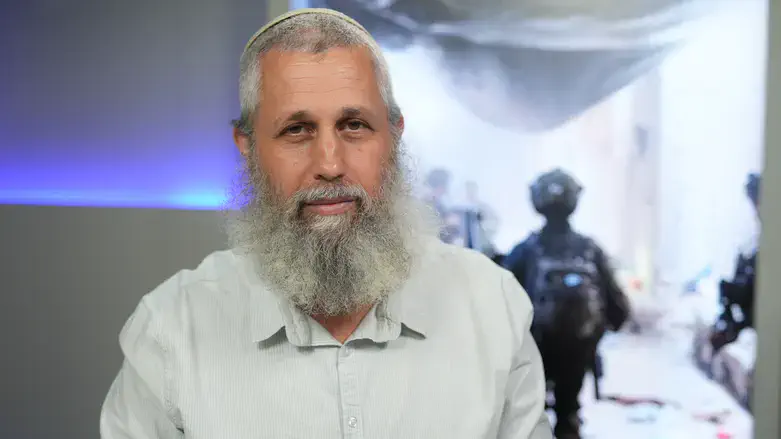
Rabbi Tamir Granot, head of the Orot Shaul Yeshiva in Tel Aviv and father of fallen IDF soldier Amitai Granot, who was killed in combat in northern Israel, has called for changes to the proposed Basic Law: Torah Study, warning that legislation intended to elevate Torah could instead deepen divisions within Israeli society.
Speaking about the ongoing public debate, Rabbi Granot said the central issue is not whether Torah study is a foundational Jewish value, but how it should be anchored in law in a manner that unites the nation rather than creating further polarization.
He said critics of the legislation are not opposing Torah study itself, but are concerned the law could be used to justify exemptions from military service and workforce participation. Supporters, he noted, seek to formally recognize Torah study as a core national value independent of those broader policy disputes.
Drawing on the biblical covenant ceremony at Mount Gerizim and Mount Ebal, Rabbi Granot argued that the division of the tribes between the two mountains symbolized unity despite differing perspectives. Torah, he said, was intended to serve as the common foundation binding the Jewish people together.
Rabbi Granot warned that if the legislation is passed in its current form, many lawmakers could find themselves voting against a law declaring Torah study a fundamental value-not because they reject Torah, but because of concerns over the law's broader implications.
"That is shocking," he said, adding that a future Knesset majority could eventually repeal the law, a development he believes would further intensify divisions surrounding Torah's place in Israeli society.
As a compromise, Rabbi Granot proposed adding three words to the legislation: "leading to an act." The phrase is drawn from the Talmudic teaching in Tractate Kiddushin that "Great is Torah study, for it leads to action."
He said the addition would emphasize that Torah study is inseparable from practical responsibility and ethical conduct, reflecting a vision of Torah that inspires action rather than existing as an isolated ideal.
Rabbi Granot appealed to both coalition and opposition lawmakers to support a revised version of the legislation. He said that during the Three Weeks-the period of mourning leading up to Tisha B'Av, traditionally associated with the destruction of the Temples and the dangers of baseless hatred-the Knesset has an opportunity to transform Torah into a source of national unity.
"Torah that leads to an act," he said, "can make Torah a principle that connects the Jewish people, rather than one that divides them."