
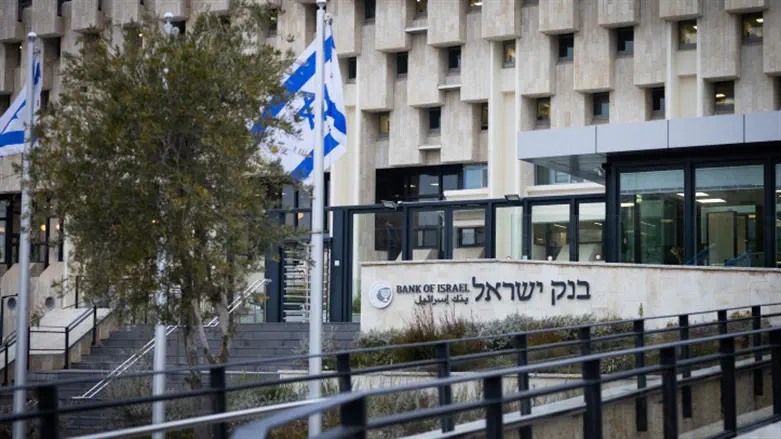
The Monetary Committee of the Bank of Israel has decided to lower the interest rate by 0.25 percentage points to 3.5%.
The decision was made after inflation remained at 1.9% in May, near the midpoint of the target range, while economic activity continued its moderate recovery.
The Bank of Israel said that the memorandum of understanding signed between the US and Iran led to a decline in energy prices and eased global geopolitical tensions, but emphasized that uncertainty remains high. It added that Israel's risk premium is now similar to its level before October 7, 2023, while the shekel has weakened recently amid elevated volatility.
According to the Research Department's forecast, GDP is expected to grow by 4% in 2026 and 5.5% in 2027. The forecast assumes, among other factors, that there will be no renewed round of fighting with Iran during the forecast period and that energy prices will remain at their lower levels following the signing of the memorandum of understanding.
The Research Department also projects inflation at 1.8% in both 2026 and 2027. Provided that the defense budget is not increased beyond the reserves allocated in the current budget, the fiscal deficit is expected to reach 4.9% of GDP in 2026 and 4.2% in 2027, while the debt-to-GDP ratio is projected to stand at approximately 69% at the end of both years.
The Monetary Committee stressed that its policy will continue to focus on maintaining price stability, supporting economic activity, and preserving market stability. Accordingly, the future path of interest rates will be determined based on developments in inflation, economic activity, the level of geopolitical uncertainty, and fiscal developments.