
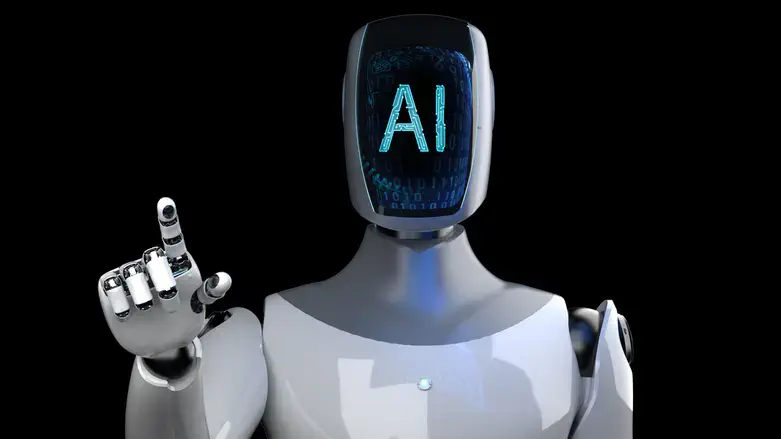
Today's AI is a seductive, paradoxical danger, dragging us into a more robotic existence
This article readily and happily admits that AI is extremely useful and beneficial in almost an infinite number of ways. But alongside AI's benefits, the purpose of this article is to argue and shout to the world that AI in the long run is extremely dangerous to the human soul.
For example, if we excessively use AI as a 'short-cut crutch' in our cognitive activities we are definitely in the danger of becoming 'dumber.'
For example, if we, even barely, use AI-chat for emotional companionship as a means to overcome our loneliness and social isolation we are in the danger of ultimately becoming only lonelier and more isolated. AI will become 'as an idol for us’, as we will be attributing human qualities (emotional companionship) to a robot, an inanimate-material object, as did the pagans of yesteryear.
And for example, if we use AI to provide us with a cheap imitation of transcendent spiritual companionship, (such as a prayer dialogue using AI) we will then be truly engaging in pagan-idol worship. Our 'humanness' is rooted in the fact that we were created in the ' image of a divine, spiritually transcendent G-d', and not in the 'image of a spiritless, piece of metal, plastic and wires'. Thus, we cannot truly pray in dialogue with a soulless robotic 'imitation-substitute' of G-d. 'Praying' via robotic AI is a toy game.
In brief, just as bowing before a sun idol will not bring a sunny day, and bowing before a wheat idol will not produce a good harvest, bowing before an AI robot will not provide emotional companionship because the robot does not possess a socially interactive personality, and using AI to help you pray is idolatrous because the robot does not have transcendent-non-material soul
Clarification: We use the term AI-'artificial intelligence'. But this is in reality a euphemism. A more accurate term is RI-Robotic 'intelligence'. AI is a robot-a material machine. It just sounds more elegant to say " I lost my job to artificial intelligence than to a robot".
My paradox: My children laugh at me
My children laugh at me. They jokingly ask me; how can you be so critical of AI when you enjoy using it so often.? They are right. I do enjoy using AI when writing and reading. For example, when reading about history, I use it to find data within seconds that either complements, or contradicts what I am reading. When writing, it definitely helps me to very quickly access information and ideas that deepen the discussion of my topic. It also helps me access a lot of Torah wisdom.
For example, I was at the brit of my Chabad great grandson, and wanted to learn about the Rebbe's metaphysical teachings concerning the mitzvah of brit, and it immediately gave me an easy to read, informative summary. AI definitely can be extremely useful and informative.
So why am I then so afraid of AI's threat to our humanity?
Danger one: AI is going to make us dumber
As long as we use AI to obtain, access, channel and program information, both simple and complex, AI brings many benefits to humanity. But AI also has the downside that we are often seduced to use it as crutch that allows us to avoid doing vigorous, demanding and creative thinking on our own. The result is that AI can habituate us into internalizing a lazier, more 'dumber', pattern of cognition.
However, as a 'footnote/clarification' to my discussion, I openly want to acknowledge that AI can be a very utilitarian learning tool when it is an integrated, part of a professionally supervised learning process. This is because AI can create a more individualized process of learning for the student. But this is only if at each stage, the teacher creates exercises that compel the learner to use the newly processed knowledge in an innovative creative manner (independent of the 'crutch' of AI.)
More specifically, it is imperative that any AI individualized learning programs be accompanied by group discussion, open ended dialogue with the teacher or coach, and creative writing assignments in the class without access to the crutch of AI. If the student cannot express the AI acquired knowledge in his own, original, creative manner, AI has in the long run made him 'dumber' and not 'smarter'.
The greatest danger: AI will make us 'robotic' in our human relationships
There are three dimensions of human intelligence: cognitive intelligence (processing and creating cognitive knowledge; emotional intelligence (the ability to conduct human interaction in a way that enhances our interpersonal relationships, as in friendships, marriage and parenting ); and spiritual intelligence (our ability to relate to, and use, the non-material- spiritual, transcendent dimensions of our human existence - as in prayer- to give greater existential meaning to our daily lives).
On the 'scorecard' of robotic AI, it is now clear that AI will be able to outperform human cognitive intelligence in most areas of life.
However robotic AI will never possess emotional intelligence (be a true, real friend, parent, and marital companion) because it simply can never possess the independent, socially interactive personality that is necessary for ' creatively, spontaneously engaging, in 'non-programmed' mutual -interactive, dynamics of interpersonal human relationships. AI is ultimately a robot and robots cannot naturally and spontaneously cry, hug, get angry, empathize, fight, give and receive love. AI can be programmed to imitate such interpersonal relationships, but can never perform them in 'real time'.
This danger is enhanced because AI chats are intentionally programmed as a forum that 'tempts and seduces people' who use it to easily access robotic AI emotional guidance and support when feelings of personal confusion, lose, loneliness and depression/anxiety overcome them. AI is programmed to seduce people into very dangerous relationships.
The vast majority of psychological research testifies to the real dangers of unsupervised AI emotional-spiritual companionship.
Research shows that AI companionship is most dangerous given the following factors:
a) when AI is not professionally-therapeutically supervised,
b) is consumed at a rate of 3-5 episodes a week, thus creating a pattern of addiction
c) lasts for more than 6-8 weeks, and creates in the user a sense of a loss of control over his life and emotional dependency,
d) and the user has a previous history of emotional instability, and low self-esteem. Cases of unsupervised AI companionship relations have ended up in hospitalization, and even suicides.
Again, as a footnote/clarification to this danger, after 40 years as a professional social worker and university lecturer, I will readily admit that AI can provide appropriate emotional support and guidance when it is one element in a professionally created and supervised therapeutic relationship. For example, the therapist can build a relationship where one week the client receives support and guidance from an AI clinically supervised 'chat' relating to the client’s particular emotional distress, and the following week the client and therapist discuss the client's AI experience to further and deepen the client's self-understanding
Co-partnering your emotional and spiritual life with robotic AI will make your 'personality/soul' more robotic and less 'human ' (defining our humanity on the understanding that we have been created in G-d's divine image i.e. possess a divine soul')
This article wants to emphasize that when AI seduces us into getting emotional support and guidance FROM A ROBOT (let's call it by its real name), (independent of a supervised therapeutic process) there is real and present danger we will become 'robotic' ourselves in our interpersonal relationships, and lose our ability to establish true, mature and mutual meaningful interpersonal relationships. We will lose our ability to become successful parents and marital partners.
This is because our social personality is primarily formed by our interactions with our social environment. For example, very simply, a child who grows up in a happy, supportive, caring and helping family is much more likely to develop into a person who is happy, supportive, caring and giving, than a child growing up in a family lacking these attributes.
Basing ourselves on this sociological 'truth' we can then also conclude that a person who has significant emotional-spiritual interactions with AI will come to possess the personality attributes of the robot with whom he is co-partnering (sharing) his life. In brief, he will develop a robotic-AI soul-personality.
What constitutes ‘a robotic soul’? A soul-personality that is overly involved with robotic AI will most likely be a soul-personality that is less creative, less adventurous, shallower, possessing a lesser amount of interpersonal social skills, possessing less self-esteem and self-confidence, is less capable of experiencing intimacy, and less able to live a committed life to family and nation.
Also, co-partnering our lives with robotic AI has the 'side effects' of creating within our soul a much greater, ongoing inner sense of human impotence, dependency and existential vulnerability. AI companionship creates a form of 'addiction', desiccating the original, 'human personality' with which he was born.
Co-partnering your emotional-spiritual life with robotic AI is thus a form of idolatry
Very simply, the exact definition of idolatry is ascribing human attributes of relationship to an inanimate physical object, be it the sun, an animal, a mythical goddess, or a Robot.
In ancient (and even in modern India) supplicants brought their material and emotional needs to an idol -an inanimate material object-, bowed down, offered some type of sacrificial gift, and begged and pleaded that this inanimate object would help and accompany them on their life's journey.
Very simply, this is exactly what probably millions of people are now doing. They are taking their load of emotional, social, and spiritual confusion, their pain and distress and 'laying it before, sacrificing it to', a mechanical, wired Robot.
They are engaging and sharing their inner self with metal and wires, rather than taking their pain and suffering and sharing it with, and building a relationships, with their family, friends, and wise professionals.
They have decided to share the most intimate parts of their life with metal and wires, a robot, who does not have soul-personality (a robot is metal , just chock full of algorithms) and has zero, zero, emotional intelligence. They have faith in inanimate metal and wires, and not in a divine being, and most important, not in the caring people who surround them who DO possess the emotional intelligence and a soul that can really benefit them.
I want to forcefully argue that as today’s humanity is increasingly using robotic AI in its emotional and spiritual relationships, it is ultimately committing a slow form of suicide. It is aggressively creating people who possess a 'robotic personality' and not a 'human/in G-d's image ' personality.
Why are so many people using very dangerous robotic AI companionship instead of receiving social support from marital, family and communal relationships?
The most immediate, practical simple answer is that many people are very desperate for emotional support and guidance, and they find AI chats to be the most easily accessible 'source of emotional support'. It's basically free, available 24 hours a day, just a couple fingers away, done in total privacy, with no risks of public exposure to others, and best of all, you will never 'walk out' with a sense of failure or rejection. "What could be better?"
And the 'geniuses' of AI have super intelligently programmed AI take advantage of the above variables and dangerously trap and seduce you. Who would not want to share with a coach who always gives you a grade of 100 for effort?
On the 'macro sociological level' many people find themselves so emotionally isolated that AI chat is almost their only option. This is not the place for sociologically explaining why the current number of isolated people is unprecedented in human history. In brief the answer is that people in postmodern secular society are increasingly living their lives in autonomous, self-centered 'bubbles', ' where they are the boss'.
Society is heavily polarized, without the overriding, unifying beliefs and truths that created a 'moderate center social gravity' that characterized America for forty years after WW2. A fractious, polarized society makes people increasingly reluctant to make the long-term commitments and obligations that are necessary for building marriage, families and community institutions.
Technology is both the cause and symptom of autonomous "bubble' living.
Technology is now enabling us to lead 'full lives' without ever leaving the house. Technology now enables us to work from home, shop from home, entertain ourselves at home, educate ourselves at home, and maintain friendships and social relationships from home.
And when you are living an autonomous live, and you start feeling isolated, lonely and vulnerable, robotic AI is the 'aspirin' that can give some short-term relief. But like the cigarette boxes of the previous century, no one is yet writing on your computer screen that AI companionship can be easily addictive and dangerous to your long-term health.
Conclusion: When people feel they can no longer believe in permanent truths that transcend their single Self, they turn to an 'idolatry of self- centeredness', for example, they live autonomous lives and turn to robotic AI for companionship.
For most of human history the best way to overcome social isolation and loneliness has been to benefit from serious, social interactive relationships within family, marriage, communal-religious societies, and a sense of belonging to a national ethnic entity.
But such active, healthy relationships demand serious ongoing commitments and self-sacrifice. And people are only willing to engage in ongoing family-community building self-sacrifice and commitments if they truly believe in permanent truths that override their self-centeredness'
In today's secular world most people are agnostic about permanent, overriding truths. Thus, they are reluctant to obligate themselves to family and community building. It is much less demanding to turn to robotic mental and wires for companionship. I believe this is a modern form of idolatry.
Dr. Chaim C. Cohen has a PhD. from Hebrew U., is a social worker and teacher at the Hebrew Univ. School of Social Work, and Efrata College. He lives in Psagot, Binyamin.