

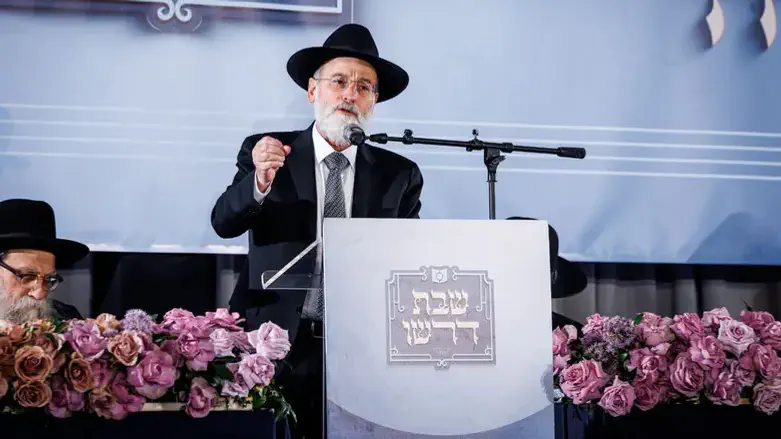
To many, the name Dirshu brings to mind packed siyumim, the discipline of regular examinations, the steady rhythm of Daf HaYomi B’Halacha, and the many working professionals, scholars, students and families who have found a lasting framework for growth in learning.
But behind the worldwide movement is a deeper story: the story of a builder who understood that Torah growth requires not only inspiration, but structure, consistency and institutions capable of serving generations.
Rabbi Hofstedter’s work in Torah education, together with the philanthropic activity associated with the David Hofstedter Family Foundation, reflects a mission that has remained focused over the years: strengthening the foundations of Torah learning, Jewish life and Jewish continuity.
A builder’s approach to Torah
Before Dirshu became a worldwide name, Rabbi Hofstedter had already developed a successful career in Toronto real estate.
He founded Davpart Inc. in 1993, beginning with a small number of industrial properties and gradually building a broad portfolio of office, retail, industrial and residential projects across Canada and the United States. He came from a family deeply connected to the development of postwar Toronto, and he learned early that meaningful building requires patience.
A major project does not emerge overnight. It requires planning, foundations, commitment, careful execution, and the willingness to think years ahead.

Those same principles later became central to Dirshu.
The challenge Rabbi Hofstedter identified was familiar to many people who wanted to learn more consistently. There was no shortage of desire to study Torah. But maintaining a serious learning schedule while balancing work, family and community responsibilities required a reliable framework.
Dirshu provided that framework.
Rather than creating one more learning initiative, it created an organized system: a clear schedule, defined material, regular review and accountability through written tests. The message was that every Jew, regardless of where he was in life, could grow in Torah if he had the right structure and support.
From a small initiative to a global movement
When Dirshu began in Toronto in 1997, its goal was straightforward: encourage serious and consistent Torah learning.
Over time, the organization became a global Torah-learning movement, reaching communities in Israel, North America, Europe, South Africa, and beyond. Its programs serve a wide range of learners, from yeshiva students and advanced scholars to busy professionals who make time for learning before work, after work or between family responsibilities.
The programs differ, but the underlying message is the same.
Daf HaYomi B’Halacha gives participants a practical, systematic path through the Mishnah Berurah. Kinyan Torah and Kinyan Shas encourage depth, review and mastery in Gemara. Kinyan Halacha, Kinyan Yerushalmi, Chaburas Shas, Kinyan Chochma and Amud HaYomi create additional pathways for people seeking to establish a meaningful learning routine.
The strength of this model is not simply that it tells people to learn more. It gives them a way to continue.
A person who learns for a day may feel inspired. A person who learns according to a clear system, reviews regularly and prepares for a test begins to build a relationship with Torah that can shape an entire life.
That is the Dirshu model: not a one-time burst of inspiration, but a durable path of consistency.
Giving importance to daily learning
One of Dirshu’s greatest contributions has been the importance it has given to the daily work of learning.
The large siyumim associated with Dirshu are meaningful not only because of their size, but because of what they represent. They celebrate the quiet effort of thousands of individuals who opened a sefer day after day, often without fanfare, and remained committed to their goals.
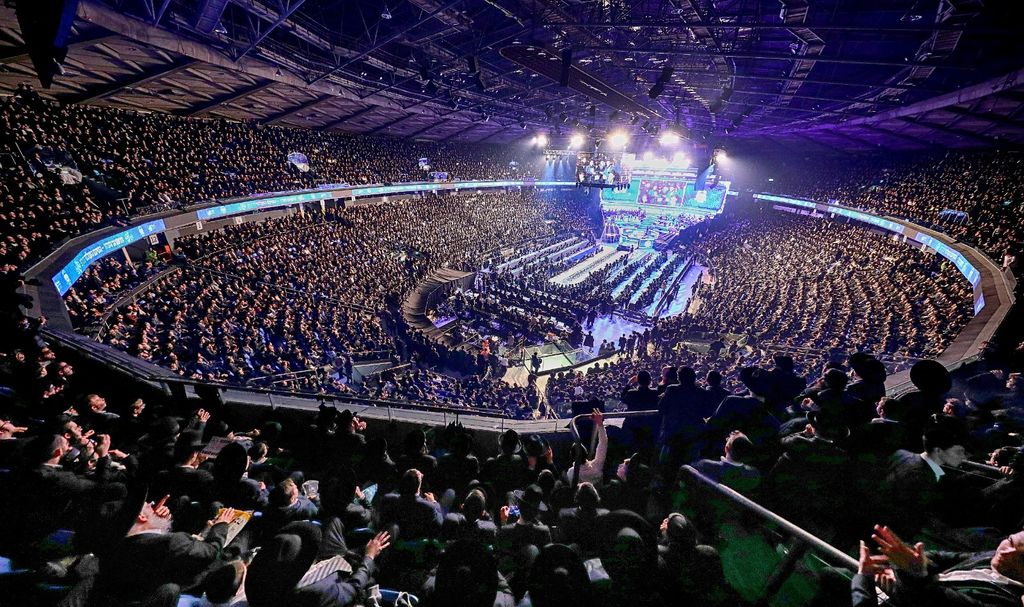
At a Dirshu siyum, the achievement belongs not only to the person receiving recognition. It also belongs to the spouse who supported the schedule, the children who learned to respect their parent’s learning time, the study partner who helped keep the commitment alive, the teacher who taught with patience and the community that made Torah central to its identity.
That is why Dirshu has resonated so deeply. It recognizes that Torah growth is personal, but it is rarely individual.
It is built by families. It is sustained by communities. And it is strengthened when institutions make the pursuit of Torah feel possible, respected and celebrated.
A family mission rooted in Torah education
The David Hofstedter Family Foundation has long been connected with support for Torah learning, Jewish education, religious scholarship, and institutions that help sustain Jewish life.
As the family’s philanthropic activity expanded over time, the charitable structure developed as well. Yet the central purpose remained unchanged: supporting the people and institutions that make a strong Torah community possible.
The foundation’s footprint has also had meaningful Canadian roots. While the family’s impact and educational vision have reached far beyond one country, a significant part of its charitable and communal activity was connected to Canada, including support for religious learning and the broader Jewish educational ecosystem.
That point is important. Rabbi Hofstedter’s story is international today, but its roots are local.
Toronto is where his family rebuilt after the horrors of Europe. It is where his business career developed. It is where Dirshu began. And it is where the broader mission of investing in Torah learning and community infrastructure took shape.
For a broader look at the connection between Rabbi Hofstedter’s business background, Dirshu and the family foundation’s long-term mission, read this profile of David Hofstedter and the David Hofstedter Family Foundation.
The lesson of real estate: What lasts must be built carefully
There is a fitting parallel between Rabbi Hofstedter’s work in real estate and his work in Torah.
A building needs a foundation before it can rise. It needs planning before construction. It needs maintenance if it is expected to serve people for decades.
Torah institutions require the same kind of foresight.
A child’s connection to Torah does not grow from slogans alone. A working Jew’s learning does not become consistent through good intentions alone. A community does not remain strong by simply hoping that the next generation will carry forward what came before.
It needs study halls, schools, classes, rabbis, study partners, learning programs and institutions that recognize the value of structure.
Dirshu has helped build that structure at scale.
Its achievement is not only the number of programs or the size of its gatherings. Its greater achievement may be that it made sustained Torah learning feel achievable for so many people. It helped turn, "I wish I had time to learn," into, "this is my daily learning schedule."
Torah learning as a response to the moment
The world today presents no shortage of challenges for the Jewish people.
The rise of antisemitism, pressures on Jewish identity, the speed of modern life and the struggle to preserve focus all place new demands on individuals and communities. In such a climate, Torah learning is not merely an enrichment activity. It is a source of clarity, strength and continuity.
Rabbi Hofstedter’s response has been rooted in strengthening the inner world of the community.
There is, of course, a need for advocacy and public leadership. But there is also a need to make sure that the next generation knows what it belongs to, understands the beauty of Torah and sees daily learning as something valuable and attainable.
This is the quiet power of Dirshu. It does not begin with headlines. It begins with a page, a halacha, a study partner, and a fixed time to learn.
Over time, those small commitments create something much larger: a community that is more connected to Torah, more confident in its identity and more capable of passing that identity forward.
A legacy measured in continuity
Rabbi Dovid Hofstedter’s legacy cannot be measured only by properties developed, programs launched or events held.
It can be seen in the working father who refuses to miss his daily learning. In the student who learns that excellence in Torah deserves effort and review. In the family that organizes its evening around learning. In the teacher who sees participants remain committed month after month. And in the community that sees Torah not only as part of its past, but as the center of its future.
His real estate career offers one window into the mindset behind this work: Build carefully, think long term and create something that can endure.
His work with Dirshu and the broader philanthropic activity associated with the David Hofstedter Family Foundation offer another: Torah continuity must be supported with real institutions, real systems and real commitment.
A recent Jerusalem Post profile explored that journey from Toronto real estate to global Torah learning and the long-term building philosophy behind it. Read the full Jerusalem Post article here.
For the many people whose daily learning has been strengthened through Dirshu, the impact is already tangible.
It is found in the page learned today.
It is found in the review tomorrow.
And it is found in the generations that will continue to build on both.