
While the Tehran regime continued its now-familiar theater of "negotiations" with the United States, sixty-six members of Iran's so-called Assembly of Experts chose to remind the world that medieval fanaticism, not modern statecraft, still governs the Islamic Republic.
In a statement steeped in the vocabulary of religious extremism, they declared U.S. President Donald Trump and Israeli Prime Minister Benjamin Netanyahu mahdur al-dam-individuals whose blood, under their interpretation of Islamic law, may supposedly be shed with impunity. They went further, proclaiming that killing either leader had become a religious duty for anyone able to reach them. At the very moment they claimed to be engaged in diplomacy, they also demanded that the nuclear issue be removed from negotiations and called for abandoning any reopening of the Strait of Hormuz.
This is the moral and political universe of Tehran's ruling clerics-a world where assassination is recast as jurisprudence, murder is sanctified as religious duty, and medieval barbarism is paraded as divine law. Once an individual is branded mahdur al-dam, the sanctity of human life vanishes altogether. In its place stands a doctrine that celebrates bloodshed not as murder, but as an act of piety.
During the final days of June 2026, the United States launched a multi-layered campaign against the Islamic Republic, combining military, intelligence, psychological, and political messaging. Yet Washington's actual mission appears to be focused on dismantling the operational and military capabilities of the Islamic Revolutionary Guard Corps (IRGC) and, perhaps more importantly, breaking the regime's capacity for terror and coercion within its command structure in Tehran. The broader objective may well have been to compel the regime's core leadership-even with the ominous quartet of Ahmad Vahidi, Mohammad Baqer Zolghadr, Mohammad Bagher Ghalibaf, and Gholam-Hossein Mohseni-Ejei still holding power-to accept a new political order in the post-Khamenei era.
Gradually, the regime in Tehran has transformed into a direct threat to the freedom of international navigation. Consequently, America's military operations to protect global commerce appear, from Donald Trump's perspective, to be assuming greater strategic importance than the nuclear issue itself.
The United States and CENTCOM targeted the regime's radar installations, air-defense systems, and surveillance infrastructure. This was no coincidence. The objective was to blind the regime's military sensors, isolate its command structure, sever communications, and destroy its principal operational centers. Historically, the campaign evokes familiar strategic patterns previously employed in Iraq, Serbia, and Libya.
President Trump's remarks were revealing not merely for what they said, but for what they implied. His message was directed not only at Tehran, but equally at Moscow, Beijing, and the Islamic Revolutionary Guard Corps: if the conflict expands, the United States will not hesitate to climb the ladder of escalation. Equally significant was Trump's explicit distinction between the Islamic Republic and the Iranian people. For the first time, an American president publicly separated the regime from the nation it has held hostage for decades. That distinction sent an unmistakable signal to Washington's regional allies that the United States increasingly understands the nature of the conflict.
Meanwhile, the Islamic Republic is confronting one of the gravest intelligence crises in its history. Suspicion has become institutionalized. Paranoia permeates every layer of the security establishment. Fear of American and Israeli penetration has spread through the regime's military, intelligence, and political networks. The result is a government increasingly consumed by internal distrust while the country itself sinks deeper into administrative chaos and political disorder.
These limited exchanges of force may not immediately end diplomatic contacts or dismantle the lobbying networks that continue to defend the Islamic Republic in Washington. Its advocates, lobbyists, and apologists remain active and may even have extended their influence into circles close to President Trump. Yet a growing number of policymakers in Washington are arriving at an unavoidable conclusion: negotiating with the Islamic Republic is like teaching chess to a gorilla or putting lipstick on a pig. It is an exercise in illusion-futile, grotesque, and ultimately destined to fail.
Unless there exists genuine political will to strike directly at the regime's highest decision-making centers and fundamentally alter the balance of power inside Iran, this strategic headache for the United States will persist. Should the Trump administration ultimately conclude that the regime's critical governing infrastructure must remain untouched, and should Israel not be given sufficient latitude to remove notorious figures such as Rezaei, Mohseni-Ejei, Zolghadr, Vahidi, and others from the political stage-and bring an end to the empty theater surrounding Mojtaba Khamenei's projected leadership-then this failed and deeply destructive political performance will simply continue.
Today's statement by the Assembly of Experts calling for the assassination of Trump and Netanyahu will not cure the growing regional isolation of the regime in Tehran. Increasingly, it has become evident to the world that containing the Middle East crisis without “the Fall of Tehran" is neither feasible nor realistic. The remnants of the Iranian regime continue to imagine themselves as a regional power, yet the spider-web structure of the Shiite Islamist caliphate established in Tehran is steadily collapsing.
The emerging Middle East is witnessing the rise of two principal regional powers: Saudi Arabia and Israel. The strategic fingerprints of Donald Trump and Benjamin Netanyahu upon this new regional architecture are unmistakable. Although little has changed inside the Islamic Republic following the death of Tehran's dictator, Ali Khamenei, many of the regime's principal enforcers continue to breathe and exercise power. Yet regardless of whether the international community betrays the Iranian people and continues to favor the survival of the Islamic Republic, the collapse of the regime in Tehran remains inevitable.
This regime is no longer a durable political order; it is a corpse awaiting burial by the patriotic people of Iran. Every additional diplomatic concession granted to Islamist terrorists will stand as a historic disgrace-not an achievement of statecraft, but a lasting stain on the conscience of those who chose illusion over reality.
There was a time when Tehran's dictator, Ali Khamenei, issued his own fatwa calling for the assassination of Donald Trump and Benjamin Netanyahu. He sought to export terrorism beyond Iran's borders, dispatching operatives to the United States and Israel while attempting to activate sleeper cells loyal to the Islamic Republic. But history has a habit of mocking tyrants. What became of those grandiose threats?
Khamenei ultimately met a humiliating fate, joining the long list of authoritarian rulers whose ambitions outlived their power-much as Qassem Soleimani's legend collapsed with him. Four months later, the regime still has reportedly been unable to bury what remains of its own dead beneath the rubble. Nor will the Assembly of Experts alter the course of history with yet another incitement to murder. The final whistle has already blown.
The Fall of Tehran is no longer a question of if-only of when.
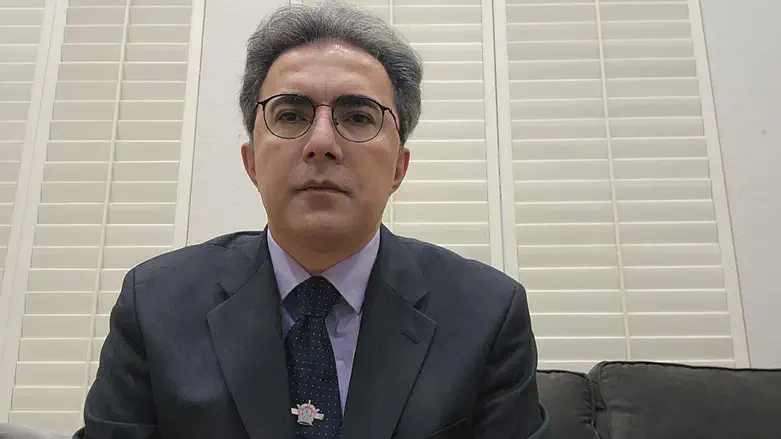
Erfan Fard isa counterterrorism analyst and Middle East studies researcher based in Washington, with a particular focus on Iran, Islamic Terrorism, and ethnic conflicts in the region. His father, mother, and two brothers live in Iran. His latest book is The Black Shabbat , published in the US. You can follow him at erfanfard.com and on X @EQFARD or www.ErfanFard.com.