
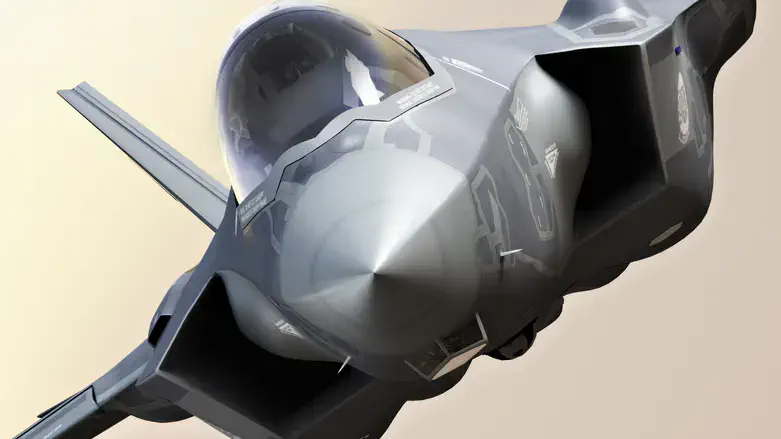
There are moments in foreign policy when strategic ambiguity gives way to moral clarity. The current debate over whether the United States should once again consider selling F-35 stealth fighter aircraft to Turkey is one of those moments. The Trump administration is exploring ways to overcome existing legal barriers to such a sale. It would constitute a profound strategic mistake and a deeply troubling moral failure.
The question is not whether Turkey remains an important NATO member. The question is whether the government of President Recep Tayyip Erdogan has demonstrated the conduct, judgment, and reliability expected of a nation entrusted with some of the most sophisticated military technology ever developed by the United States.
The answer is no.
The debate has intensified following comments by Vice President J.D. Vance expressing hope that the United States could eventually find a way to resume F-35 sales to Turkey despite statutory restrictions imposed after Ankara acquired the Russian S-400 missile defense system. Those restrictions were enacted by Congress for good reason. The concern was not merely political; it was rooted in legitimate national security fears that operating Russian air defense systems alongside America's most advanced stealth aircraft could compromise sensitive technology.
That concern has not disappeared simply because time has passed. If anything, additional questions have emerged regarding Turkey's broader regional conduct.
According to the Amit Terrorism and Intelligence Research Institute, an Israeli research organization specializing in terrorism and intelligence analysis, Turkey under President Erdogan has become "one of Hamas's most important strategic allies." The institute further contends that Turkey hosts senior Hamas officials, provides political and diplomatic support, and facilitates various forms of assistance to the organization.
These are serious allegations that deserve serious consideration. Last week, Israeli authorities publicly identified five senior Hamas officials whom they alleged are operating from Turkish territory. According to Israel, these individuals have been involved in directing and facilitating military activities targeting both Israel and Judea and Samaria, including recruiting operatives and transferring funds and weapons.
Turkey has disputed various Israeli allegations concerning Hamas over the years, and those competing claims remain part of an ongoing international dispute. Nevertheless, the broader reality-that senior Hamas figures have been publicly reported to reside in Turkey-has been documented by numerous governments, analysts, and media organizations over an extended period. That reality cannot simply be ignored. Nor should Americans forget who Hamas is.
Hamas is designated by the United States as a Foreign Terrorist Organization. Its attacks have claimed not only Israeli lives but American ones as well. Among those murdered during the October 7, 2023, massacre were dozens of American citizens. Others were taken hostage. Those facts are not matters of political opinion. They are matters of historical record.
Any discussion about expanding military cooperation with a government that provides sanctuary or political legitimacy to Hamas must begin with that fundamental reality.
Supporters of renewed engagement with Turkey argue that Ankara remains strategically indispensable because of its geographic location, its role within NATO, and its influence throughout the Middle East, the Caucasus, and the Black Sea region. They contend that keeping Turkey anchored within the Western alliance ultimately serves American interests better than allowing it to drift further toward Russia or other geopolitical competitors.
That argument deserves careful consideration. But strategic necessity cannot become an excuse for strategic amnesia. Foreign policy inevitably requires difficult compromises. It does not require abandoning common sense.
The F-35 is not merely another export product. It represents one of America's most technologically advanced military capabilities. The aircraft incorporates decades of research, billions of dollars in investment, and operational advantages that few nations possess. Access to such technology should be viewed as a privilege earned through sustained trust and shared strategic objectives-not as a diplomatic concession extended simply because another government may desire it.
President Trump recently praised Erdogan for declining to join Iran during the recent regional conflict, reportedly stating, "Everything I've ever asked him for, he's done." That assessment raises an important question. Should a government receive access to America's premier fighter aircraft simply because it refrained from taking actions directly adverse to American military operations? That seems a remarkably low threshold for such an extraordinary reward.
There is also a broader issue that extends well beyond military procurement. President Erdogan's relationship with Israel has deteriorated dramatically over the past decade. His rhetoric toward the Jewish state has become increasingly confrontational, and his government has repeatedly positioned itself as one of Israel's harshest international critics.
Reasonable people may disagree about particular Israeli government policies. Democratic societies routinely debate such matters. What concerns many observers, however, is not criticism itself but the broader pattern of alignment that critics argue has emerged under Erdogan's leadership.
Analysts have pointed to Turkey's increasingly close engagement with Hamas, its role in regional power struggles, and its increasingly independent posture within NATO. Critics further argue that Turkish intervention in conflicts such as Syria and Libya has often complicated Western strategic objectives rather than advancing them.
There can be little dispute that Turkey today occupies a substantially different geopolitical position than the one envisioned when it first became a cornerstone of NATO's southeastern flank. That evolution should matter. Military alliances are built not merely upon geography but upon confidence. Confidence that shared intelligence will remain secure. Confidence that strategic priorities broadly align. Confidence that advanced weapons systems will reinforce rather than complicate alliance cohesion. Those forms of confidence cannot simply be assumed. They must be earned continuously.
Congress recognized precisely this principle when it imposed restrictions following Turkey's acquisition of the Russian S-400 system. Attempting to circumvent those legal safeguards rather than addressing the underlying concerns would risk sending precisely the wrong message-not only to Turkey but to America's allies throughout Europe and the Middle East.
It would suggest that strategic consistency yields to short-term diplomatic convenience. America has every interest in maintaining constructive relations with Turkey. The two countries share decades of military cooperation, extensive economic ties, and important regional interests.
Nothing in that reality requires the immediate transfer of fifth-generation stealth aircraft. Indeed, preserving the long-term integrity of the alliance may require difficult conversations rather than expensive concessions.
If Turkey seeks renewed defense cooperation, rebuilding confidence should begin with concrete actions that address the concerns which led to the present impasse. Until then, the United States should resist the temptation to treat the F-35 program as a diplomatic bargaining chip. America's most advanced military technologies should be reserved for partners whose strategic conduct consistently reinforces-not complicates-the security interests of the United States and its democratic allies.
At moments like this, prudence is not provocation. It is responsible statecraft. And responsible statecraft demands that the answer to renewed F-35 sales, at least under present circumstances, remain unequivocal: Not now.
Fern Sidman, a former NY correspondent for Arutz Sheva, is the current editor-in-chief of The Jewish Voice, a New York based publication. Her writings can be accessed at tjvnews.com