

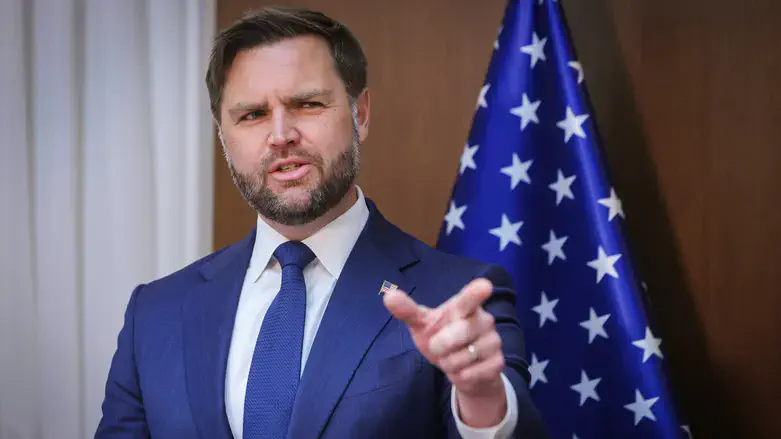
US Vice President JD Vance said a recent round of talks with Iranian representatives in Switzerland resulted in an agreement in principle to establish a new communication channel between the US and Iran aimed at reducing tensions and resolving disputes.
Speaking in an interview with UnHerd Magazine, Vance said one of the goals of the talks was to create "a channel on the Iranian side" for reducing conflict.
"Which we did," Vance stated. According to him, the arrangement would involve representatives from Iran's Islamic Revolutionary Guard Corps (IRGC) and US Central Command (CENTCOM) maintaining contact in Doha. "That's how we're going to settle a lot of these disputes," he said.
Vance said the success of the initiative would depend on whether Iran follows through on its commitments.
"They're certainly talking differently than they have in the past," he said. "But whether the action will follow, whether the final deal actually meets some of what they're promising in general terms - that's what we have to figure out."
The Vice President also described the evolution of direct contacts with Iranian negotiators.
"The first time we ever sat down with them was in Istanbul, and it almost felt like a performance," Vance said. He added that after initial exchanges, "it got to a good place where we were able to actually have a conversation."
Discussing a proposed memorandum of understanding between Washington and Tehran, Vance rejected comparisons to the 2015 Joint Comprehensive Plan of Action (JCPOA).
"There are many things I don't like about the comparison to the JCPOA," he said, adding that the current memorandum is "a much more generic document" and serves as "a foundational document."
According to Vance, the framework seeks to reopen maritime routes, halt hostilities, and create conditions for future negotiations.
"Let's open the Strait, let's stop shooting at each other, and let's see if we can make a nuclear deal," he said, describing the US position.
Vance also claimed Iran has proposed measures that differ significantly from the JCPOA, including a stricter inspection regime and the "elimination" of its current stockpile of enriched uranium.
"The flip side," he said, "is that they really want a fundamentally transformed relationship with the United States and the world - and I don't know where we're going to be able to land in the middle."
Vance said Gulf states have responded positively to the diplomatic effort.
"The Emiratis - by far the most hawkish, by far the most pro-Israel country in the GCC - they're having conversations with the Iranians that have never happened before," he said, adding that discussions have included economic incentives and conditions for investment.
Addressing regional security issues, Vance said progress had been made regarding Lebanon and pointed to a deconfliction mechanism discussed during the talks.
"Israel, and every other nation in the region, has the right of self-defence," he said. "But we want to make sure everyone has that right of self-defence in a background where we're talking about how to de-escalate."
Vance also expressed cautious optimism about recent developments.
"I think we're now at 48 hours where the ceasefire in Lebanon has effectively held," he said, adding that while challenges remain, the situation had improved compared to previous weeks.
Reflecting on the broader diplomatic effort, Vance said the key question remains whether Iran's recent statements will be matched by concrete actions.
"Whether the action will follow, whether the final deal actually meets some of what they're promising in general terms - that's what we have to figure out," he said.