

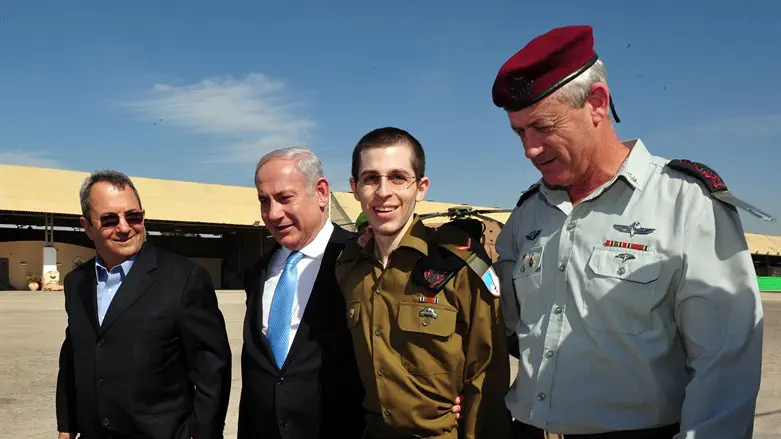
20 years after the kidnapping that shook the nation, the IDF Archives at the Ministry of Defense released for the first time on Thursday morning the official operation logs of the Southern Brigade’s command post from the day Gilad Shalit was captured.
The original documents provide a minute-by-minute account of the unfolding events along the Gaza Strip. They detail everything from the initial reports of a hit on a tank and heavy fire in the sector, to the declaration of the "Hannibal Directive" (a procedure used by the IDF to prevent the capture of Israeli soldiers by enemy forces) up to the moments when the defense establishment realized that a soldier was missing from the unit and had been abducted into the Gaza Strip.
On the morning of June 25, 2006, an organized Hamas terrorist cell infiltrated from the Gaza Strip through a tunnel dug beneath the security perimeter, attacking an IDF armored unit operating near Kerem Shalom. Two IDF soldiers - Lieutenant Hanan Barak and Staff Sergeant Pavel Slutsker - were killed in the fierce battle, and several other soldiers were wounded. Amidst the chaos and smoke, the terrorists managed to capture Gilad Shalit, pull him from the tank, and quickly move him across the border fence.
The operations log reveals that at 5:13 a.m., the first report came in of multiple explosions heard in the Kerem Shalom area. The command post initially assumed these were mortar or rocket impacts. Just a minute later, a deeply concerning two-word log was recorded: "Casualties reported." Immediately after, updates began flowing in about the scrambling of attack helicopters and special forces, alongside reports of terrorists spotted inside positions and trenches.
Just over an hour after the incident began, at 6:40 a.m., the sentence that changed the course of the entire operation was logged: "A soldier is missing from the tank." Four minutes later, the codename "Hannibal" was officially recorded.
At 7:12 a.m., forces found a protective vest and a helmet discarded on the security fence but reported no visible drag marks.
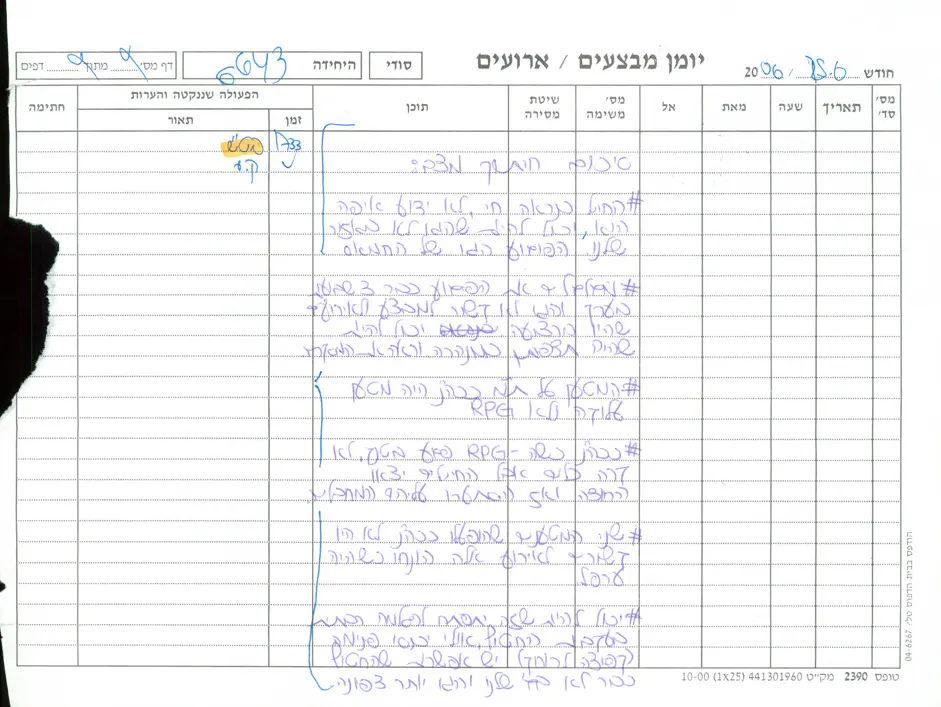
At exactly 8:00 a.m., the situation became clear: "Name of the abducted soldier: Gilad Shalit." Nearly two hours later, the command post logged that "inside the area, tracks belonging to both the terrorists and the abducted soldier have been identified." By noon, an entry noted that "the abducted soldier's vest is with the chief tracker and shows bloodstains and shrapnel damage."
The declassified documents highlight not only the sequence of events but also the moments of intelligence uncertainty and tactical assessments made during the afternoon of that dramatic day. Later that afternoon, an initial situational summary was logged at the command post, underscoring the realization that this was a major strategic crisis: "The soldier is likely alive, location unknown, possibly outside our sector, the attack was carried out by Hamas. They have been planning this attack for about three weeks and it is unrelated to current operations or recent events in the Strip... This could escalate into a major confrontation due to the hostage... There is a possibility the hostage is no longer in our sector and has been moved further north."
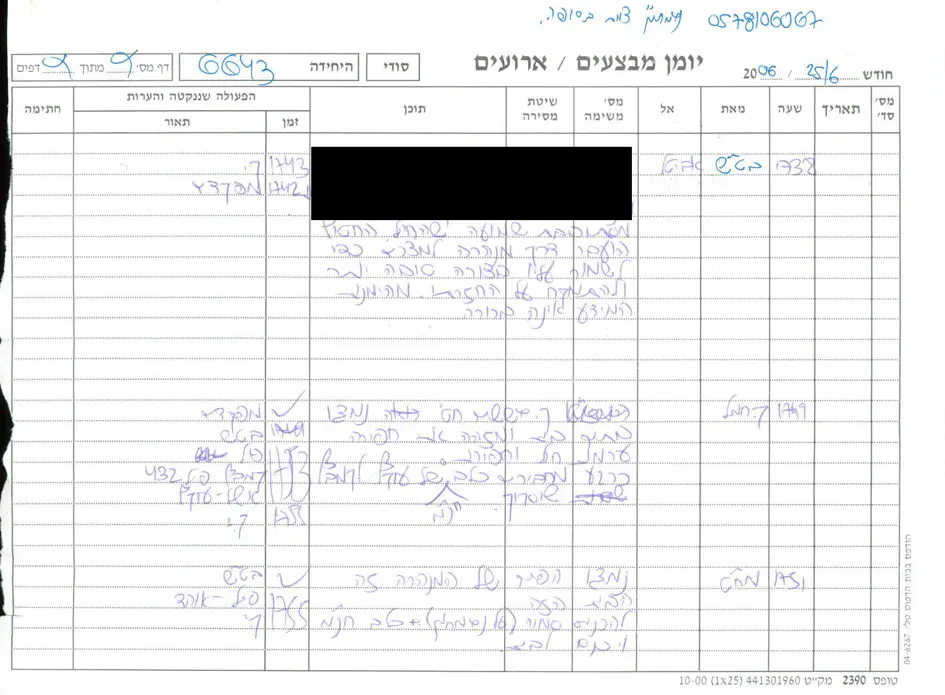
At 4:34 p.m., the commander on the ground reported that he had definitively identified Shalit's tracks near the location where forces believed the entry tunnel shaft was situated. An hour later, one of the most alarming reports was logged: "A rumor is circulating that the captured soldier was moved through a tunnel into Egypt to better secure him and negotiate his return. The reliability of this information is unclear."