

Players who commit to fair, structured play and genuine skill development tend to perform more consistently over time than those who look for shortcuts.
Here is a practical look at how competitive integrity and tactical intelligence actually work in CS2, and what builds a foundation for long-term improvement.
Building Competitive Integrity in CS2
Fair play in CS2 goes beyond just following the rules. It shapes the quality of every match you play, the skill level of your opponents, and the long-term value of your rank. Valve has built several systems around this idea, and understanding them helps players benefit from them rather than fight against them.
Valve's Trust Factor and What It Protects
Valve's Trust Factor is a hidden rating that evaluates account behavior across CS2 and the broader Steam platform. It considers factors like match completion rates, commendation history, report frequency, and account age. Higher Trust Factor accounts get matched with similar accounts, which means cleaner, more competitive lobbies.
Maintaining a solid Trust Factor comes down to consistent, positive habits:
● Complete matches fully, even when results look unlikely to change
● Use the in-game report tool for genuine violations rather than frustration
● Avoid toxic communication that triggers teammate reports
● Stay active on your Steam account across multiple games to signal account legitimacy
Building and keeping a good Trust Factor does not require anything extraordinary. It mostly requires playing the game honestly and treating teammates with basic respect.
Real Game Sense vs. Mechanical Shortcuts
Positional awareness in CS2 comes from learning how long each rotation takes, where common holds appear on specific maps, and what sound cues reveal about enemy intent. Players who develop this through study and practice build a skill set that works in every match they ever play.
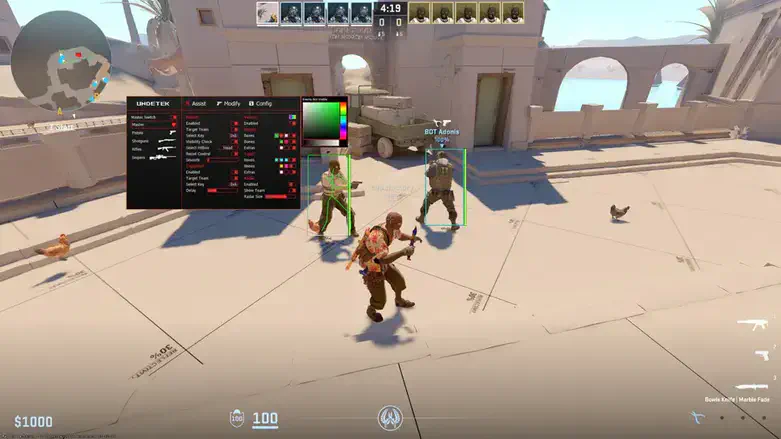
Players who seek shortcuts like CS2 Wallhack bypass this development entirely, which means they never build the map-reading ability that separates consistent competitors from those who plateau. Valve's VAC Live system operates in real time with AI-driven behavioral detection, making sustained use of external tools in ranked matches increasingly difficult to maintain.
Smart Economic Strategy in CS2
CS2 runs on a round-by-round economy that directly determines which weapons each player can carry into each fight. Managing this economy well is one of the clearest ways to create competitive advantages without relying on aim alone.
With the shift to MR12 format, each round carries more weight than it did previously, making coordinated economic decisions even more important than they were in CS:GO.
Understanding Buy Rounds and Eco Rounds
The four economic situations every CS2 player needs to recognize:
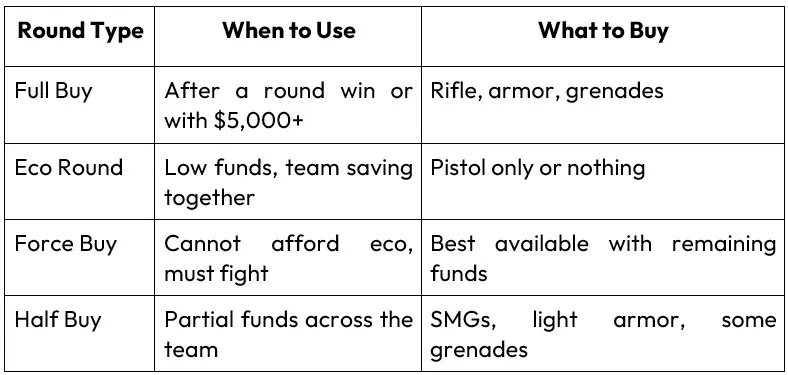
The update to MR12, rather than MR15, has made each round count more, with matches frequently decided long before the first duels of any given round. A complete buy for Terrorists costs roughly $5,000 and around $6,000 for Counter-Terrorists, covering weapons, armor, and grenades.
Coordinating Utility as a Team
Smokes, flashes, and molotovs change round outcomes when used as a coordinated sequence rather than individual decisions. A single smoke on CT crossing on Dust 2 stops a fast rotation. A flash before a B site push forces defenders to reposition before the attacking team arrives.
The most effective teams practice utility setups together in offline servers so that sequences arrive as a unit, not as separate improvisations. Time spent on utility practice translates directly into round wins at every level of play.
Communication, Map Knowledge, and Customization
CS2 rounds are essentially information contests. The team that knows more about enemy positions, rotation timing, and utility usage consistently makes better mid-round decisions. Building the communication habits to share that information clearly is as important as individual mechanics.
Callouts and Sound Information
Callouts are the shared positional vocabulary that make fast, clear communication possible. Learning the standard position names on your core maps and using them consistently in voice chat gives teammates the context they need to act without asking follow-up questions.
A few effective communication habits:
1. Keep calls short and factual. "Two B long" communicates everything needed in under two seconds.
2. Share sound cues immediately. Footsteps, reload sounds, and grenade pulls all reveal enemy intent before anything is visible.
3. Confirm utility usage. Telling teammates when a smoke or flash has been spent lets them plan around its absence.
Teams with good communication win approximately 20% more rounds than those operating without coordinated callouts. That difference compounds over a full match.
Skins and the CS2 Community
Beyond competitive mechanics, CS2 has a rich cosmetic community built around weapon skins, knives, gloves, and stickers. These items let players personalize their experience without affecting gameplay at all.
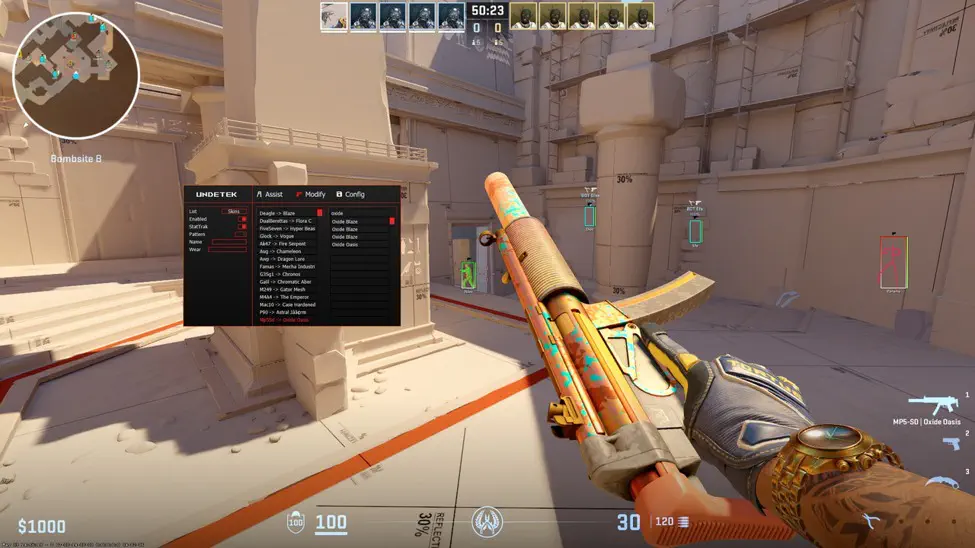
Some players explore a CS2 Skin Changer to preview different aesthetic combinations before committing to purchases on the Steam market. The skin economy in CS2 is active and significant, with rare items holding considerable value among collectors and long-time players. Engaging with the cosmetic side of CS2 is a legitimate part of how many players connect with the game outside of ranked play.
Final Thoughts
Fair play and smart strategy reinforce each other in CS2. Competing honestly means your rank reflects your real skill level, which gives practice sessions a clear direction. Strategic thinking means that skill converts into wins more reliably.
Put time into map knowledge, coordinate economic decisions with your team, communicate cleanly, and build positional awareness through genuine play. That combination is what makes competitive CS2 worth the investment over the long run.