
On June 9, 2026, Vice President JD Vance stated on Fox News that the United States would continue pursuing a deal with Iran even if Israel disapproves. “Israel may or may not like it," he said, “but fundamentally, we believe this serves the interests of the American people."
With all respect, Mr. Vice President : that statement deserves a serious answer, not an angry one. A historical one.
The Pattern Nobody Wants to See
The United States has a long and painful record of abandoning its allies at the most inconvenient moment - for them.
Mohammad Reza Shah Pahlavi was abandoned in 1979 when the streets of Tehran filled with revolutionaries. Washington hesitated, wavered, and ultimately let him fall. The direct result of that abandonment was not the stability anyone sought. It was the Islamic Republic of Iran - the same regime that today, 47 years later, sits across the negotiating table from the Trump administration from a position it does not deserve.
Anwar Sadat paid with his life for the courage to make peace. The United States could not - or would not - protect him.
Hosni Mubarak was abandoned within 48 hours when cameras showed crowds filling Cairo. Three decades of strategic alliance, dissolved in a single news cycle.
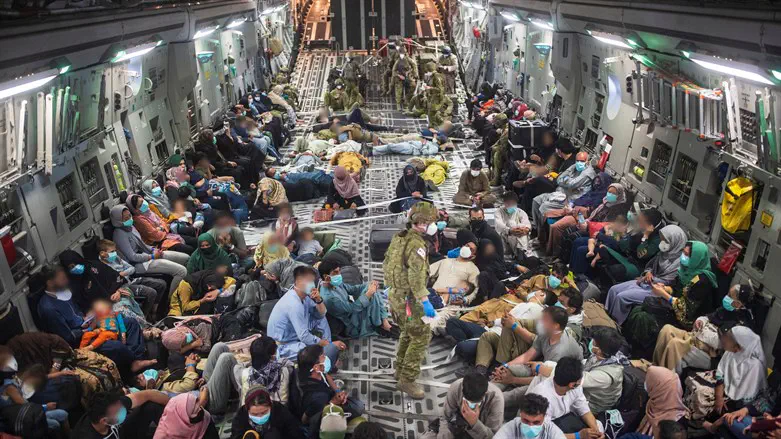
Afghanistan, August 2021. The fall of Kabul was broadcast live. Afghan allies who had risked their lives trusting the American word were left at the mercy of the Taliban. The entire world took note.
The Kurds - abandoned in 1975, in 1991, in 2019 and recently in Syria. Each time with new promises. Each time with the same result.
This is not a partisan critique. It is a bipartisan pattern, crossing Democratic and Republican administrations alike. And that is precisely why it must be named.
America has a pattern. And allies are paying attention.
Not only Israel. The Arab countries today weighing an alliance with the West - some have already signed, others still hesitate - carry institutional memory. They know what happened to the Shah. They know what happened to Mubarak. The question being asked quietly in Riyadh, in Abu Dhabi, in Cairo is always the same: How long before it happens to us?
That doubt is the greatest strategic gift Tehran could receive. Without negotiating. Without firing a single missile.
Within today’s Republican ecosystem two incompatible souls coexist. On one side, the tradition of Reagan, of the Atlantic alliance, of commitment to democracies that share Western values. On the other, a nationalist-isolationist current that frames distancing from Israel as “American national interest" - when in reality it is an agenda that, in its darker sectors, draws no distinction between anti-Zionism and antisemitism.
Vance is not necessarily part of that sector. But his words today feed a narrative that does not befit a statesman who looks beyond the immediate present.
Max Weber distinguished between two ethics of political leadership. The ethic of conviction acts according to the principles of the moment. The ethic of responsibility asks: what will be the real consequences of this decision in ten, twenty years? What signal do allies receive today? What signal do adversaries receive?
A deal with Iran that weakens Israel’s position may appear to be a tactical convenience. Viewed through the ethic of responsibility, it is a strategic debt that someone will pay.
What Is at Stake - and Who Understands It
Israel does not need anyone to predict its victories. They are written in its history and in its soul.
If the United States chooses to look away, Israel will act regardless. And it will prevail. Not because it is omnipotent - but because it has no other choice, and peoples who have no other choice find strengths that no strategic calculation can register.
Mordechai said it to Esther with a clarity that has not aged:
“For if you remain silent at this time, relief and salvation will rise for the Jews from another place."
Relief comes. The question is who will be on the right side of history when it does.
Today’s Israeli leadership is neither accidental nor improvised. Benjamin Netanyahu is the son of Benzion Netanyahu - historian of antisemitism, a man who dedicated his life to understanding the existential threat against the Jewish people. He is the brother of Yonatan Netanyahu, who died at Entebbe leading the operation that proved to the world that Israel rescues its own wherever they may be. This family does not theorize about the price of freedom. It paid it.
The question for Washington is not whether Israel will survive. Israel will survive. The question is whether the United States will be on the right side when history records this moment.
Loyal Allies Are Worth Keeping, not out of sentimentality. Out of strategic intelligence.
Long-term relationships - between people, between nations - carry a value that appears on no spreadsheet of immediate convenience. They are the capital that holds when the storm arrives. They are the difference between standing alone and not standing alone when it matters most.
Prioritizing short-term convenience is not merely a tactical error. It is a signal that allies read clearly - and that adversaries read with satisfaction.
The Shah was abandoned. Iran became the problem being negotiated today.
Mubarak was abandoned. Egypt endured years of instability that still resonate.
Afghanistan was abandoned. The message reached every capital in the world.
Israel is watching. And taking note.
Mr. Vice President, with respect and with candor: loyal allies are worth keeping. Not because it is comfortable. Because it is right. And also because the long term always collects its debts.
US President Donald Trump knows this. We trust that those around him will allow him to remember it before he "does a deal" with Iran that may endanger the only democracy in the Middle East..
Leon J. Halac is an accountant and businessman. He is also a great-grandfather, Argentinian, and Zionist who has been publishing opinion pieces in Iton Gadol and AJN since 2025.