

Regional mediators are continuing efforts to advance implementation of the second phase of the Gaza ceasefire agreement, with discussions focusing on several unresolved issues, including the future of Hamas's weapons.
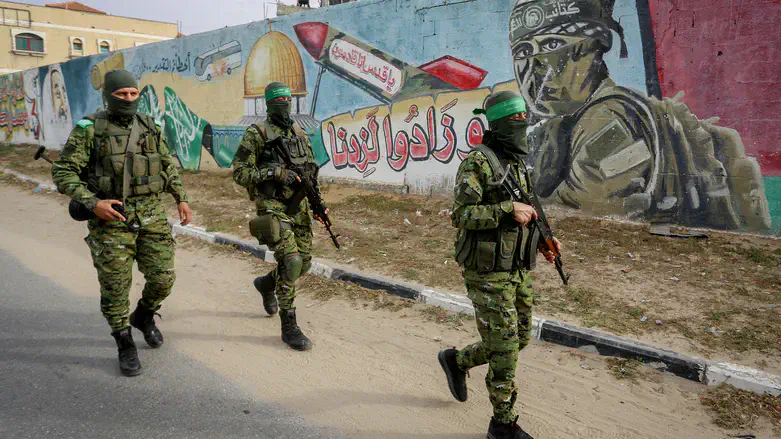
Sources told Al Arabiya on Wednesday that mediation efforts involving Egypt, Qatar, and Turkey remain ongoing as negotiators seek solutions related to the disarmament issue. The sources said Hamas has not yet agreed to transfer its weapons to a Palestinian body.
A Palestinian source told the Saudi outlet that Hamas had submitted its response to a 15-point Egyptian proposal and described the response as positive. According to the source, mediators are now awaiting reactions from Israel and the United States.
The developments follow meetings held in Cairo in recent days involving a Hamas delegation headed by Khalil al-Hayya. The delegation reportedly met with the Qatari Prime Minister as well as the Egyptian and Turkish intelligence ministers.
A day earlier, a Palestinian official familiar with the discussions said mediators and Hamas had reached a conditional formula regarding weapons held by Palestinian factions in Gaza. According to the official, Hamas links any arrangement on weapons to a full Israeli withdrawal from Gaza, an end to the consequences of the war, and the start of reconstruction efforts.
The official said he expected Israel and Board of Peace Chairman Nickolay Mladenov to reject those conditions, maintaining that weapons must be surrendered before moving to the second phase of the peace plan proposed by US President Donald Trump.
Sources cited in the report said that Qatar, Egypt, and Turkey share a common position on the need to advance implementation of the outcomes of the Sharm el-Sheikh Peace Conference alongside the plan endorsed by President Trump.
The mediators have also stressed the importance of moving forward with the next phase of the agreement and accelerating early recovery and reconstruction efforts in Gaza.
Hamas media adviser Taher al-Nunu said on Tuesday that negotiations in Cairo had achieved tangible progress and were continuing. He stated that the discussions address the remaining issues from the first phase of the ceasefire agreement, humanitarian aid, reconstruction efforts, the work of a national committee to administer Gaza, and an Israeli withdrawal from the territory.
The meetings come after a period of stalled implementation of the peace plan, while Israeli strikes in Gaza have continued despite the ceasefire that took effect in October 2025.
Last month, Prime Minister Benjamin Netanyahu announced that he had instructed the Israeli military to expand its control in Gaza to 70 percent of the territory, stating that Israeli forces currently control approximately 60 percent of the Strip.
The October 2025 ceasefire agreement, reached with US backing, provided for Israeli forces to withdraw to the so-called "Yellow Line," which left Israel in control of about 53 percent of Gaza.