

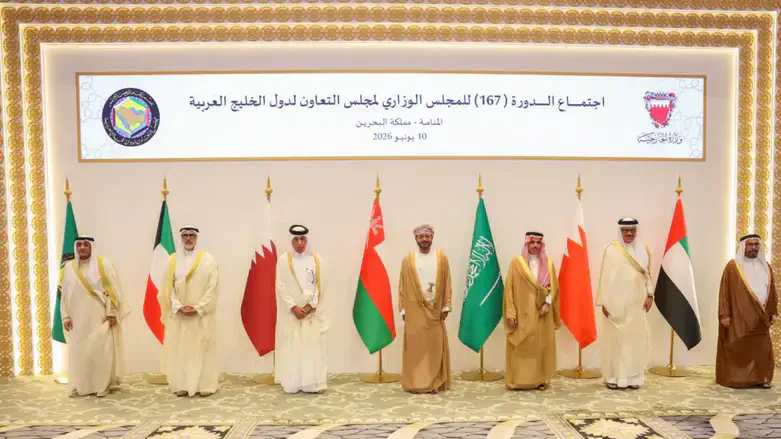
The 167th Ministerial Council of the Gulf Cooperation Council (GCC), meeting in Manama, Kingdom of Bahrain, condemned what it described as a new Iranian aggression involving drone and ballistic missile attacks against Bahrain, Kuwait, and Jordan.
In a statement issued following the meeting, the Council said it "condemns in the strongest terms these brutal Iranian attacks" and considers them "a blatant aggression against the sovereignty of states, the security of their peoples and the safety of their territories," as well as "a flagrant violation of international law, the Charter of the United Nations and the principles of good neighbourliness."
The Council stated that the attacks do not contribute to understanding between nations, saying that such actions "distance peoples from one another, undermine the foundations of trust, sow discord and close the doors of dialogue to which the GCC states have always called."
"Aggression does not build relations, and intimidation does not create stability," the statement added.
The GCC Ministerial Council expressed "full solidarity and firm support" for Bahrain, Kuwait, and Jordan, emphasizing that "the security of the GCC states is indivisible, and that any attack against one of them is an attack against them all."
The Council also sought to reassure citizens and residents of GCC states, stating that joint defense capabilities and air defense systems are confronting the attacks "with high efficiency and readiness," and that regional leaders remain committed to preserving security and stability.
According to the statement, "These attacks will only increase the cohesion, determination and resolve of the peoples of the GCC states to resist and confront them."
The Council affirmed what it described as the legitimate right of member states to defend themselves, individually and collectively, and to respond to the attacks "by all legitimate means, in accordance with Article 51 of the Charter of the United Nations."
The statement held Iran "fully responsible for these acts and their grave repercussions on the security of the region, international navigation and energy supplies," and demanded "their immediate cessation and a complete end to any targeting of the GCC states, their interests and their citizens."
The Council also called on the UN Security Council and the international community to condemn the attacks and hold those responsible accountable in order to preserve regional and international peace and security.
Concluding its statement, the Ministerial Council reaffirmed the GCC states' commitment to "the option of peace, good neighbourliness and diplomatic solutions as a means of settling disputes."
At the same time, it posed what it described as a fundamental question to the aggressor: "How can future relations be built amid the continuation of these attacks and the insistence on pursuing them?"
The Council warned that "Persistence in the path of aggression will only lead to further isolation," while stressing that "the door to understanding remains open to those who choose the language of wisdom and good neighbourliness."