
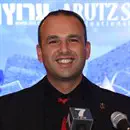

Pinchas Wallerstein, one of the heads of Gush Emunim, the first movement to promote Jewish settlement of Judea and Samaria, sent an open letter to the leaders of the Yesha Council, in which he called on the leaders to voice a clear and active opinion against the violence and property damage against Arabs in the region.
He opened his letter by quoting Rabbi Abraham Isaac Kook: "One who Jewish nationalism causes them hatred towards another person, whoever he may be, does not understand the depth of the Jewish nation's existence."
Wallerstein wrote that he wrote the letter after rabbis and settlement leadership voiced opposition to violence and vigilantism. He stated that principled positions are not enough if they are not backed up by clear directives to the public on how to act when an incident occurs where innocent civilians are hurt or their property is damaged.
He wondered what the practical meaning of the call against violence was and whether the leaders in Judea and Samaria were really interested in "restoring law and order in the region." According to Wallerstein, when there is no clear directive for the public, there is an impression of two-facedness, and even a "nod of agreement with the criminals."
In his letter, Wallerstein asked if Jewish residents should help the victims, prevent attacks, or report to the authorities with all the details when they are exposed to violent incidents. He added that even if the "criminals obviously do not listen to the rabbis' instruction," there is still an obligation to instruct the "public that is loyal to the state and to sovereignty" how to act.
Wallerstein quoted Rabbi Nachum Rabinovitch, who, in 2010, at the beginning of the "Price Tag" phenomenon, wrote that there is concern about young people who define themselves as loyal to the Land of Israel but act violently. He warned that "these flies of death will shame the entire sacred campaign for our country and our people."
Later in the letter, he also mentioned Rabbi Zvi Yehuda Kook, who protested when his students harmed an elderly Arab merchant. He quoted him as saying, "I was very pained and shamed by what I saw," and emphasized the fact that the rabbi wrote, "I did not manage to catch them," which highlights the obligation to prevent such incidents.
According to Wallerstein, these actions are not only criminal but also harm the State of Israel and the settlement movement itself. He wrote that "all our work in the settlement movement is a tool to strengthen sovereignty in our homeland," adding that sovereignty demands outreach and decisions made "with the consent of the majority of Israel."