

Stephen M. Flatow is an attorney and the father of Alisa Flatow, HY"D, who was murdered in an Iranian-sponsored Palestinian Arab terrorist attack in 1995. He is author of A Father’s Story: My Fight for Justice Against Iranian Terror, now available in an expanded paperback edition on Amazon.com, and is the president of the Religious Zionists of America-Mizrachi. An oleh chadash, he divides his time between Jerusalem and New Jersey.
Senator Chris Van Hollen may not have said the words “Western Wall." That is true, and accuracy matters. But words in diplomacy matter even more.
When an American senator argues that the United States should treat the "West Bank", “including East Jerusalem" - which should be called "eastern Jerusalem" as it is not clearly defined - as part of "Palestine" unless and until some different agreement is reached, he is not speaking in abstractions. He is speaking about real places. Real stones. Real history. Real people.
And yes, he seems to be speaking about the Old City of Jerusalem.
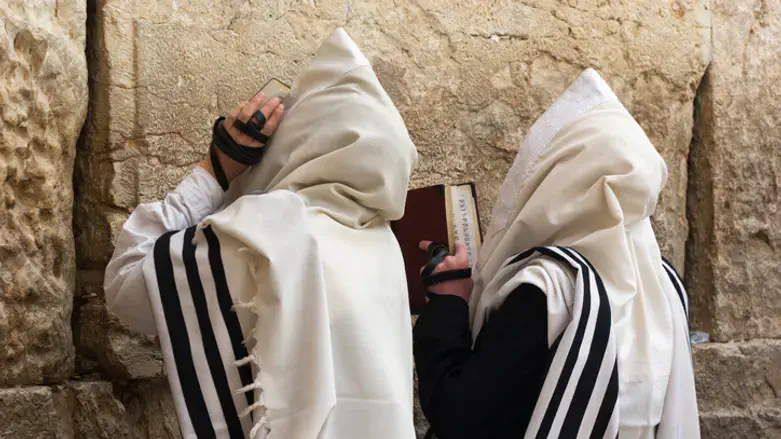
That means he is speaking about the Jewish Quarter. He is speaking about the Temple Mount. He is speaking about the Western Wall, the holiest site where Jews can pray.
So, if Senator Van Hollen does not mean the Western Wall, he should say so plainly. If he does not mean the Old City, he should say so plainly. If he does not mean that the Jewish people’s most sacred accessible site should be treated by the United States as part of “Palestine," he should explain exactly where his map begins and where it ends. (Not that Israel will allow a Palestinian Arab state after October 7 - an entity that would become a Hamas stronghold overnight.)
Because the problem is not merely a careless phrase. The problem is the casual way in which so many in Washington speak about Jerusalem as if it were a bargaining chip, a diplomatic formula, or an irritating complication to be swept into the phrase “East Jerusalem."
For Jews, Jerusalem is not a line item in a peace plan. It is the city of King David. It is the city of the Temples. It is the city toward which Jews prayed for centuries when there was no Jewish army, no Jewish government, no Israeli flag, and no hope in the world’s chancelleries that Jewish sovereignty would ever return.
On Yom Yerushalayim, we do not celebrate a real estate acquisition. We celebrate the moment in 1967 when Jewish memory became Jewish sovereignty. We celebrate the moment Israeli soldiers stood at the Wall and restored to the Jewish people access to the place from which they had been barred under Jordanian rule.
That history matters.
From 1948 to 1967, when Jordan controlled eastern Jerusalem, Jews could not pray at the Western Wall. Synagogues in the Jewish Quarter were destroyed or desecrated. Jewish cemeteries were violated. The world, which today lectures Israel endlessly about access and sensitivity, did very little when Jews were denied access to their holiest places.
Then came 1967. Israel reunited Jerusalem and did something remarkable. It protected access for others. It did not turn the city into a place where only Jews could pray. It maintained Muslim administration on the Temple Mount. It opened the city. It made Jerusalem more free, not less.
That is why the current rush toward unilateral recognition of a Palestinian Arab state is so dangerous. It skips over the essential question: recognition of what, governed by whom, with what obligations, and under what security arrangements?
The Palestinian Arab leadership has not earned sovereignty in Jerusalem by recognizing Jewish history there. It has done the opposite. Mahmoud Abbas has mendaciously denied the Jewish connection to Jerusalem. Palestinian Authority institutions have glorified terrorists. Fatah has not become a peace movement. Hamas, which still holds hostages and built its power on murder, is not a partner for coexistence.
Yet some American and European leaders now want to hand the Palestinian Arabs the reward first and ask for responsibility later.
That is not peacemaking. It is fantasy.
Those who advocate recognition like to say they are preserving the two-state solution. But a real two-state solution cannot be built on denial. It cannot be built on the fiction that Jerusalem is holy to everyone except the people who made it holy to the world. It cannot be built by treating the Jewish presence in the Old City as some negotiable inconvenience.
And it certainly cannot be built by declaring “East Jerusalem" to be part of "Palestine" without confronting what that phrase actually includes.
This is not a minor semantic dispute. If eastern Jerusalem is "Palestine", then what is the status of the Western Wall? What is the status of the Jewish Quarter? What is the status of the Mount of Olives, where generations of Jews are buried? What is the status of the roadways, security arrangements, and access points that allow Jews and others to live, worship, and visit safely?
These questions cannot be dismissed as right-wing hysteria. They are the unavoidable consequences of the words being used.
Nor is this only about Senator Van Hollen. He is part of a broader political fashion that treats Palestinian Arab statehood as a moral shortcut. Say the word “recognition," and suddenly the hard realities disappear: Hamas terror, Palestinian Arab incitement, corruption, security threats, the refusal to accept Israel as the nation-state of the Jewish people, and the long history of rejecting compromise.
But Jerusalem has a way of exposing unserious thinking. It forces the question that diplomatic language tries to avoid.
Do the Jewish people have rights in their own capital, or only permissions granted by others?
Those of us who have written about Jerusalem before know that the city is not made sacred by resolutions in foreign capitals. It was sacred to Jews before there was a United Nations, before there was a State Department, before there were senators discovering that “Palestine" is a useful word in progressive politics.
The Western Wall does not need recognition from Senator Van Hollen. But American policy does need moral clarity.
If the United States wants to support peace, it should insist on negotiation, mutual recognition, demilitarization, an end to incitement, and ironclad protection of holy places. It should not prejudge Jerusalem’s future with vague language that turns the Jewish people’s most sacred places into assets on someone else’s ledger.
Senator Van Hollen is free to criticize Israel. He is free to advocate for Palestinian Arabs. He is free to support a two-state solution. But he is not free from the consequences of his words.
So let him answer plainly.
When he says, “East Jerusalem," does he mean the Western Wall?
Does he mean the Jewish Quarter?
Does he mean the Old City?
And if he does not, then he should stop using language that suggests he does.
Jerusalem is not a slogan. The Kotel is not a bargaining chip. And Jewish history is not something to be erased by a senator’s op-ed.
Before American politicians speak so casually about giving away “East Jerusalem," they should stand at the Wall, place a hand on its ancient stones, and remember who was praying there long before Washington learned the vocabulary of Middle East peace processing.