

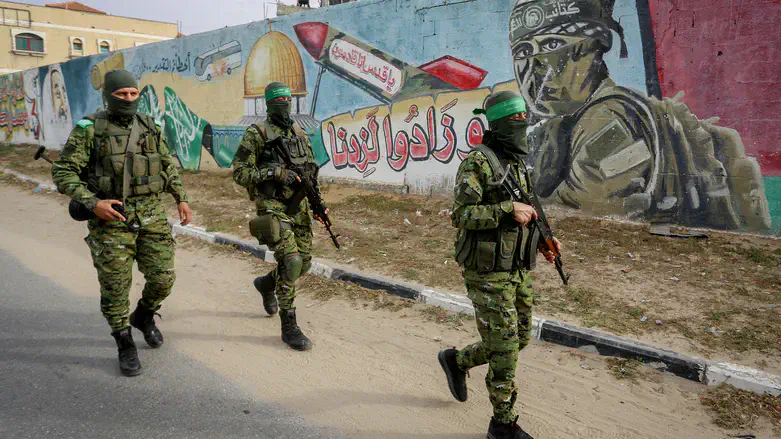
The Hamas terrorist organization is investigating a series of recent Israeli assassinations targeting senior leaders and operatives in Gaza after a sharp increase in the pace of such operations, according to a report by Asharq Al-Awsat.
The report said Israel's campaign against Hamas leaders, which began during the war in Gaza in October 2023, accelerated significantly in recent weeks. Among those killed were Qassam Brigades commander Izz al-Din al-Haddad and his successor, Mohammad Odeh. Other senior commanders and field operatives were also targeted, including figures involved in the October 7, 2023, massacre and personnel connected to military production.
Hamas field sources told Asharq Al-Awsat that the movement examines every assassination in an effort to identify security failures or intelligence breaches that may have contributed to the attacks.
According to four field sources, one factor behind the increase in successful Israeli operations has been the extensive destruction of Hamas's tunnel network. Over the years, Hamas constructed a large underground system used for military operations, command centers, transportation, and shelter.
The sources said Israeli military actions damaged large portions of the network through ground operations and airstrikes. As a result, Hamas leadership gradually reduced its reliance on tunnels and moved many commanders and operatives above ground.
They said a decision to limit tunnel use emerged during the war as attacks on underground sites intensified. Tunnels were subsequently used mainly for movement and specific missions rather than as long-term hiding places.
The sources described the shift away from tunnels as a turning point. While some leaders continued to use the underground network, many spent extended periods above ground, relying on concealed movement methods and alternative communication channels to avoid detection.
Several senior Hamas figures were nevertheless killed while using tunnels, including political bureau members Rawhi Mushtaha and Sameh al-Sarraj in 2024, as well as Mohammad Sinwar and Mohammad Shabana in May 2025.
The sources also pointed to Israel's expanded control over large areas of Gaza, which they said has reduced the available space where faction leaders and operatives can move without attracting attention. Many now reside in densely populated western areas of the Strip, often near family members and in temporary shelters, increasing their exposure to surveillance.
Field sources additionally cited Israeli technological capabilities as a major factor in the assassinations. They referred to extensive drone activity, intelligence gathering, and the use of informants.
One source claimed Israel has employed advanced technology, including artificial intelligence systems integrated into drones, to identify and track individuals through voice recognition and other methods.
The same source said investigations into suspected collaborators revealed that some had allegedly planted surveillance equipment in Gaza, including cameras and recording devices. According to the report, some devices were deployed by drones while others were placed during Israeli military operations.
A Hamas field source said numerous suspected informants had been arrested, with some allegedly linked directly to the targeting of senior commanders. Two sources confirmed that one suspect was being questioned over alleged involvement in tracking Haddad's movements.
The report also noted that during the war, Palestinian factions carried out proceedings against individuals accused of providing information that aided Israeli operations, including cases connected to the killing of senior Qassam commander Mohammad Deif in 2024.