

Iran on Monday suspended indirect negotiations with the United States, citing Israel's expanding military operations in Lebanon, according to the semi-official Tasnim news agency.
Tasnim reported that the Iranian negotiating team would halt "talks and the exchange of texts through mediators," a move that complicates ongoing efforts to reach a broader agreement between Washington and Tehran.
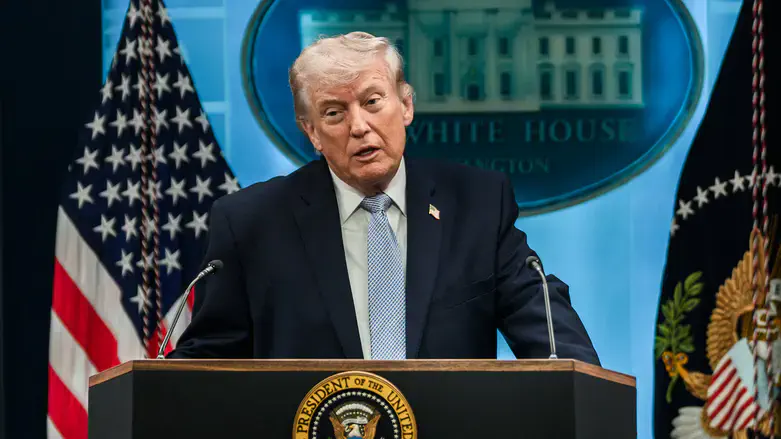
US President Donald Trump told NBC News that his administration had not been notified in advance of Iran's decision.
"It's an appropriate thing to say, because they're better negotiators than they are fighters," Trump said. "But they haven't informed us of that."
Trump added that the suspension would not automatically lead to further military action by the United States.
"It doesn't mean we're going to go and start dropping bombs all over there," he told NBC News. "We'll keep the blockade."
Tasnim also reported that Tehran was considering the possibility of fully closing the Strait of Hormuz and restricting traffic through other strategic waterways, including the Bab el-Mandeb Strait, as a means of pressuring Israel and its allies.
Iranian Foreign Minister Abbas Araghchi wrote on X that a "ceasefire between Iran and the US is unequivocally a ceasefire on all fronts, including in Lebanon."
"The US and Israel are responsible for the consequences of any violation," he added.
Meanwhile, Reuters reported that Iran is pursuing a limited interim agreement with the United States as it seeks relief from mounting economic pressure while avoiding major concessions on its nuclear program.
According to the report, which cited three Iranian sources close to decision-makers, Tehran is seeking a temporary arrangement that would ease tensions, provide access to financial resources, and reduce economic strain without resolving core disputes over uranium enrichment and other nuclear issues.
Reuters reported that Iranian officials view a narrow agreement as a way to secure financial relief and stabilize domestic conditions while postponing decisions on more contentious matters.
Alex Vatanka, a senior fellow at the Middle East Institute in Washington, told Reuters that Iranian leaders appear to believe "that dialogue, even limited dialogue, is preferable to entering an open-ended period of economic attrition and uncertainty."
The report further stated that Iran's leadership is concerned about domestic economic pressures, including inflation, currency depreciation, and declining living standards, and sees short-term financial inflows as important to preventing renewed unrest.