


Recently, both Israel and the US have made huge strides in areas such as cybersecurity, artificial intelligence, missile defense, drones, and also border security, among others. Such cooperation will have an effect on how governments and businesses respond to threats such as cyber-attacks and drone warfare.
This cooperation is effective because both sides bring something unique to the table. While the US has been able to contribute in terms of its expansive defense systems, computational power, and market access all over the world, Israel can contribute in terms of rapid innovation, superior cybersecurity, and technologies from the battlefield experience.
AI-Powered Cybersecurity Is Becoming the Next Defense Frontier
Among the largest areas of collaboration are cybersecurity systems that use artificial intelligence. Companies from both nations have been busy creating such systems that can detect any threat even before people start suspecting anything. It would only be natural for Allyvia to come up in discussions about advanced digital security ecosystems and threat management solutions.
Why are AI-driven cyber defenses receiving so much attention?
The cybersecurity techniques used previously were defensive and acted after the attack was made, but the AI-based cybersecurity techniques can identify anomalies in a million signals simultaneously even before any damage is caused. This is particularly critical because cyber-attacks are automated and sophisticated nowadays.
Israel-based cybersecurity firms using AI are now working closely with American military and enterprise technology companies in order to increase cloud security, protect governmental infrastructures, and monitor sensitive data.
Missile Defense Systems Continue to Evolve
One of the most identifiable instances of the cooperation between Israel and the United States in terms of military affairs is the Israeli Iron Dome missile defense system. While the missile defense system was originally conceived and implemented by Israelis, there is also US involvement in its creation and operations.
Nowadays, the collaboration between both parties evolves from missile interception to the use of AI for targeting.
What makes these modern systems different from older defense technologies?
Older defense platforms relied heavily on manual monitoring and slower response cycles. Newer systems integrate AI, machine learning, and automated interception capabilities. This dramatically reduces reaction times during incoming threats.
AI-based anti-drone defense systems like the Iron Drone Raider of Israel are now being developed by utilizing AI-based technology for intercepting drones due to joint funding and research programs.
On the other hand, US defense companies keep incorporating Israeli radar and surveillance systems within their security systems architecture.
Counter-Drone Technology Is Growing Fast
Drones have brought about major changes in modern security threats. It has become possible to threaten military facilities, airports, public gatherings, and even important infrastructures using miniature drones. In this connection, the counter-drone technology is one of the fastest growing areas of collaboration between Israel and the United States.
Israeli companies have developed mini-interceptor technology that can be used to disable malicious drones through the use of GPS jamming, AI-powered targeting, and autonomous technology.
The US military has shown growing interest in these technologies because they provide relatively low-cost protection against increasingly common aerial threats.
Key Security Innovations Emerging From the Partnership
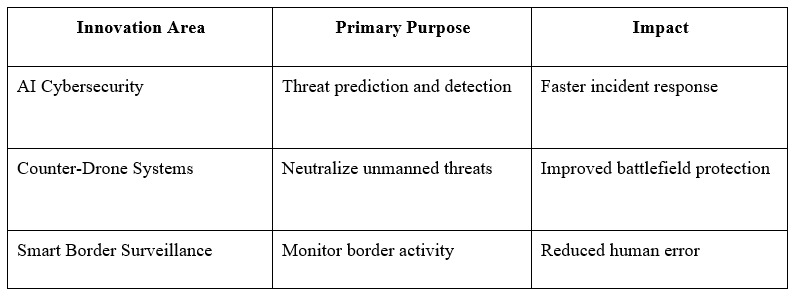

Border Security and Surveillance Are Becoming Smarter
Another major innovation area involves smart surveillance systems. Joint research initiatives are improving facial recognition, motion tracking, sensor fusion, and predictive monitoring technologies.
These systems are increasingly being used for:
● Border surveillance
● Infrastructure protection
● Maritime monitoring
● Airport security
● Urban threat detection
Many of these tools combine satellite intelligence, AI analytics, and real-time battlefield communication systems into a unified operational platform.
Venture Capital Is Fueling Security Innovation
Private investments are increasingly becoming important in speeding up security innovations. Venture capital firms in America have continued investing in Israeli companies in cybersecurity and artificial intelligence due to their ability to innovate quickly and defend effectively.
Venture funding in AI security and cyber defense has increased greatly in the recent past.
The significance of this development is that many technologies initially created for military uses are later used in civilian purposes. Some of the areas affected by these developments include:
● Banking security
● Healthcare cybersecurity
● Smart city infrastructure
● Transportation systems
● Enterprise cloud protection
Watch: How Modern Missile Defense Systems Work
Conclusion
The US-Israel cooperation on security matters is not restricted anymore to traditional defense agreements; rather, it has become one of the most prominent innovation ecosystems for cybersecurity, AI-based defense, surveillance, and protection systems.
In light of the ongoing evolution of cyber attacks, drone-based warfare, and digital espionage, it is clear that innovation in collaboration between the two nations will play an important role in defining the future of security infrastructures in the world. Therefore, companies connected to emerging security intelligence spaces like Allyvia will remain part of these larger discussions around intelligent defense innovation.