
I am writing this essay because I believe one of the greatest challenges facing the Jewish people today is not only the war against Hamas, Iran, or global antisemitism. It is the growing internal divide between secular Israelis and the haredi world.
That divide is becoming unsustainable.
The haredi population already constitutes close to 18 percent of Israel’s Jewish population. Based on birth rates and demographic projections, within several decades - perhaps even within half a century - they may become the majority of Israeli Jews.
That means the future of Israel depends on whether secular and haredi Jews can learn not merely to tolerate one another, but to understand one another.
And understanding begins with studying ideas honestly, seriously, and respectfully at their source.
The Jewish future will not be built by Jews screaming at one another across barricades. It will be built by Jews studying one another seriously.
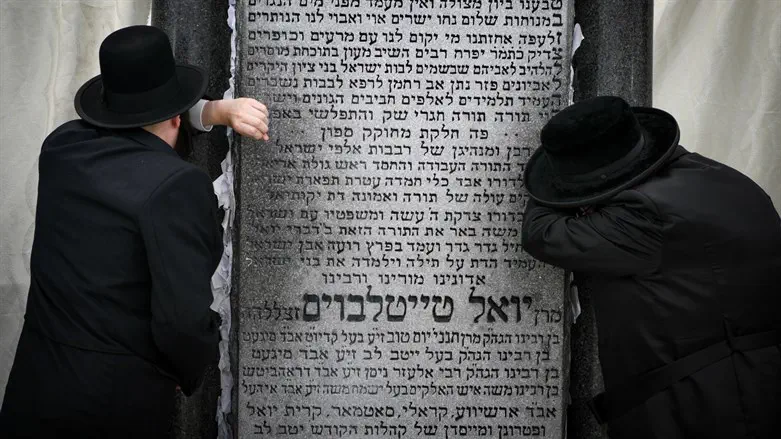
That is why I decided to immerse myself in the foundational anti-Zionist texts of the haredi world, especially the writings of Rabbi Joel Teitelbaum, world-renowned as the Satmar Rebbe, and his monumental post-1967 work Al HaGeulah Ve’al HaTemurah.
If secular Israelis and religious Zionists wish to understand the haredi opposition to Zionism, they must study its foundational texts seriously and respectfully. They must understand how towering figures like Teitelbaum viewed secular Zionism not merely as a political movement but as a spiritual revolution - one that threatened to replace Judaism itself with nationalism.
Only then can genuine dialogue begin.
Only then can peace emerge between different Jewish tribes who increasingly share one country and one destiny.
Because if Israel’s future majority is increasingly Orthodox, then Israel’s secular population cannot afford ignorance of haredi thought. And if the haredim are to help lead the Jewish state in the future, they too must understand that Zionism was not merely secular rebellion but also the desperate Jewish answer to centuries of helpless slaughter and a millennia-old desire to return to their ancient homeland in Israel.
The argument between Zionism and anti-Zionism is therefore not merely political.
It is a struggle over the meaning of Judaism itself.
And no figure articulated that struggle more fiercely, more uncompromisingly, or more powerfully than Rabbi Joel Teitelbaum.
To his followers, he was a saintly Torah giant defending authentic Judaism against the seductions of nationalism and secular power.
To his critics, he became the most influential theological opponent of the modern State of Israel and the architect of a worldview that, intentionally or not, gave ammunition to Israel’s theological enemies.
First, let’s be clear. Amid their anti-Zionist stand, Satmar is not anti-Jews. They visit Israel in their hundreds of thousands. They staunchly oppose Neturei Karta, a fringe extremist group with whom they are sometimes and wrongly confused due to similar dress codes. Satmar are among the most generous and benevolent Jews around, supporting hospitals, providing Shabbat meals to visitors to hospitals, soup kitchens, families in need, sick children, destitute parents, and Yeshivas the world over. Few Jewish communities anywhere can claim to be as generous.
They are also the proudest Jews anywhere, dressing with their tzitzit, beards, black hats, streimels,, black coats, and making no compromises in speaking Yiddish and celebrating every last vestige of open Jewishness amid the worst antisemitic outbreak since the Holocaust. In short, they are lion Jews.
Much of this derives directly from the example set by the Satmar Rebbe himself who, amid his ferocious anti-Zionism, was renowned for his Shahar Yisrael, humble demeanor, and openness to every Jew regardless of level of observance.
And yet reducing the Satmar Rebbe, a scholar of encyclopedic knowledge, to merely an “anti-Zionist extremist" misses the profound seriousness of his argument and the profound scholarship at the core of his anti-Zionist tomes.
Because he was certainly not motivated by hatred of Jews, God forbid.
First and foremost, he was motivated by his sincere, immutable belief that the return to Jewish sovereigty must be preceded by the miraculous appearance of Mashiach ben David (the Messiah. No matter how religious the State of Israel might become, its very establishment without the advent of Mashiach is not acceptable.
On the other hand, his attitude to the Zionist Movement itself was motivated by a fear for Judaism. He feared that the Jewish people, after surviving 2,000 years through Torah and covenant, would exchange their spiritual mission for political nationalism. He feared Jews would rebuild the Jewish body while abandoning the Jewish soul.
And nowhere did he articulate this more fiercely than in his famous post-1967 work Al HaGeulah Ve’al HaTemurah (“On Redemption and On Change"), written after Israel’s astonishing victory in the Six-Day War and the reunification of Jerusalem.
While Jews across the world danced in the streets and wept before the Western Wall, the Satmar Rebbe wrote a theological counterattack.
The world saw redemption. He saw danger.
The Satmar Rebbe believed Zionism was not the beginning of redemption, but the corruption of redemption itself. He believed that it postponed the Mashiach's arrival.
To understand his argument, one must understand the world that shaped him.
Rabbi Teitelbaum was born in 1887 in Hungary into one of the great Hasidic dynasties of Eastern Europe. He emerged as an extraordinary Talmudic scholar and charismatic rebbe, eventually leading the Satmar movement, named after the city of Satu Mare.
Then came the Holocaust.The world of European Jewry was annihilated. Entire Hasidic courts disappeared into Auschwitz. Millions of observant Jews were murdered.
Most surviving Jews emerged from the Holocaust believing one thing above all: Jews could never again rely on the mercy of the nations.
David Ben-Gurion concluded that Jewish statelessness had become a death sentence.
The Zionist conclusion after Auschwitz was simple:
Without sovereignty, Jews perish.
Without an army, Jews die.
Without power, Jews are slaughtered.
Rabbi Teitelbaum reached the opposite conclusion entirely.
He believed the Holocaust demonstrated the catastrophic consequences of Jews attempting to force redemption through politics and nationalism rather than waiting for clear divine intervention. That conviction became the basis of his anti-Zionist theology.
And it rested on four foundational objections.
I. Zionism Was Replacing Judaism With Nationalism
The Satmar Rebbe's deepest objection was not merely political. It was spiritual.
He believed Zionism sought to replace Judaism itself. The early Zionist movement was dominated by secular European intellectuals - socialists, nationalists, revolutionaries, and anti-clerical thinkers - many of whom openly despised traditional Orthodoxy.
Some mocked rabbis.
Some saw Torah Judaism as a relic of the weak Diaspora Jew.
Some envisioned the creation of an entirely “new Jew."
The old Jew of exile studied Talmud. The new Jew carried rifles.
The old Jew prayed. The new Jew farmed land.
The old Jew waited for God. The new Jew trusted nationalism and military force.
Rabbi Teitelbaum viewed this not as Jewish revival but Jewish transformation. Dangerous transformation.
He feared Zionism would preserve the Jewish people physically while destroying them spiritually.
This fear was not simply imaginary.
Some early Zionists truly did seek to secularize Jewish identity.
Hebrew was revived, not as a holy language of Torah.
Jewish holidays became agricultural festivals.
Kibbutzim sometimes replaced prayer with socialist ideology.
Religion was frequently treated as embarrassing and ossified baggage from the ghetto.
Rabbi Teitelbaum saw this and asked a devastating question:
If Judaism becomes merely ethnicity, language, and nationalism, what exactly makes it holy?
And here, even many who reject his conclusions must admit he identified a real danger.
Because nationalism without morality can become idolatrous and land without spiritual transcendence can become mere earth rather than a sanctified home. Power without transcendence can become corrupting. A Jewish state without Jewish values eventually risks becoming merely another state.
Rabbi Teitelbaum argued something essential that secular Zionists often underestimated: The Jewish people did not survive exile because of land or armies.
We survived because of Torah. The covenant preserved the Jews long after the kingdom disappeared.
Without Judaism, he believed, Jewish nationalism becomes spiritually hollow. And history gives his warning enduring relevance.
Because Israel’s greatest threat is not only Iran, Hamas, or Hezbollah.
It is the possibility that Jews forget why Jewish civilization exists in the first place. This, however, did not happen and that is because the Religious Zionists combined Torah and a return to the Jewish land. And increasingly since the 2023 war began, young Israelis are retturning to belief in God.
But the one area where the Satmar Rebbe seemed to be blinkered was this: yes, the Torah unquestionably sustained Jewish identity and survival. But how many Jews, due to Jewish powerlessness and homelessness, were murdered along the way?
II. The Jews Were Forbidden to Establish Sovereignty Before the Mashiach's arrival.
Rabbi Teitelbaum’s second objection emerged from one of the most controversial passages in rabbinic literature: the “Three Oaths" in Tractate Ketubot.
According to an opinion the Talmud, after the destruction of the Temple, God imposed three oaths:
- Jews must not ascend to Israel “as a wall" - collectively or with force.
- Jews must not rebel against the nations.
- The nations must not persecute Jews excessively.
For centuries, these passages were generally treated as aggadic - moral or theological teachings rather than binding law.
Rabbi Teitelbaum transformed them into the foundation of an entire anti-Zionist worldview. In his monumental work Vayoel Moshe, he argued that Zionism violated divine Will itself.
Only God could end exile. Only Mashiach ben David could restore sovereignty. Human beings had no authority to seize redemption politically. Everything else was rebellion against Heaven.
For Rabbi Teitelbaum, Zionism was not merely premature. It was theological insurrection. This belief was unchangeable and divorced from his criticism of the Jewish state itself.
This separated him not only from secular Zionists but also from religious Zionists such as Rabbi Abraham Isaac HaCohen Kook.
Rabbi Kook believed redemption unfolds gradually through history. Even secular Zionists, he argued, were unknowingly participating in God’s plan.
Religious Zionist Rabbis countered Rabbi Teitelbaum's claims of the validity of the Three Oaths, saying that:
1.The Three Oaths were never binding law.
And in any case:
2. The Balfour Declaration, San Remo Conference, League of Nations ratification and the UN partition plan and recognition of the State of Israel nullifed the first two oaths.
3. The excessive persecution through the ages and the Holocaust shattered the conditions of the third oath.
4. Redemption can also unfold gradually as a famous Talmudic source opines, using the expression "kima, kima" - step by step, even if all Jews have not yet repented. It may occur by means of a one time miraculous appearance of Mashiach if the Jews have repented their sins, but not exclusively.
5. The signs of the start of the period of Redemption are described in biblical prophecy: the gathering of Jews from exile, and the return of the land to its pre-exile productivity, both of which are clearly occurring at this time.
6. Jewish self-defense has become morally obligatory to protect Jewish lives.
Rabbi Teitelbaum considered these ideas, though backed by rabbinic sources which are beyond the scope of this article, profoundly dangerous and heretical.
To him, redemption without repentance was impossible.
Redemption without Torah observance was fraudulent.
National sovereignty before divine command was spiritual arrogance.
And then came the Holocaust. Most Jews concluded Auschwitz proved Jews needed a state. Rabbi Teitelbaum concluded Auschwitz proved Jews needed repentance and humility before God.
This remains one of the most difficult aspects of his theology for many Jews to comprehend.
Because after six million murdered Jews, many could no longer morally accept permanent Jewish helplessness and homelessness or that the Holocaust was deserved.
Religious Zionists argued that after Auschwitz, Jewish self-defense became not merely permissible but mandatory, whether or not one accepted the belief in a gradual Redemption.
How could Jews remain dependent on the goodwill of the nations after Treblinka? How could exile remain holy after gas chambers? How could statelessness remain virtuous after crematoria?
But Rabbi Teitelbaum never moved.
For him, theology could not be altered by emotion or history and Jewish martyrdom could be as holy as Jewish life.
III. The Six-Day War Was Not Redemption
Then came 1967. The Six-Day War transformed Jewish consciousness forever.
Israel, surrounded by hostile Arab armies threatening annihilation, achieved one of the most astonishing military victories in modern history.
Most dramatically, Jews regained the Old City of Jerusalem and the Western Wall. Across the Jewish world, people wept openly. Secular Jews suddenly rediscovered Jewish identity. Religious Jews spoke openly of miracles.
The Lubavitcher Rebbe, my Rebbe, responding to a global Jewish spiritual awakening that ensued after the war responded with his global Jewish mitzvah campaign that would eventually and literally encompass nearly all the earth.
Many who doubted it beforehand now believed the Redemption process had begun.
And then Rabbi Teitelbaum published Al HaGeulah Ve’al HaTemurah.
The book was essentially a full-scale assault on the idea that Israel’s victory represented divine Redemption.
While Jews worldwide celebrated, Teitelbaum issued a warning. He rejected absolutely the claim that the war was miraculous.
Why? Because he believed Jews were dangerously transforming military victory into theology.
He feared Jews were replacing the Mashiach with tanks.
Rabbi Teitelbaum argued the war could be explained naturally.
Israeli soldiers fought fiercely. Arab armies were disorganized. Arab leadership was weak.Military strategy succeeded. Nothing supernatural was required.
To many mainstream Jews, this seemed almost incomprehensible.
How could anyone witness Jerusalem reunited after 2,000 years and not see Divine Providence?
How could anyone fail to see miracle in Jewish survival against overwhelming odds?
Prominent rabbis and scholars responded forcefully. Religious Zionist thinkers argued that Jewish history itself had become impossible to explain through ordinary politics alone.
The return of exiles.
The rebirth of Hebrew.
The survival of repeated wars.
The restoration of Jerusalem.
The revival of Torah learning in Israel.
All these together appeared overwhelmingly providential.
But The Satmar Rebbe remained unmoved because his concern was deeper than military victory.
He feared nationalism becoming a substitute religion.
He feared Jews worshiping power instead of God.
And if we are honest, his warning contains some truth.
Because military victories can intoxicate nations. Power can become morally corrupting. Nationalism can become messianic.
Judaism has always distrusted the worship of force alone.
And yet history also teaches another lesson: Powerless Jews die.
That lesson became unavoidable after the Holocaust - and again after October 7.
IV. Jerusalem Was Not Spiritually Redeemed
Rabbi Teitelbaum’s fourth objection was perhaps the most radical.
He argued that if Jerusalem had truly been redeemed, the city would immediately reflect uncompromising Jewish monotheism. A redeemed Jerusalem, he believed, could not remain religiously pluralistic.
Christianity’s Trinity violated pure Jewish monotheism.
Islam’s reverence for Muhammad remained problematic.
A truly redeemed Jerusalem would reflect complete Torah sovereignty.
The fact that churches, mosques, and competing faiths remained central in Jerusalem proved redemption had not arrived.
For Rabbi Teitelbaum, Jerusalem without all-embracing holiness was merely political geography.
This argument disturbed even many Orthodox Jews.
Because modern Israel became one of the most religiously open societies in the Middle East. Christian holy sites were protected. Mosques remained intact. Pilgrims of all religions entered freely.
Israel governed Jerusalem with remarkable religious tolerance.
But Rabbi Teitelbaum saw this not as steps toward Redemption but as proof Redemption had not yet come.
The Mainstream Response
The mainstream Jewish response to Al HaGeulah Ve’al HaTemurah was fierce.
Many rabbis considered the work emotionally devastating because it appeared to deny gratitude for Jewish survival.
Others argued Rabbi Teitelbaum had elevated one obscure aggadic Talmudic passage into absolute theology while ignoring vast portions of Jewish history and halakhic tradition.
And then history itself complicated Teitelbaum’s predictions.
Because the Israel he feared never entirely materialized.
Yes, Israel remains deeply secular in many ways. But the secular socialist Zionism Teitelbaum most despised has dramatically weakened.
The Labor Party that once dominated Israel has largely collapsed.
Meanwhile, Israel has become steadily more traditional and religious at a feverish rate. Religious academies and yeshivot cover the landscape. An enormous percentage of IDF officers now come from religious backgrounds. The Orthodox and haredi populations are growing rapidly. By some demographic projections, religious Jews may become the majority within decades.
The Jewish state he opposed may have become one of Judaism’s greatest protectors.
And I ask:
Without Israel, where would Jews flee today?
Who rescues Jews from persecution?
Who protects Jews when the world turns violent?
Can one reject a Jewish army?
October 7 reminded us again of an awful truth:
The world mourns dead Jews after massacres.
Only Jewish power prevents massacres beforehand.
However, without Judaism, there is no enduring Jewish state.
Israel cannot survive merely through technology, economics, and military strength.
Nations require moral meaning. Civilizations survive through purpose.
The Jewish people did not survive 2,000 years because of power. We survived because of covenant.
Because of Torah.
Because of holiness.
The IDF can protect Jewish bodies. Only Judaism can protect the Jewish soul.
And perhaps that is where this great Jewish argument ultimately ends.
The future of Israel depends not on choosing between Judaism and Zionism.
It depends on ensuring they remain inseparable.
Torah, Israel, the Jewish people. One and inseparable. Now and forever.
Rabbi Shmuley Boteach is the international bestselling author of thirty-eight books, translated into more than twenty languages. He has been hailed as “the most famous rabbi in America" (The Washington Post, Newsweek), “arguably the most famous Orthodox Jew on earth" (The New York Observer), and named one of the fifty most influential Jews in the world (The Jerusalem Post). Rabbi Boteach has appeared on virtually every major television network and media platform across the globe-from the United States to Europe to Asia to Australia-bringing his unapologetic voice to hundreds of millions.
For eleven years, he served as Rabbi at Oxford University, where he founded the L’Chaim Society and built it into one of the largest student organizations in the university’s history, mentoring future leaders and shaping a generation of thinkers. Rabbi Boteach is the only rabbi ever to receive the London Times Preacher of the Year Award, and remains the competition’s record-holder.
He lives in New Jersey with his Australian wife, Debbie, and together they have, thank God, nine children and twelve grandchildren. Follow him on Instagram and X @RabbiShmuley.