
The Israeli Air Force eliminated Nasrallah in September 2024. Along with him, the equations died as well. Hezbollah fires at civilians for a variety of reasons, and not necessarily because civilians were killed in Lebanon.
Hezbollah does not target only military objectives (we already understood that in October 2023), and it is not always possible to identify a clear cause-and-effect relationship in Hezbollah’s patterns of fire.
So why has Hezbollah intensified its launches in recent days, including launches against civilian targets in Israel?
The answer, as usual, lies along the axis between Washington and Tehran.
In recent days, American pressure to reach a deal with Iran has increased. But the gaps between the sides remain unchanged. Both sides are making it clear that they will not compromise on the nuclear issue, and no one knows how this will end. To put pressure on the Americans, the Iranians, as usual, are activating their proxies to solve their problems - both in the internal Lebanese arena and in the struggle with Israel.
To explain: Naeem Qassem’s statement calling on people to take to the streets and bring down the Lebanese government amounts to giving legitimacy to a civil war in Lebanon. Although it was said in the context of Al-Qard Al-Hassan as a red line, it is in fact an expression not only of Hezbollah’s interest but also of Iran’s - to push Lebanon into chaos that will divert attention away from Tehran. Along the way, they will also benefit from Hezbollah’s strengthening.
At the same time, in recent days Hezbollah has intensified its fire toward Israel, including toward civilian communities themselves. It is clear that under these circumstances, Israeli pressure to renew strikes in Beirut is growing. If that indeed happens, Iran will be able to blame Israel for the collapse of the talks over a deal.
After all, the Iranians made clear all along that the ceasefire between the United States and Iran is tied to the ceasefire between Israel and Hezbollah. Thus, Israeli strikes in Beirut would allow the Iranians to ease the American pressure on their backs - at least temporarily.
This is Iran’s familiar game of buying time, whose purpose is to avoid reaching a deal that would force them into a compromise they are not interested in, and to drag out the negotiations, as in the previous round, for 20 years.
While everyone is focused on the Lebanese arena, the Iranians, with Chinese and Russian assistance, will be able to work on rebuilding the damage they sustained during the war.
At the same time, it is clear that Israel needs to strike in Beirut and the Beqaa Valley. Every day that passes without this happening allows Hezbollah to preserve and strengthen its power in Lebanon, both in terms of its infrastructure as a state within a state and in terms of its military terrorist infrastructure.
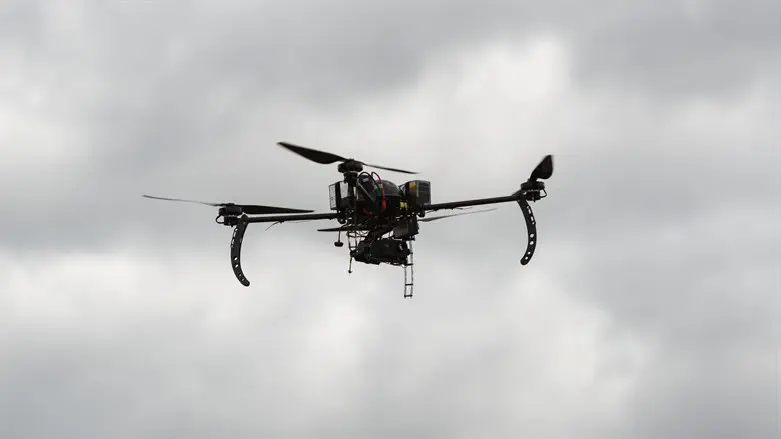
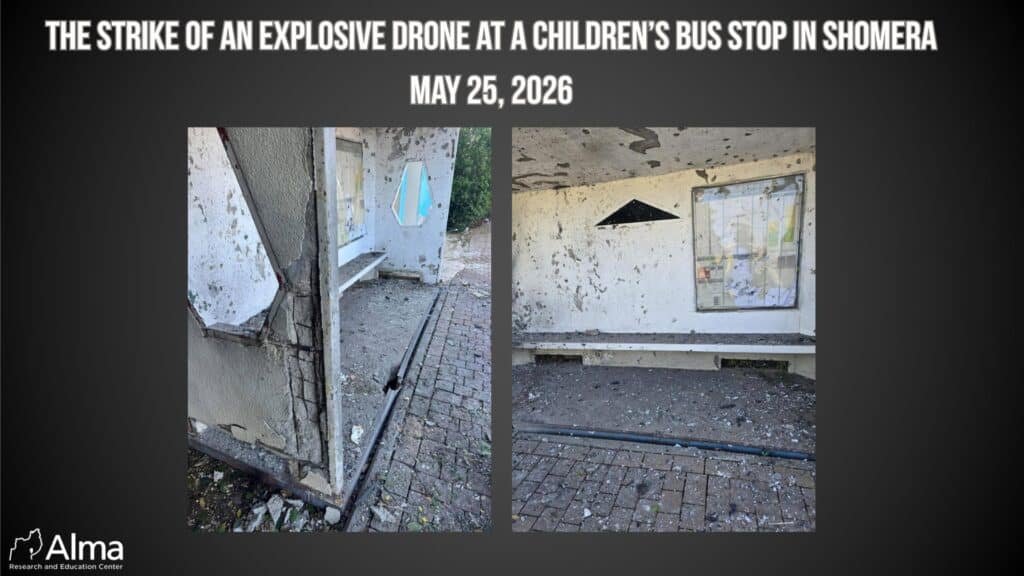
The consequences are reflected in the cancellation of school classes in communities along Israel’s northern border, following the strike of an explosive drone at a children’s bus stop in the community of Shomera.
Thus, a small tactical drone becomes a strategic tool in the chess game between Iran and the United States.