

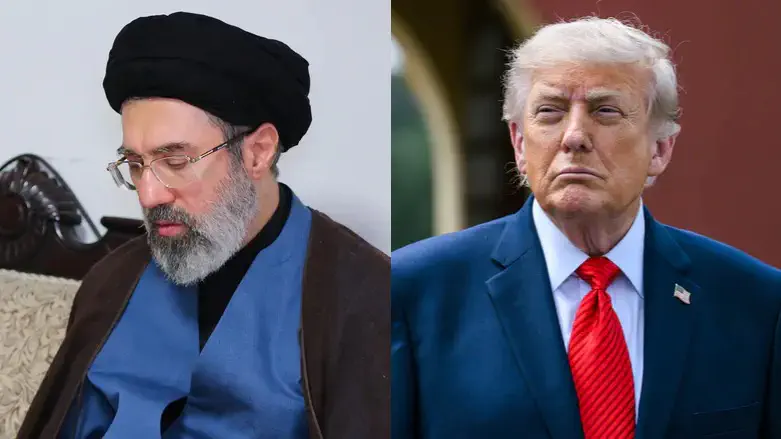
The confrontation between the United States and Iran, although a necessary and farseeing move on his part, places President Donald Trump in one of the most politically dangerous situations of his presidency. Unlike a war launched after a direct attack on the United States, many Americans do not seem to perceive Iran as an immediate threat to their daily lives, economic well-being, or national security. They see rising gasoline prices, instability in global markets, and the danger of another prolonged Middle Eastern conflict.
What many Americans do not fully appreciate is the long-term strategic argument behind confronting Iran now rather than later. Allowing Iran to continue advancing its ballistic missile and nuclear programs could eventually create a far greater threat - one capable of reaching beyond the Middle East and directly threatening the United States and its allies. But strategic arguments alone, despite the many historic examples proving them right, do not win elections. Public perception does.
This is what makes Trump’s position so dangerous politically. He is trapped between a rock and a hard place.
At the beginning of the confrontation, Trump entered the crisis with two identifiable objectives: first, eliminating or decisively crippling Iran’s nuclear threat, and second, preserving free international shipping through the Strait of Hormuz. The second objective was never stated as dramatically because the shipping lanes had already been open before the war began. But once the conflict threatened global oil routes and energy markets, keeping the strait open became an unavoidable strategic requirement.
The political danger for Trump is that Americans will ultimately judge the war against those original objectives. If Iran’s nuclear capability survives in meaningful form, and if the final outcome merely restores shipping conditions that already existed before the conflict, critics will argue that the United States paid the price of war only to end up where it started.
And that would be politically devastating.
If, after all the destruction, instability, military escalation, and economic shock, the final result simply returns the world to the exact situation that existed before the war, Americans will inevitably ask: What was the war for?
Before the conflict, the Strait of Hormuz was open, oil was flowing, and Iran’s nuclear program remained unresolved. If those same conditions still exist after the war, then the administration will face enormous difficulty explaining why military confrontation was necessary at all. In politics, returning to the starting point after paying a massive price is not viewed as a strategic achievement. It is viewed as failure.
This is why partial success may not be enough for Trump politically. Opening the Strait of Hormuz alone would not justify the costs of war if the nuclear issue remains unresolved. Likewise, damaging Iran’s nuclear infrastructure without stabilizing the region and energy markets could still leave Americans angry over economic pain and instability. Trump likely needs both objectives achieved simultaneously if he hopes to present the outcome as a genuine victory.
But even achieving military success may not fully solve his political problem.
Trump would still need to convince the American public that the Iranian nuclear threat was real, urgent, and worth the risks associated with military confrontation. Without broad public acceptance of that argument, many voters may continue viewing the war as unnecessary regardless of the final outcome. Voters usually judge wars emotionally and economically long before they judge them strategically. Rising fuel prices, uncertainty, casualties, and fear are immediate and visible. Long-term geopolitical threats are abstract and harder to communicate.
Another political reality deepens Trump’s dilemma. Impeachment and removal from office become a genuine danger only if both chambers of Congress fall under Democratic control. If Republicans lose only one chamber during the midterm elections, Trump’s domestic agenda would likely be paralyzed for the remainder of his presidency, leaving him with limited room to maneuver beyond foreign policy and executive authority.
But if Democrats gain control of both the House and the Senate, the threat becomes existential for his presidency itself. Investigations, hearings, subpoenas, and impeachment proceedings would almost certainly dominate Washington. The Iran war would become the centerpiece of the political assault against him. Whether removal would ultimately succeed would depend on public opinion and political calculations at the time, but the danger would no longer be theoretical.
This is where Trump’s real political nightmare lives. From his perspective, the Iran confrontation is not merely a foreign-policy gamble. It is tied directly to the survival of his presidency. If the war is perceived as unnecessary, inconclusive, or strategically pointless, the midterms could become the opening stage of an effort to politically destroy his administration altogether.
Another factor hovering in the background is the danger of anti-Israel and antisemitic backlash if the war is ultimately perceived by Americans as unnecessary or unsuccessful. In periods of military frustration, societies often search for someone to blame, and Israel could quickly become a target of accusation in American political discourse.
Critics would likely argue that Trump abandoned the “America First" philosophy and allowed the United States to become entangled in a conflict serving foreign interests rather than direct American interests. Narratives portraying the war as “fighting Israel’s war" rather than America’s war could gain traction across both the far left and isolationist segments of the right.
Historically, Jews have often been blamed during periods of geopolitical turmoil, economic anxiety, or unpopular wars, regardless of the actual strategic realities involved. Conspiracy theories and accusations of manipulation spread rapidly during moments of public anger, especially in the age of social media, where emotionally charged narratives often travel faster than careful strategic analysis.
For that reason, if the conflict ends without a clear and broadly understood strategic achievement, the political consequences may extend far beyond the fate of one administration. The backlash could deepen polarization surrounding Israel, fuel antisemitic narratives, and intensify divisions already tearing at American society itself.
This leaves Trump with very little room for error.
-A prolonged and inconclusive conflict could politically cripple him.
-A negotiated compromise that effectively restores the pre-war situation could make the war itself appear pointless.
-If the nuclear and ballistic missile threats remain fundamentally intact after all the destruction, instability, and economic pain, Americans will ask why the confrontation was necessary in the first place.
From Trump’s perspective, this is precisely why negotiations alone are unlikely to provide a politically survivable outcome. Diplomatic agreements may temporarily reduce tensions or reopen shipping lanes, but they are unlikely to eliminate Iran’s nuclear ambitions or permanently stop the development of long-range ballistic missile capabilities. At best, negotiations may delay the problem while leaving the underlying threat unresolved.
That leaves Trump with a brutal reality: a military solution may not guarantee success, but it may be the only path that even offers a chance of fully achieving his original objectives. Only decisive military pressure has the potential to significantly degrade both the nuclear infrastructure and the strategic capabilities that support it.
Whether such a strategy can succeed without triggering wider regional consequences remains uncertain. But politically and strategically, despite his claims that a deal is close, Trump may already believe he has crossed the point where returning to diplomacy alone can produce an outcome strong enough to justify the risks, costs, and consequences of the confrontation he began.
Dr. Avi Perry is a former professor, telecommunications executive, and technology innovator with a Ph.D. in Operations Research and Statistics. He worked at Bell Labs and later served as Vice President and General Manager at NMS Communications. Dr. Perry is the creator of the Perry Conjugate Gradient optimization algorithm, which has been used in optimization, engineering, machine learning, artificial intelligence, MRI systems, financial modeling, and large-scale scientific computing applications worldwide. He also contributed to advanced defense and communications systems, including technologies used by the IDF.
In addition to his technical career, Dr. Perry is the author of several books spanning technology, geopolitics, fiction, and human behavior, including The Winner’s Playbook, AI Playbook for Solution Architects, Principles of Voice Quality in Wireless Networks, and the thriller novel 72 Virgins. He has also published hundreds of opinion and analysis articles on international affairs, technology, and society. More information about his work can be found at www.aviperry.org.