
I am not a perfect person.
I say that not as a disclaimer but as the most important thing I’ve learned in twenty years. The furthest thing from perfect. That’s me. I’ve made mistakes I’m not proud of. I’ve hurt people I love. I’ve been in the down, deep in it, where the walls close in and all you can see is the moment you’re trapped in.
But this past weekend I marked twenty years without needing an external substance to get through the day.
Twenty years ago, on May 15th, 2006, something shifted. I put drugs and alcohol down and I didn’t pick it back up. That’s the simplest way I know how to say it. And in the years since, living a life I could never have imagined from where I was standing then; making aliyah, building a family, planting roots in the hills of Judea, I’ve tried to understand what actually happened. What actually changed.
Here’s what I’ve got after two decades:
The hardest thing a human being can do is stop.
Not slow down. Not moderate. Not manage. Stop.
We are wired for motion. For doing. For filling. The grind isn’t just economic. It’s existential. As long as we’re moving, we don’t have to feel the weight of where we are. Substances do that. Busyness does that. Noise does that. Anything that keeps you from having to sit in the quiet with yourself and ask the hard questions.
Recovery has taught me to stop, when needed. And in the stopping, I learned something that took years to fully understand. The only way to see your life clearly is to zoom out.
When you’re in the down, everything narrows. The walls come in. You can’t see past the moment you’re in and it seems like it’s all going to crumble. One of the tools that saved me, literally, was learning to pull back. To see the arc. To trust that this moment, however dark, is not the whole story.
Life is a series of ups and downs. Everyone hits the down. The question is whether you have the tools to see past it.
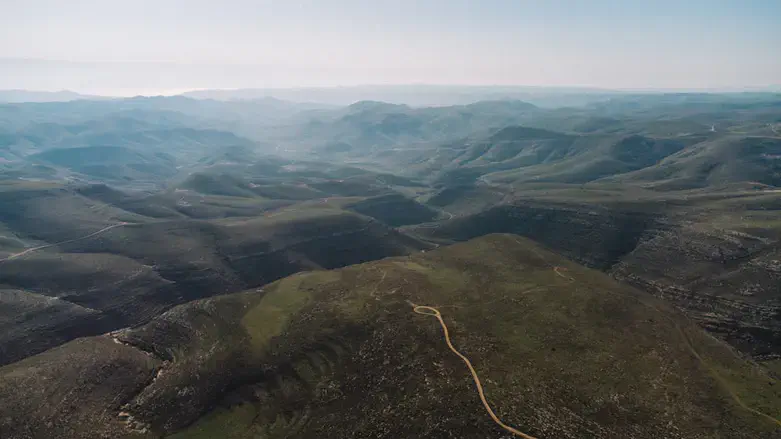
I moved to Judea a few years ago. I sit on the same hills where prophets walked and listened. I grow things in this soil. I watch the sun go down on Friday nights over the same landscape Isaiah looked at when he wrote about Shabbat as the door through which all nations, not just Judaism, would one day enter.
Not rest as a reward for the righteous. But the act of stopping as something universal. Something that was always meant for everyone.
Three thousand years ago, a prophet on these hills saw this moment coming.
This past week, the President of the United States did something no American president has ever done. He called on all Americans, regardless of faith, background, or belief, to observe a national Shabbat. From sundown Friday, May 15th, to nightfall Saturday, May 16th.
He called it Shabbat 250.
I’ll be honest with you. My first instinct wasn’t theological. It was personal.
May 15th is my sobriety date.
Twenty years. Shabbat 250. The same weekend. I don’t know what to do with that except write it down and sit with it.
Shabbat, to me, is not primarily about what you do. It’s about what you don’t do. It’s the pause. The reset. The forced zoom-out. One day a week where the grind stops, not because the inbox is empty, not because you’ve earned it, but because something bigger than your to-do list is asking you to trust that the world will hold together without your constant management of it.
I didn’t always feel this way about Shabbat. There was a time it meant nothing to me. I know it’s not easy for a lot of people. I know what it feels like to sit in the quiet and not like what you hear. To need the hustle and grind to continue. To not be able to let go.
But that feeling? That’s not a reason to fill the silence.
That’s the whole point of the silence.
Recovery taught me that. Shabbat reinforced it.
Both have brought me to Friday night on a hilltop in Judea, watching a country 6,000 miles away being invited, for the first time in its history, to simply stop.
I don’t care about the politics of who issued the invitation. I’ve learned not to disqualify a truth because of who’s delivering it. What matters is the message.
Stop.
Just for one day. Put it down. Zoom out. Look at your life from above the grind and ask yourself what’s actually there. What you’ve built, who you love, what you believe, where you’re going.
That’s what twenty years taught me.
That’s what Shabbat has given me every week since.
Last Friday night, for the first time, America was asked to try it.
I hope some of you did.