
Dr. Alex Grobman is the senior resident scholar at the John C. Danforth Society, a member of the Council of Scholars for Peace in the Middle East, and on the advisory board of The National Christian Leadership Conference of Israel (NCLCI).He has an MA and pHd from The Hebrew University in Jerusalem in Contemporary Jewry.
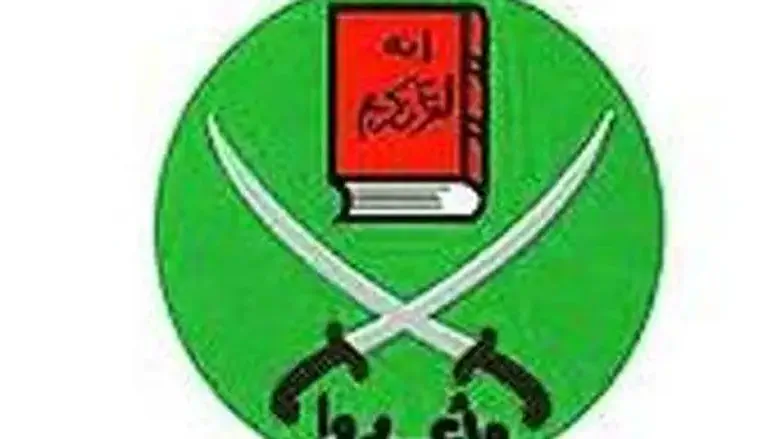
For decades, critics of the Muslim Brotherhood have described it as the ideological grandfather of modern jihadism: a movement that learned to operate as a religious revival, political party, social-service network, educational project, and revolutionary incubator at the same time.
It did not always wear the uniform of terror. More often, it preferred the language of reform, charity, student activism, civil society, and political participation. That ambiguity was not incidental. It was the strategy.
With the release of the United States Counterterrorism Strategy 2026, that ambiguity is being challenged directly:
The White House states that modern jihadi groups, from al-Qaeda to ISIS to Hamas, trace their roots to the Muslim Brotherhood, which it calls “the root of all modern Islamist terrorism." The strategy further says the United States will continue designating Brotherhood branches “to crush the organization everywhere it operates."
This is not simply a rhetorical pivot. It is a legal, financial, and operational one. The Treasury stated that Brotherhood chapters “purport to be legitimate civic organizations" while, behind the scenes, supporting terrorist groups such as Hamas.
On January 13, 2026, the U.S. Treasury and State Departments designated key Brotherhood branches:
-The Lebanese branch, also known as al-Jamaa al-Islamiyah, was designated both a Foreign Terrorist Organization and a Specially Designated Global Terrorist.
-The Egyptian and Jordanian branches were designated as Specially Designated Global Terrorists for material support to Hamas.
-In March 2026, the United States moved against the Sudanese Muslim Brotherhood as well, with the State Department designating it as a Foreign Terrorist Organization.
Taken together, these actions mark a fundamental change in American policy: Washington no longer treats the Brotherhood merely as an ideological influence. It now treats its designated branches as part of a terror-support architecture.
The Founding of the Muslim Brotherhood:
The Muslim Brotherhood was founded in Ismailia, Egypt, in 1928 by Hasan al-Banna. It emerged from the crisis of the modern Middle East after the collapse of the Ottoman Empire, the rise of European power, and the conviction among Islamists that Muslim society had been politically humiliated and spiritually corrupted. Its answer was not reform in the Western sense. It was the Islamization of society from the ground up and, ultimately, the restoration of Islamic political power.
German political scientist Matthias Küntzel has argued that the Brotherhood’s importance to Islamism is comparable to the Bolshevik Party’s importance to communism: it became the ideological reference point and organizational core for later Islamist movements, including al-Qaeda and Hamas. The comparison is useful because the Brotherhood was never merely a mosque-based religious association. It was a disciplined revolutionary movement with doctrine, cadres, social institutions, political ambitions, and a long-term strategy.
Al-Banna did not invent jihad or martyrdom; those concepts existed in Islamic history long before him. What he did was modernize, politicize, and operationalize them for an age of mass movements. He fused religious revival with militant politics and turned sacrifice in battle into a program of national and spiritual regeneration.
As Abd Al-Fattah Muhammad El-Awaisi, professor of international relations, has noted, al-Banna gave death a new political utility by linking jihad to the possibility of sacrifice at any time and place. In 1937, al-Banna published an article on jihad titled “The Industry of Death." In 1946, it was republished as “The Art of Death." His conclusion was chilling: “To a nation that perfects the industry of death, and which knows how to die nobly, God gives proud life in this world and eternal grace in the life to come… So prepare yourself to do a great deed."
That was not ordinary piety. It was the sacralization of political violence.
The Brotherhood’s most dangerous achievement was not simply that it produced radical ideas. Ideas alone do not build armies, move money, recruit cadres, or penetrate institutions. The Brotherhood’s genius was organizational. It built an ecosystem.
Its model was patient. Establish charities. Build schools. Influence mosques. Recruit students. Enter professional associations. Create political parties when useful. Deny violence when convenient. Support violence through cutouts when necessary. Speak the language of democracy in English and the language of Islamist supremacy in Arabic. Present one face to Western governments and another to the street.
That is why MEMRI’s translations and analyses have been so important. They expose the gap between public presentation and internal ideological messaging. They also show how Islamist movements use Western freedoms-free speech, academic autonomy, charitable status, religious liberty, and political pluralism-not necessarily to strengthen liberal democracy, but at times to weaken it from within.
Post October 7:
Since the October 7 massacre, this infrastructure has become harder to ignore
Across Western campuses and civil-society institutions, anti-Israel activism rapidly crossed, in some places, from criticism of Israeli policy into open glorification of Hamas, calls for “resistance," and the normalization of eliminationist slogans. Not every protester is a terrorist supporter. Not every harsh critic of Israel is part of a Brotherhood network. But the broader ecosystem has shown how easily Islamist narratives can be laundered through academic and activist language.
This is where the new U.S. posture matters. The campus issue is not that every offensive slogan becomes a federal crime. The First Amendment still protects speech, even vile speech. The legal line is crossed when speech becomes coordinated support, services, training, personnel, fundraising, or other material assistance to a designated Foreign Terrorist Organization. Under 18 U.S.C. §2339B, knowingly providing material support to an FTO can carry up to 20 years in prison .
That distinction is critical and is highlighted in analyses by the Foundation for Defense of Democracies (FDD). Protected expression remains protected. But the old game of hiding operational support behind the costume of activism, charity, student organizing, or “human rights" advocacy is becoming far more dangerous.
The Brotherhood’s relationship to Hamas is not incidental:
Hamas is the Palestinian Arab branch of the Brotherhood’s ideological world. Treasury stated directly that Muslim Brotherhood branches provide significant material support to Hamas, which is inspired by and serves as a branch of the Brotherhood.
This matters because Hamas is not merely a Palestinian Arab nationalist movement. Its founding charter and ideological framework place it inside the Islamist revolutionary tradition. Its war against Israel is not only territorial. It is theological, civilizational, and eliminationist. October 7 was not a spontaneous eruption of rage. It was the practical expression of an ideological universe in which Jews are not neighbors or political opponents, but enemies to be slaughtered, humiliated, and expelled from history.
The Brotherhood provided the grammar. Hamas wrote it in blood.
The legal consequences of the 2026 designations:
The legal consequences of the 2026 designations are immediate according to the Treasury Department. For the Lebanese and Sudanese branches, the FTO designation triggers material-support exposure under U.S. law. For the Egyptian, Jordanian, and other SDGT-designated branches or persons, sanctions freeze property and interests in property under U.S. jurisdiction and generally prohibit U.S. persons from transactions involving blocked entities. OFAC also warns that sanctions violations can result in civil or criminal penalties.
This strikes at the Brotherhood’s lifeblood: money, access, legitimacy, and institutional cover. For decades, Islamist networks understood that the West was reluctant to connect ideology to organization. Governments preferred to separate “moderates" from “extremists," political Islamists from jihadists, social-service organizations from terror infrastructure. Sometimes those distinctions were real. Often, they were exploited.
The Brotherhood mastered ambiguity. It could deny responsibility for its violent offspring while benefiting from the ecosystem that produced them. It could condemn terrorism in one forum while romanticizing “resistance" in another. It could claim democratic legitimacy while incubating movements that reject the moral foundations of democracy itself.
Predictably, Brotherhood leaders and affiliated branches have denounced the U.S. designations as politically motivated attacks on Islamic civil society. The response should surprise no one. Movements built on ideological discipline rarely confess their strategic purpose. They invoke civil rights when operating in the West, democracy when seeking power, victimhood when exposed, and resistance when violence serves their goals.
The issue is not whether every Brotherhood member personally commits violence. The issue is whether the movement’s ideology, institutions, finances, and affiliated branches have helped produce and sustain the modern Islamist terror ecosystem. The 2026 U.S. strategy answers that question with unusual bluntness.
For years, Western governments treated the Muslim Brotherhood as a possible firewall against jihadism. That theory has collapsed. The Brotherhood was not the antidote to Islamist extremism. It was one of its principal incubators.
The new policy does not merely monitor an ideology. It targets an infrastructure. It recognizes that terrorism does not begin with the bomb, the rocket, or the suicide vest. It begins with doctrine, recruitment, funding, indoctrination, institutional legitimacy, and the patient normalization of hatred.
This is the lesson the West repeatedly refuses to learn until the bodies are counted.
The Brotherhood’s genius was always its ability to appear respectable while cultivating the forces that made barbarism respectable. The United States is now declaring that this game is over. But declarations are not enough. Designations must be followed by investigations, prosecutions, asset freezes, immigration consequences, donor scrutiny, and the political courage to confront Islamist influence where it hides behind elite institutions.
Still, the conceptual breakthrough has occurred. The Brotherhood is no longer being treated as a misunderstood religious movement or a moderate alternative to jihadism. It is being treated as the ideological engine that helped power the jihadist century.
And engines can be dismantled.