
Malcolm Dash moved to Israel from Cape Town, South Africa, where he had studied business and economics at the University of Cape Town. He served in the Israel Defense Forces, which included combat service during Yom Kippur War in 1973. Until his retirement, he was the director of operations at the Israel Institute for Strategic Studies (IISS).
You may like him; you may hate him. Maybe you see him as a populist without a guiding ideology, or that he’s just not your cup of tea.
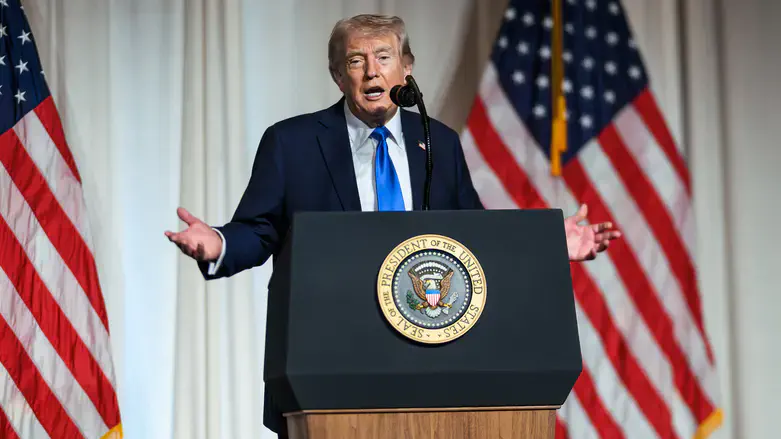
Putting aside any personal opinions or sentiments regarding President Trump; his time in office has undeniably had a profound effect on Western democracies, global alliances, and worldwide strategic planning. In Europe and the Western world, there's a notable lack of enthusiasm for Trump's stance against globalization and international organizations such as the UN, NATO, ICJ, and ICC. And his scorn for influential mandarins who run these organizations has done little to increase his popularity.
He challenged the foundations of the post‑1945 order, which were to avert great‑power conflict; encourage cooperative economic and security arrangements, and promote cultural change. Across the globe, Trump's leadership is hastening a trend away from multilateralism and diminishing the influence of institutions that have long supported the international system. Studies conducted by “progressive" think tanks and academic “experts" in America and the West conclude that his populist tactics weaken democratic systems and empower like-minded movements internationally.
A look at why a significant number of Americans identify as Trump supporters. In the US, there is a growing sense of economic despair and national decline. Many studies, including those from the Pew Research Center and the American Enterprise Institute, note that a considerable portion of Americans feel that:
The economy no longer works for them; wages have stagnated, jobs have moved overseas, and the political class ignored its struggles. Trump’s messaging directly tackles these anxieties by promising a return to past prosperity and vowing to put domestic workers first. (Researchers like to characterize this as “economic grievance populism.")
Leading political science departments, including those at Harvard's Kennedy,School and the University of Chicago, suggest that many Americans experience cultural and identity-based concerns. The fast-paced cultural changes, alterations in demographics, globalization, and cultural benchmarks that deviate from established traditions. Compounded by the rise in minority rights, the evolution of societal views on gender, the advancement of LGBTQ+ rights, and the modification of gender roles.
When groups challenge traditional hierarchies, others perceive this as a loss rather than progress. Sociology predicts this pattern, which transcends right/wrong or left/right binaries.
Therefore, Trump's powerful message on "safeguarding American culture," "law and order," and "traditional values" deeply appeals to voters who feel disoriented or marginalized. (Academic writings, somewhat deprecatingly, refer to this as “cultural backlash theory.")
Over the last two decades, confidence in institutions has plummeted, as shown by surveys from Gallup and Pew, particularly in: congress, the media, government agencies, universities, and corporations. Trump’s confrontational style toward these institutions resonates with people who already believe the system is corrupt, apathetic and unresponsive.
The president's direct communication manner, blunt, emotional, and combative style - is a major part of his appeal. His supporters often refer to him as saying “ what others won’t" being “politically incorrect" and as “authentic." By adopting this controversial style, he signals to his base that he's not part of the traditional elite political class. Political psychology research also suggests that in periods of uncertainty, voters often seek leaders they perceive as strong, assertive, or willing to break traditional conventions. And Trump, a forceful, often disruptive figure, appeals to voters who believe the country needs dramatic, not gradual, fixes.
He also understands the highly polarized nature of the American media and its deficiency in objective reporting. And how media shapes the way we process and grasp information. It's common for Americans to rely on media that reinforce their existing opinions. Through this, a self-perpetuating pattern emerges that deepens reader loyalty. Journalism has become obsolete, with its place now taken by opinion-based commentary. With this in mind, President Trump assumed he would be presented unfavorably, so he astutely used digital platforms to connect with his supporters.
The political arena mirrors the state of the media. Intense political polarization has frayed the U.S. political fabric to its limits. It's personal and about destroying your political opponent, not engaging with their political agenda. Or perhaps conspiring to invent bogus charges of treason related to past wrongdoings, similar to the "Russian collusion" sham.
To sum up, Trump's appeal is a combination of economic frustration, cultural anxiety, and distrust of institutions. And an attraction to strong leadership plus a deep party identity. None of these factors alone explains his support; but together they create a potent force.
Then there is the “pendulum effect" - a historical pattern where cultural change often unfolds non-linearly.
It features cycles of rapid liberalization, followed by conservative reactions, and then subsequent shifts in the opposite direction.
For instance, the "Roaring Twenties" emerged partly as a cultural rebellion against the rigid Victorian morality and the devastation of the 1914-18 war. Following the progressive Reconstruction era was the backlash of Jim Crow. The 1980s, marked by the rise of the Moral Majority during the Reagan years, came after the liberal 1960s sexual revolution. The emergence of Trumpism represents history's pendulum swinging back to conservatism, correcting the extremes of progressive "liberal" radicalism.
It seems these cyclical shifts are fundamental and occur when societies change more rapidly than they can or choose to adapt. They represent tectonic shifts to tectonic shifts, and the struggle for equilibrium rarely succeeds.
Tragically, momentous cultural transformations can be so drastic that they may presage violent outcomes.