


Yet across industries - from technology and consulting to manufacturing, financial services and professional firms - a quiet structural shift is underway. Companies are not abandoning spreadsheets out of fashion. They are moving project work out of them because the underlying operating model of modern business has changed faster than the tool ever could.
Why spreadsheets stop working at scale
Spreadsheets work remarkably well when the underlying process is linear, the team is small, and the dataset is local to one person’s desk. They begin to strain the moment an organisation runs multiple parallel initiatives, collaborates across locations, and depends on information that needs to stay current across departments. What was once a planning tool quietly becomes a fragile coordination layer.
The first thing companies lose is project visibility. With several files circulating by email, no version is fully authoritative, and leadership ends up reviewing a snapshot that was already out of date when it was sent. Task ownership becomes ambiguous because cells do not enforce accountability; people do. Workflow coordination depends on whoever remembers to update the master sheet, and real-time collaboration remains structurally impossible - even when several users edit the same file, the workflow logic around it does not.
Modern teams need more than shared files
Many organisations attempted to solve the spreadsheet problem by layering messaging platforms on top. The result, in most cases, was not better coordination but more noise. Slack, Teams and email solve the conversation layer; they do not solve project structure. A status update written in a thread does not change a milestone. A decision taken in a call does not propagate into a plan. Without an underlying system of record, the organisation relies on memory rather than process. The operational symptoms are consistent across sectors: information overload, manual reporting cycles that consume entire days each month, the absence of a single source of truth, and resource planning that depends on tribal knowledge rather than data. As operational complexity grows, many organisations begin replacing spreadsheets with dedicated software project management software designed to centralise schedules, priorities, reporting and team collaboration in one environment rather than across a dozen fragmented files.
Visibility and accountability are becoming business priorities
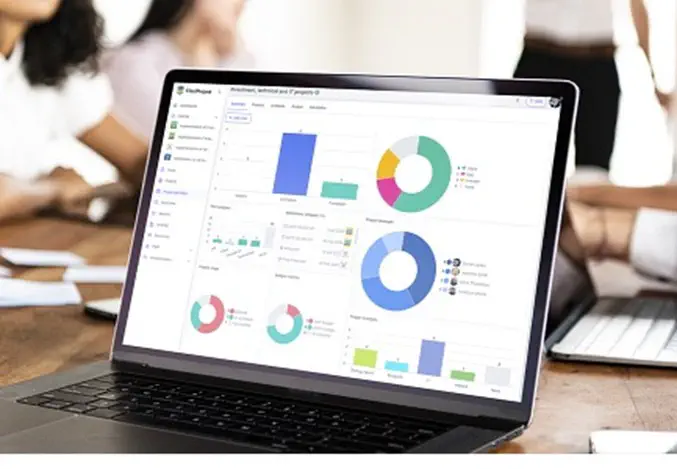
What boards and executive teams ask for has changed. Five years ago, the standard expectation was a monthly report. Today it is an always-current view of where initiatives stand, what they cost, and which dependencies threaten delivery. The shift away from spreadsheets is usually driven by operational complexity rather than technology trends - leadership simply cannot make timely decisions on data that is reconciled by hand once a fortnight. Four expectations now sit at the centre of how modern organisations want to run project work: operational transparency, so that progress is visible without an intermediary; resource visibility, so that overcommitment is identified before it produces delays; cross-team coordination, so that dependencies between functions are managed rather than discovered; and portfolio oversight, so that leadership can prioritise across initiatives rather than defending each one in isolation. None of these requirements can be satisfied by static files, however well maintained.
Why project management platforms are replacing fragmented workflows
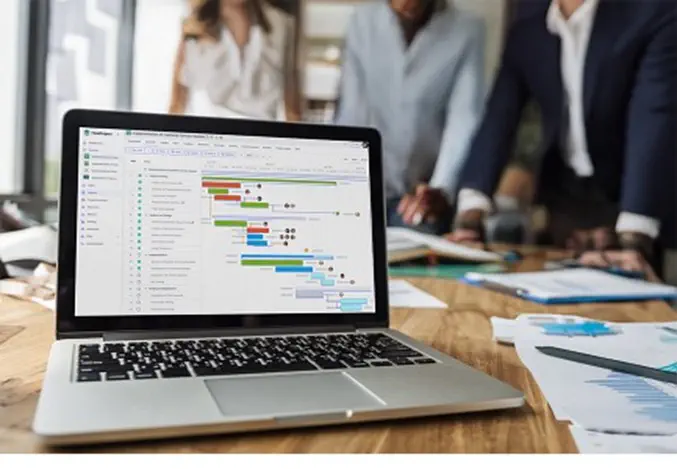
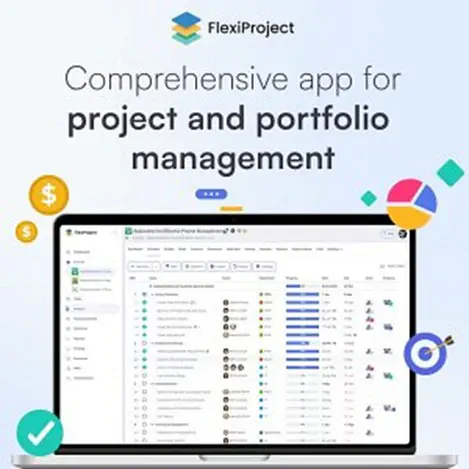
The category of dedicated project management platforms emerged in response to exactly this gap. Platforms such as Flexi Project help organisations manage timelines, dependencies, reporting and distributed collaboration within a single operational environment, replacing what used to be a patchwork of spreadsheets, chat threads and email confirmations. The objective is not to add another tool, but to consolidate the layer underneath the work.
The strategic value of consolidation is often underestimated. When schedules, statuses, and resource commitments live in the same system, reporting stops being a manual exercise and becomes a query. Cross-project conflicts surface early enough to be resolved through prioritisation rather than crisis management. Audit trails appear naturally as a byproduct of normal work, which matters increasingly in regulated industries and in any organisation where decisions need to be defensible long after they were made.
The future of project work is structured and connected
Spreadsheets are not going to disappear from the corporate landscape. They remain unmatched for ad-hoc analysis, modelling, and the kind of one-off calculations that knowledge workers reach for several times a day. What is changing is their role: from the default operating system of project work to a supporting tool used alongside structured platforms.
The direction is consistent across sectors and geographies. Workflow standardisation replaces ad-hoc templates. Project governance moves from a quarterly review document to a continuous discipline. Team coordination becomes a function of shared systems rather than scheduled meetings. Data visibility turns from a reporting deliverable into a baseline condition of doing business. The companies making this transition are not chasing a technology trend - they are responding to the simple operational reality that the modern enterprise produces more interdependent work than any spreadsheet was ever designed to hold.