
The world does not need another ceasefire with Iran - it needs an unconditional surrender. That phrase has practically vanished from the American strategic vocabulary, replaced by euphemisms like “de‑escalation," “confidence‑building measures," and “a framework for negotiations."
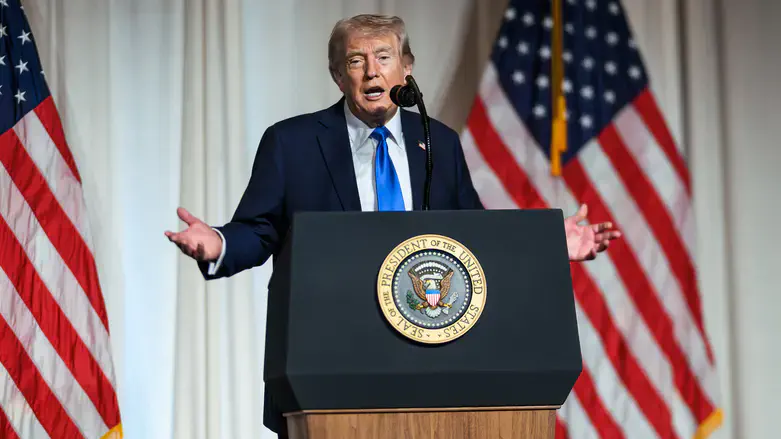
Yet in June 2025, and again this March, President Donald Trump did something no Western leader has done since Harry Truman: he spoke openly of demanding “unconditional surrender" from a sworn enemy of the United States. He repeatedly boasts that Iran “has no navy," “no air force," that its communications and air defenses are crippled, and that its already fragile economy is being strangled by a US‑led blockade at the Strait of Hormuz. If those statements are even roughly true, then for the first time in four decades Washington is not merely managing the Iranian threat-it is on the verge of victory.
Conservatives used to know what victory meant. In an earlier conflict, I wrote that Israel needed victory in Gaza, not “ceaseless ceasefires." The conditions were straightforward and time‑tested: destroy the enemy’s military capability, degrade its economy so it cannot sustain war, and finally, break the will to fight.
That is how the Allies approached Nazi Germany and Imperial Japan, and that is why Berlin and Tokyo eventually accepted that further resistance was suicidal. Tehran’s theocratic regime may be too fanatical ever to “sue for peace" in the classic sense, but by crushing its military and suffocating its economy, the United States can still impose defeat so thoroughly that it functions as a de facto surrender, even if no document is ever signed.
By his own account, Trump has already checked two of those three boxes. Iran’s air force and navy are shadows of their former selves. Its ships are at the bottom of the sea and ports are under pressure. Its regional terror proxies-from Hezbollah and Hamas to Shiite militias in Iraq and Syria-are reeling from sustained blows. Meanwhile, Project Freedom and the de facto blockade of the Strait of Hormuz have squeezed Iran’s economic jugular, cutting into oil exports that are the regime’s lifeblood.
Most wars have been won against formidable countries with military and financial assets. So why can’t we win against a decimated regime without either? If a nation’s military is shattered and its economy choked, victory is not a theory. It is within reach.
What remains is the hardest front of all: the enemy’s will to fight. That is not something you drone‑strike into submission or sanction into good behavior. It is something you crush by making defeat undeniable. From Grant to Truman, Eisenhower, and MacArthur, world leaders understood that wars end decisively when the loser knows he has lost.
Yet at precisely this moment of maximum leverage, Trump’s old deal‑maker instincts are stirred. He now speaks of Iran “wanting a deal," reassures nervous markets that “we are close," and lets his advisors float talk of a five‑ or ten‑year moratorium on uranium enrichment. That may sound prudent to State Department veterans; to anyone with a memory longer than the last news cycle, it sounds depressingly familiar. We tried “sunset clauses" and “temporary freezes" with the JCPOA. Tehran pocketed sanctions relief, poured money into terror proxies, kept advancing its nuclear and missile programs, and waited for the next American president to blink.
This pattern is not an accident. It is baked into the regime’s worldview. In classical Islamic jurisprudence, genuine peace with infidels is theologically suspect; at most, one agrees to a truce-a hudna-of limited duration, traditionally no more than ten years, after which hostilities may resume. The history of Arab-Israeli wars since 1948 reads less like a path to reconciliation and more like a rolling series of truces and rearmament cycles. For Tehran’s shrewdly patient clerical rulers, negotiations with the “Great Satan" are not a road away from conflict; they are a tactic for winning the long war.
Trump, of all people, should recognize this. He built his brand by bragging that he could smell a con from across the Hudson. Yet when he talks about Iranian negotiators, he often slips into the language of real estate - “savvy," “tough," “they want a deal"-as if he were up against sharp‑elbowed Manhattan developers, not fanatical tyrants. He is up against a regime that has orchestrated bombings from Beirut to Buenos Aires, armed proxies that lob rockets at Israeli kindergartens, supplied drones and missiles used against American personnel, and now threatens global energy flows at one of the world’s most vital chokepoints.
The foreign‑policy establishment insists that demanding unconditional surrender is unrealistic, destabilizing, even dangerous. But what has their version of “realism" produced? Four decades of exquisitely worded communiqués, hostage crises, terror wars, proxy campaigns, nuclear brinkmanship, and now open clashes at sea. The choice is not between war or peace.
The war has been ongoing since 1979. The real choice is between a decisive end and an endless, low‑grade, metastasizing conflict that we continually push onto our children and grandchildren.
Trump’s blockade has put the United States in a stronger strategic position vis‑à‑vis Tehran than any administration since the Shah fell. Iran’s revenues are constricting and its people are ready for revolt. If Trump believes that Iran is “desperate", now is not the moment for negotiated half‑measures. It is the moment to say, with moral and political clarity, that the war Iran launched against America and its allies nearly half a century ago must end with the aggressor’s unconditional surrender.
History will not remember the footnotes of another Iran deal. It will remember whether - when presented with the hinge moment to end the reign of Middle Eastern terror - an American president mastered the “art of the deal" for freedom, or walked away at the closing table and left the time bomb ticking for the next occupant of the Oval Office, and for all of us.
Robert Marc Schwartz, Ph.D. is a psychologist and scientist who has published political and social commentaries on Arutz Sheva, in the Christian Science Monitor and American Spectator, as well as publishing pioneering research in positive psychology.