

Journalist and researcher Yitzhak Horwitz described an extraordinary visit to Iraq in the middle of the war and revealed a complex reality of a heavy Iranian presence and the remains of a small Jewish community that maintains its historic sites.
In an interview with Kan Moreshet on Wednesday, Horwitz emphasized Iraq's historic significance, especially that of ancient Jewish Babylon: "Abraham was born there, the Babylonian Talmud was composed there, generations of Amoraim and Gaonim lived there."
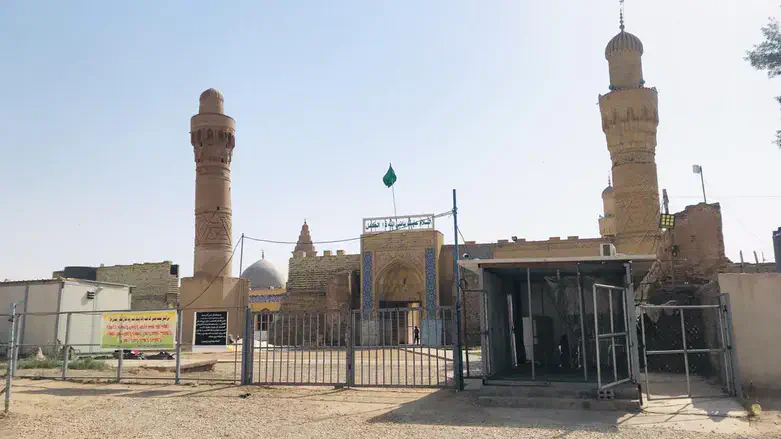
Horwitz was surprised to discover that despite years of persecution and mass emigration, a few Jews still live and uphold the Jewish heritage in the country. He says that several synagogues and the main Jewish sites in Baghdad were recently renovated and that he even visited the tombs of the Prophets Ezekiel, Ezra, and Jonah.
The war was quite noticeable during his stay. Horwitz described how, during his first night in Baghdad, he awoke to the sounds of explosions in the Green Zone, which houses the embassies and government institutions. The attack was conducted by Shiite militias, which struck sites affiliated with the US.
The journalist described a heavy Iranian presence in the country: "Everywhere you can see pictures of Ali Khamenei, Qasem Soleimani, and Hassan Nasrallah." According to Horwitz, in the south of the country, there are Iranian-backed Shiite militias, including "Kataib Hezbollah," which he described as a "copy of Hezbollah in Iraq."
Horwitz stressed a significant difference between Iraq and Lebanon: while in Lebanon, the government is trying to contend with Hezbollah's strength, in Iraq, the militias are directly incorporated into the state and military systems.
When asked how he dared to enter the country, which is dangerous for Israelis, Horwitz mentioned the abduction of Israeli-Russian researcher Elizabeth Tsurkov and claimed that, in his opinion, she acted carelessly.
"You have to take caution and know how to do it," he explained. "Crossing the street is also dangerous, depending on how and where you do it."
At the end of the interview, Horwitz shared that he hopes that in the future, after a regime change in Iran and renewed relations with Israel, Israelis will be able to visit there as well.