
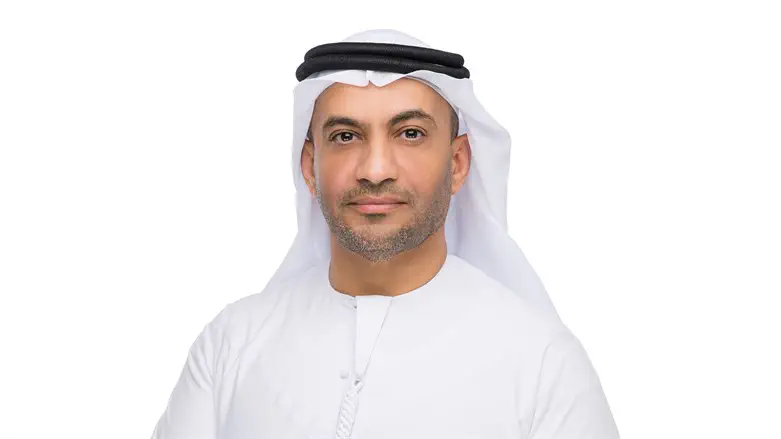
Dr. Salem AlKetbi is a UAE political analyst and former Federal National Council candidate
Reuters quoted an Emirati official April 29 as saying the country is reviewing the viability and relevance of multilateral organizations, while confirming it is studying no withdrawals for now. On the surface, this is reassuring, but at its core lies a deeper reorientation: membership in any collective framework is now conditional, subject to a cold test built on a single question - what strategic return do these organizations actually deliver against their political and economic cost?
The UAE’s withdrawal from OPEC in late April makes sense only in this light. The move looks less like a technical incident inside the energy market than the first practical, declared application of this new thinking. The real question is why the UAE would stay in a framework that neither matches its weight nor serves its priorities. Abu Dhabi is not announcing a dispute within an organization; it is announcing that the logic of staying simply because leaving is costly has run its course. What matters more than the decision to withdraw is the fragility of the reasons that once justified staying.
This is more than a quarrel over production quotas or a passing divergence inside the energy market. The OPEC withdrawal feels like the first, and perhaps the simplest, example of a wider reorientation in Emirati thinking: a move from the logic of staying because leaving is politically costly, to a reverse logic that sees staying as costlier when the institution constrains sovereign decision-making or becomes a burden yielding no tangible strategic return.
The UAE is declaring the expiration of an entire calculus that governed middle powers for decades - a calculus no longer merely unbalanced, but costly to a degree that cannot be justified politically or in security terms.
Seen this way, remarks by Anwar Gargash, diplomatic adviser to the UAE president, carry special weight. At a forum in Abu Dhabi in mid-April, cited in media coverage, he said that “logistically, the GCC countries supported each other, but politically and militarily, I think their position was the weakest in history." He added that he expects this level from the Arab League, “but I have not expected it from the GCC, and I am surprised by it."
These words go beyond a casual observation; they amount to a political indictment of institutions designed to be the first line of defense when a member state faces a direct threat. The weakness is not a mere transient failure but a total breakdown of the core function these institutions were created to serve.
Put bluntly, these systems were absent when put to the test - they never even stumbled because they never stepped forward.
Gargash’s post on X completed the picture, saying the UAE will read the map of its regional and international relations “with precision," determine “who can be counted on" in the future, and link this to “a rational review of our national priorities" and economic restructuring to strengthen the Emirati model’s resilience.
This language captures the logic of an entire era: alliances driven by calculation rather than impulse, partnerships by utility rather than sentiment, and funding by return rather than habit. It signals that relationships will be weighed against utility, cost, and political and security reliability.
This is where the notion of sentimental alliances, which governed a large share of Arab politics for decades, collapses. Regional organizations that offer symbolism but no protection, demand commitment but produce no deterrence, and consume funding without delivering effective political cover cannot permanently evade accountability. Their continuation in this form fails to preserve the Arab order; it slowly consumes it and perpetuates its weakness under the umbrella of collective institutions.
The incapacity of the structures meant to confront threats, rather than the scale of the threats themselves, is the real problem. If the war with Iran this spring exposed this dysfunction, today’s Emirati reaction appears even starker: either institutions capable of protecting interests, or relationships recast on pure pragmatism.
It makes sense, then, that Abu Dhabi is diversifying its partners rather than binding itself to a single system. The UAE, which felt an Arab and Gulf security vacuum during Iran’s April attacks, responded by reinforcing ties with the United States and the State of Israel, anchoring its security and its maritime space in a more direct, more effective network of cooperation.
Evidently, if the Arab house cannot furnish even minimal deterrence and protection, waiting for a league or council that cannot decide is pointless when a bilateral or trilateral agreement can deliver what traditional systems cannot. The relationship with Israel, for all the sensitivities it stirs, is seen in Abu Dhabi as a tool to maximize regional influence and anchor its role in the regional security order, rather than a dispensable political accessory.
This reorientation redefines relations with Arab and regional states from the ground up. Financial and investment support has shed its role as a cost-free tool to purchase calm or political courtesy, becoming instead a conditional instrument.
Deposits, grants, and investments now serve as levers conditioned on concrete outcomes, rather than compensation for vague promises, ambiguous positions, or double-standard media campaigns. Halting or scaling back funding in the absence of genuine political, security, or economic return looks less like hardline posturing than a belated correction of a relationship long tilted in the recipient’s favor at the funder’s expense.
Small and medium-sized states often cling to collective institutions to compensate for their limited weight. The UAE, by contrast, acts from the position that it has accumulated enough instruments of power to rely less on these institutions in the traditional sense.
This logic has precedents. Britain reassessed the viability of its European Union membership and ended up leaving when it concluded that sovereignty mattered more than the cost of separation. The United States, at various points, renegotiated its international commitments with an eye to the return on investment from treaties, institutions, and alliances. The difference is that the UAE is a medium-sized state with high effectiveness, operating in a turbulent region that allows no luxury of prolonged waiting or costly courtesy.
Nonetheless, this pragmatism also holds Arab and regional partners accountable for their choices. Anyone seeking a stable relationship with the UAE must now offer more than mere displays of solidarity or the expectation of routine financial support. What is required is genuine partnership, definite positions in times of crisis, and enough consistency to build trust over the long term.
Those who grew accustomed to dealing with Abu Dhabi as a permanent financier or a ready-made umbrella without reciprocal commitments will find that the rules of the game have indeed changed.