

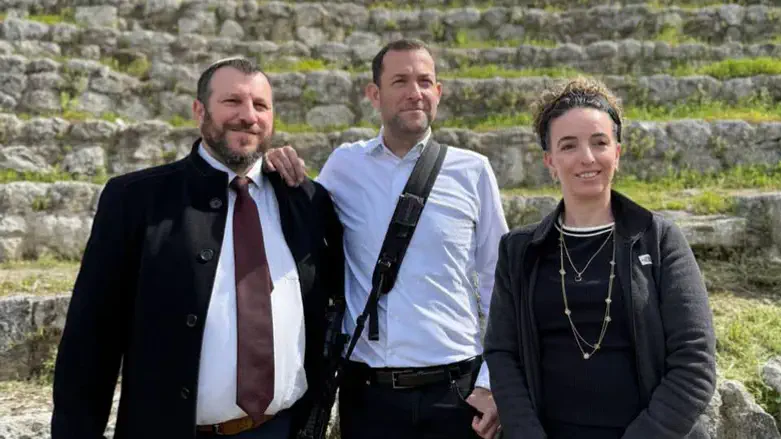
The Israeli government has reapproved a major initiative to restore and develop the Ancient Samaria National Park in Sebastia, allocating NIS 28 million toward archaeological preservation, tourism infrastructure and public accessibility at the historic site in northern Samaria.
The plan, promoted by Environmental Protection Minister Idit Silman together with Samaria Regional Council head Yossi Dagan, will place the site under the management of the Israel Nature and Parks Authority and aims to establish Sebastia as a major national heritage and tourism destination.
Under the multi-year program, government ministries will provide NIS 12.52 million between 2026 and 2028, while the Ministry of Heritage will contribute an additional NIS 6 million. The funding will support continued archaeological excavations, preservation of ancient remains and the advancement of a development plan that includes new access roads, hiking trails and public facilities modeled after the popular Herodium archaeological park.
Among the key historical sites slated for conservation are the remains traditionally identified as the palace of King Omri and the amphitheater constructed during the reign of Herod, regarded as one of the most impressive structures from the period.
Several ministries are partnering in the project, including the Ministries of Tourism, Economy, Culture, Innovation, Heritage and Diaspora Affairs. The government directed Silman to submit a progress report on the initiative by the end of 2028.
Silman described the project as a step toward preserving what she called a central expression of Jewish history in the Land of Israel. She said the restoration effort combines environmental stewardship with the protection of heritage and national interests, while strengthening Israeli presence in the area.
“This site reflects the depth of Jewish history and the continuity of settlement in the Land of Israel," Silman said, adding that the development plan would make the area accessible to the public as a regulated national heritage site.
Dagan praised the decision as what he called a “historic correction" aimed at preserving the ancient capital of the Kingdom of Israel. He accused the Palestinian Authority of attempting to damage and erase the site through neglect and looting, and said the government would continue efforts to develop the area and attract large numbers of visitors.
Heritage Minister Amichai Eliyahu called the move the fulfillment of a “historic debt," saying the site had been neglected for years and that the new initiative would help preserve what he described as one of the most important remnants of ancient Jewish civilization.
Tourism Minister Chaim Katz said the investment forms part of a broader push to expand tourism infrastructure across Judea and Samaria, while Culture and Sport Minister Miki Zohar said the project would strengthen Israeli national identity and deepen public connection to Jewish heritage.
Economy Minister Nir Barkat described Samaria as “the beating heart of Jewish history," while Diaspora Affairs Minister Amichai Chikli said preserving Ancient Samaria was essential to reinforcing Jewish historical ties to the region.