
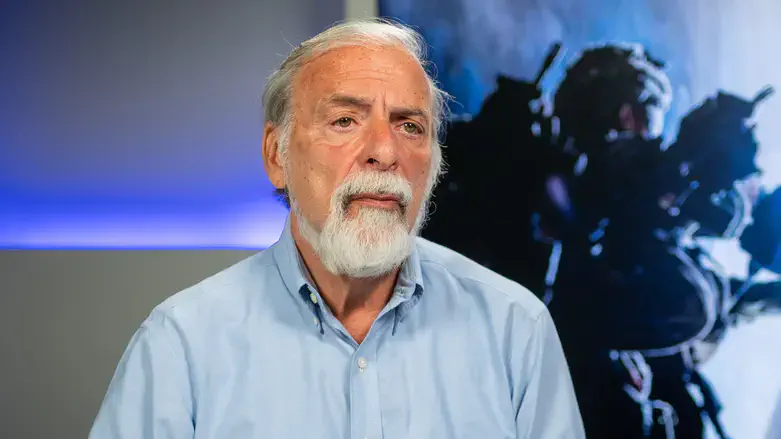
In a wide-ranging and deeply impassioned interview with The Jewish Voice, former Brooklyn Assemblyman and President of Americans Against Anti-Semitism (AAA), Dov Hikind, delivered a stark assessment of the alarming surge in antisemitism in New York City and across the United States. His remarks, marked by urgency and pointed criticism, touched on local leadership, national political trends, and the broader cultural environment that has enabled hostility toward Jewish communities to intensify.
Hikind’s commentary focused in particular on New York City Mayor Zohran Mamdani, whose tenure has drawn scrutiny from critics over policy decisions and rhetoric related to Israel and antisemitism. Hikind did not mince words in his evaluation, asserting that Mamdani and his family represent a troubling ideological force.
“Mamdani and family are incredibly dangerous to the well-being of America and the Jewish community," Hikind stated, in stark and unequivocal terms.
At the center of Hikind’s argument is that antisemitism in New York City has reached unprecedented levels. He described the phenomenon not as a series of isolated incidents but as a systemic and rapidly escalating crisis.
“Antisemitism is totally off the rails in New York City and beyond," Hikind told The Jewish Voice. “The problem is that there are no Jewish leaders who are willing to take the lead in a campaign to take on the antisemitism phenomenon - actively and boldly."
His critique included communal leadership, which he accused of failing to mobilize effectively in response to the threat.
“They are afraid to lead demonstrations against Mamdani’s clearly anti-Jewish policies," Hikind said. “They have done nothing in terms of consensus building and organizing Jews in this city who are clearly living in fear."
Such remarks underscore a broader concern within segments of the Jewish community regarding both the prevalence of antisemitic incidents and the inadequacy of institutional responses.
New York City, home to the largest Jewish population outside of Israel, occupies a unique position in this discourse. Hikind emphasized that the city’s demographic and cultural significance makes the current climate particularly troubling.
“There is so much that can be done in terms of substantial pushback," he said, suggesting that the scale of the Jewish population should, in theory, enable a more robust and coordinated response to rising hostility.
Hikind’s criticism of Mayor Mamdani has been consistent since the latter assumed office as the city’s 112th mayor on January 1, 2026. Mamdani, who previously represented the 36th Assembly District in Queens, has been a prominent figure within progressive political circles.
Among the decisions that have drawn Hikind’s ire is the administration’s move to nullify an executive order adopting the International Holocaust Remembrance Alliance definition of antisemitism. Critics have argued that the definition provides an essential framework for identifying and combating antisemitic rhetoric and behavior.
Hikind has warned that such actions risk emboldening extremist elements. He also expressed concern over what he described as the mayor’s reluctance to unequivocally condemn certain radical Islamist actions.
While supporters of the mayor have defended his positions as consistent with civil liberties and free expression, Hikind views them as indicative of a broader ideological orientation that he believes is incompatible with the security needs of the Jewish community.
The tensions surrounding Mamdani’s leadership have also played out in the electoral arena. Hikind previously broke with Republican candidate Curtis Sliwa to endorse Andrew Cuomo in an effort to block Mamdani’s ascent to the mayoralty.
That decision reflected a strategic calculation aimed at preventing what Hikind characterized as a “radical Socialist agenda" from gaining control of City Hall. Despite that effort, Mamdani ultimately secured victory, and Hikind has continued his criticism in the months since.
The political divisions exposed by the election highlight broader ideological fault lines within New York City’s electorate, particularly on issues related to Israel, public safety, and identity politics.
Hikind’s concerns are not confined to New York City. He pointed to national developments as evidence that antisemitism is gaining traction in various forms across the country.
One example he cited was the recent gubernatorial primary in Ohio, where Vivek Ramaswamy secured the Republican nomination. Hikind drew attention to the candidacy of Casey Putsch, whose campaign included controversial statements and messaging.
According to Hikind, Putsch’s ability to garner approximately 150,000 votes, despite what he described as overtly pro-Nazi rhetoric, is indicative of a disturbing trend.
“Can you believe it?" Hikind asked. “Is it possible that a candidate that constantly praises Hitler could get 150,000 votes in an election?"
He continued, “The truth is that even though he lost, he really won this election. He represents the attitude that has pervaded the collective mind of the American electorate and frankly it is beyond frightening for Jews all over this country."
These remarks reflect a broader anxiety about the normalization of extremist views within segments of the political landscape.
Despite his criticisms at the local level, Hikind expressed strong support for actions taken by President Trump to address antisemitism and recognize Jewish contributions to American society.
He specifically praised the declaration of a national Shabbat as part of the country’s 250th anniversary celebrations, viewing it as a significant acknowledgment of Jewish heritage and values.
“To have the president of the United States say that all Jews should observe Shabbat as a way of celebrating America’s 250th anniversary is beyond spectacular," Hikind said. “He wants the country to come to the realization that at least one day a week, all of us, whether Jewish or not can have the opportunity to shut our phones, computers, televisions and turn to G-d, turn to family."
Hikind framed the initiative as an opportunity for national reflection and spiritual renewal, emphasizing its potential to foster greater understanding and unity.
He also commended federal efforts to address antisemitism on college campuses, arguing that national institutions play a crucial role in confronting the issue.
“Look, the only mechanism we have today to push back against virulent Jew hatred is through the federal government," Hikind said. “We can never thank Trump enough for that."
He contrasted federal action with what he described as insufficient responses from state and local leaders, adding, “If not for him taking these measures with governmental departments such as the Department of Justice and others, who could we rely on? Kathy Hochul? Mayor Mamdani? Clearly not."
Hikind, however, expressed concern regarding the administration’s approach to Iran and the broader Middle East..
He argued that the current strategy lacks clarity and urgency, warning that delays could undermine efforts to neutralize the Iranian nuclear threat.
“The President cannot keep telling the American people that the US is winning this war," Hikind stated. “He could have won this war by now had he taken the appropriate military measures."
Hikind’s remarks reflect a broader debate within policy circles regarding the balance between diplomacy and military action in addressing Iran’s nuclear ambitions.
“Right now, he is just kicking the can down the road and not providing a permanent solution to the Iranian nuclear threat," Hikind added. “Unless he can wrap his mind around the fact that the current Islamist regime in Iran will not hold by any deal he is proposing, we can be very concerned about the outcome of this conflict."
Taken together, Hikind’s comments paint a picture of a community grappling with multiple, intersecting challenges: rising antisemitism, political polarization, and uncertainty about the effectiveness of leadership at various levels of government.
His critique is both a warning and a clarion call to action, urging greater engagement, stronger leadership, and a more coordinated response to an existential crisis for Jews.
As New York City and the nation continue to navigate these complex dynamics, the issues raised in this interview are likely to remain central to the public discourse, shaping debates over policy, leadership, and the future of the Jewish community in the United States.
Fern Sidman, a former NY correspondent for Arutz Sheva, is the current editor-in-chief of The Jewish Voice, a New York based publication. Her writings can be accessed at: tjvnews.com