
The world rightfully pauses on May 8, 2026, to celebrate the 81st anniversary of Victory in Europe (V-E) Day, when the Allies triumphed over the darkest tyranny the modern age has ever known, when an entire continent was scarred by six years of total war.
Yet, for many, the celebration is haunted by the silence of six million Jews who did not live to cheer the liberation, whose ashes were already scattered by the time the first Allied tanks rolled into the killing centers of Auschwitz and elsewhere.
The sad irony is that the Allied powers-primarily the United States and Great Britain-possessed both military intelligence and logistical means to intervene long before the spring of 1945.
By mid-1944, the Allies had achieved air superiority over Europe. Reconnaissance photos taken by the U.S. Army Air Force clearly showed the gas chambers and crematoria of Auschwitz-Birkenau.
Jewish leaders pleaded with the U.S. War Department to bomb the rail lines leading to the camps and to bomb the death chambers and ovens. The requests were repeatedly denied on the grounds that such missions would divert air support from the front lines.
Yet, on several occasions, American B-17 and B-24 heavy bombers, escorted by P-51 Mustangs, attacked the IG Farben industrial complex-less than five miles from the Auschwitz gas chambers.
The potential was there; the political will was not.
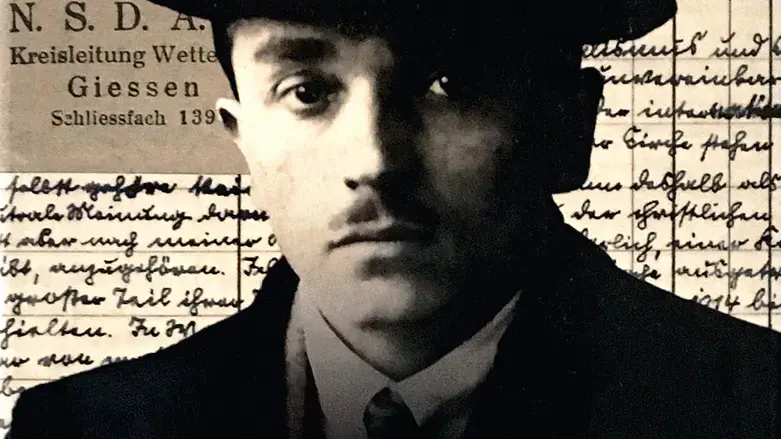
In 1940, when Germany invaded France, the German court administrator Friedrich Kellner, under surveillance by the Gestapo for speaking out against Nazi policies, wrote in his diary: “If France and England had destroyed our railway lines and bridges, they could have kept us from transporting our troops from Poland to the French border."
Two years later he returned to the topic: “The Allies could have brought about a breakdown here had they disrupted the railroad lines. There is not enough gasoline or oil for motor vehicles."
Bombing the rails might not have ended the Holocaust, but it would have disrupted the terrifying logistics of mass murder during the peak of the 1944 Hungarian Jewish deportations.
Hungary’s Jewish problem is found in a newspaper clipping in Kellner’s diary, with the headline, Clearing Southeast Europe of Jews: “Hungary, which is especially plagued by Jews, and counts 800,000 Jews, has embarked on a complicated path for gradual expulsion of Jews and has already attained worthwhile results."
Beneath the clipping, Kellner wrote, “This so-called ‘clearing Europe of Jews’ will remain a dark chapter in the history of mankind. If we in Europe are so far gone that we simply eliminate people, then Europe is irretrievably lost. Today it is the Jews; tomorrow it will be another weak tribe that is exterminated."
In the early summer of 1944, Hungarian and German authorities sent 440,000 Hungarian Jews to be murdered at Auschwitz. Over a two-month period they filled 147 freight trains that traveled back and forth upon the undisturbed rails.
One decade before that, a shift in immigration policy could have saved so many lives. Had the Allies signaled a willingness to accept Jewish refugees in the 1930s and early 40s-to suspend the restrictive quotas in the United States and allow entrance into Palestine (despite Arab objections)-thousands could have escaped before the borders were sealed.
In addition, the Allies could have shortened the war by being more flexible with the "Unconditional Surrender" policy established at the Casablanca Conference in 1943.
While the intent was to ensure the total eradication of Nazism, the rigidity of the demand inadvertently incentivized the German military to fight to the bitter end. Providing a more viable path for anti-Hitler resisters-such as those involved in the July 20 plot-might have encouraged more internal coups and even the surrender of individual army units on the Western Front.
Had the war ended even three months sooner it might have saved tens of thousands of lives, including those lost in the death marches of early 1945.
Unfortunately, the Allies viewed the dilemma of the Jews of Europe as a tragic byproduct of war-a humanitarian issue to be settled after the fighting.
But it was a central objective of their enemy and required a specific strategic response.
For us in 2026, faced with a resurgence of antisemitism and innocent Jews once again being targeted by Nazi types-led by fanatical Muslims and deluded leftists-the lesson of V-E Day must include a somber reflection on the cost of delay in stopping such irrational haters, reminding us that neutrality in the face of antisemitism is a form of complicity.
At war’s end, Friedrich Kellner wrote something in his diary that we ourselves must somehow achieve: “The once so proud German army was totally beaten on all fronts, and no one can ever dispute it. The enormous defeat of this war will hopefully help to remove the military spirit from the minds of our people."
Robert Scott Kellner, a navy veteran and member of the American Legion, is a retired English professor who taught at the University of Massachusetts and Texas A & M University. He is the grandson of the German justice inspector and diarist Friedrich Kellner and is the editor and translator of My Opposition: The Diary of Friedrich Kellner--A German against the Third Reich, Cambridge University Press, United Kingdom, 2020.