

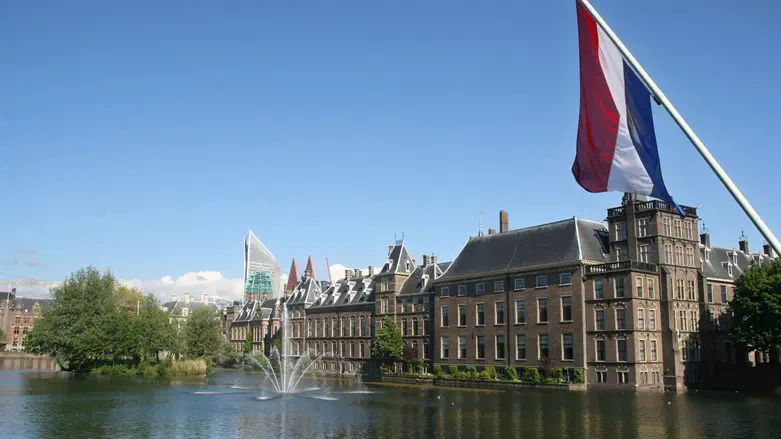
Church of Montenach, France. Built between 1884 and 1886, it survived two world wars and was devastated by a fire on Sunday.
The numbers, cold as gravestones, speak clearly: dozens of churches are destroyed by fire every year, while other places of worship enjoy an inexplicable immunity. These are not meteorological accidents or random electrical faults. It is a pattern that challenges our ability to name reality without euphemisms.
The elites in Paris and Brussels, barricaded in their intellectual salons, prefer not to see, but the citizen smells the acrid odor of a planned dissolution.
According to the Observatory for Religious Heritage, founded in 2006 to safeguard France’s religious patrimony, in 2023, 27 churches were burned. In 2024, there were 26 church fires. Data for 2025 will be published in May or June.
Churches and synagogues burn, mosques do not.
In Quebec, three churches were burned in three weeks.
Meanwhile, in Barcelona, a young woman was brutally stabbed to death while the attacker shouted “Allahu Akbar" on a crowded street in Esplugues de Llobregat. Spanish socialist prime minister Pedro Sánchez has granted citizenship to 500,000 people, so we should expect more scenes resembling civil war in the streets.
Then more stabbings in Barcelona in the same hours.
If you have not read this news in major newspapers, ask yourself whether “freedom of the press" really exists and whether mainstream journalism is worth saving.
Those stabbed to death in Barcelona did not deserve even a single line in newspapers: they are not media figures like the spoiled Western children who boarded yet another flotilla for Gaza (and for Hamas).
Meanwhile, in the Netherlands, in Loosdrecht, on the shores of the lake of the same name, in a town only slightly larger than Montenach, a popular revolt broke out after the municipal building was requisitioned to house about a hundred young African men.
Women are on the front line in the battle “for the safety of their daughters." Loosdrecht, about thirty kilometers south of Amsterdam, has seen its town hall designated to host young African males. The name Lisa was on everyone’s lips: this 17-year-old girl murdered last summer while cycling home in a village near Amsterdam. A Nigerian asylum seeker, housed in a reception center, confessed to the murder as well as to rape.
Every civilized society has regulated access to female space with rituals, taboos, and boundaries. Tearing them down in the name of “diversity" means inviting chaos. And that is exactly what we are doing. Congratulations!
The women of Loosdrecht know this without needing sociological roundtables. They know that forced mixing between local teenagers and Africans generates violence, not harmony. And they say it openly, without asking permission from the guardians of orthodoxy.
This Dutch village, nestled among the waters of the lake, is no longer an idyll of canals and green fields: it has become the stage of a revolt that Europe’s comfortable salons would like to label as obscurantism, but which instead reveals the naked anthropological truth of every human community.
Elites may continue to lecture about “diversity," but ordinary citizens, those who pay taxes and live in reality, remember a basic truth: a society works when those who arrive accept that they must conform to the existing pact and not demand to overturn it.
A civilization dies not only through external conquest, but when it stops loving itself.
That is why I am proud of these people who protest. Because they want to protect themselves and their families. They are the “common man" to whom I dedicated the last chapter of my new book, “Titanic Europe".
Because only those who dare to name reality can still hope to save it.
Peripheral Europe is not dead yet. And it warms the heart to see it rebel against a predetermined fate. Whether it can still save Europe remains to be seen. One must hope so, or all that will be left is to pack our bags, as English Jews are doing at this very moment.