

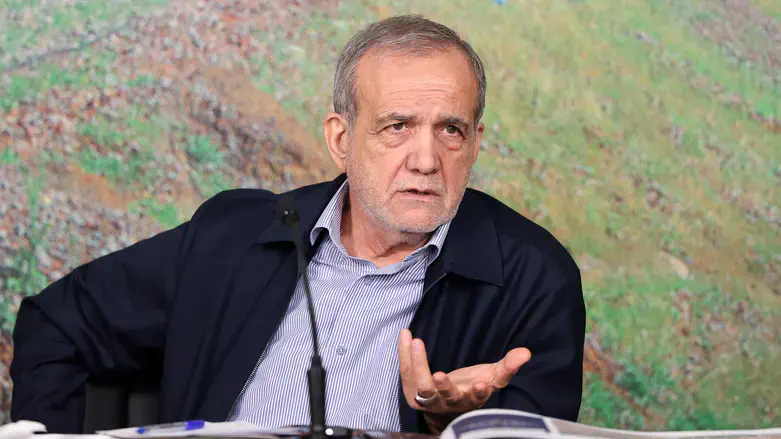
A report by Iran International has indicated growing tensions between Iran’s President Masoud Pezeshkian and senior military officials following recent developments in the Persian Gulf.
According to the report, Pezeshkian has voiced sharp criticism of actions attributed to the Islamic Revolutionary Guard Corps (IRGC), led by Ahmad Vahidi. Sources cited by Iran International said the president described reported missile and drone attacks on the United Arab Emirates as irresponsible and conducted without coordination with the government.
The report further stated that Pezeshkian warned against escalating confrontations with regional states, cautioning that such steps could have serious consequences.
Amid the developments, Pezeshkian has reportedly sought an urgent meeting with Mojtaba Khamenei, aiming to push for a halt to IRGC operations targeting Gulf countries and to prevent further escalation.
According to Iran International, the president is expected to emphasize the need for swift diplomatic engagement, arguing that there remains an opportunity to preserve the ceasefire and return to negotiations.
The report described an ongoing divide within Iran’s leadership, with differing approaches between political and military figures as diplomatic efforts continue.
The tensions come amid broader structural changes within Iran’s leadership following the killing of Supreme Leader Ayatollah Ali Khamenei at the start of the war with the US and Israel, according to a Reuters report published last week.
Reuters reported that Iran’s traditional centralized leadership model has shifted, with authority increasingly concentrated among senior figures in the IRGC and other security bodies. Mojtaba Khamenei, who assumed the top position after his father’s death, is said to play a more limited role, primarily endorsing decisions made by key institutions.
According to the report, decision-making is now largely handled by a smaller group linked to the Supreme National Security Council, the Supreme Leader’s office, and the IRGC, which oversees both military operations and broader strategic policy.
Sources cited by Reuters indicated that this structure has affected diplomatic responsiveness, with delays reported in Tehran’s replies during negotiations. At the same time, Iran’s diplomatic track has been led by Foreign Minister Abbas Araqchi and parliament speaker Mohammed Baqer Qalibaf, while Ahmad Vahidi has played a central role in operational discussions.
The report also noted that security institutions have gained increased influence over policy, with analysts pointing to a consolidation of authority around these bodies during the conflict.
Conflicting accounts have also emerged regarding maritime activity in the region. US officials have maintained that commercial shipping continues, while Iranian sources have issued warnings regarding vessel movement and reported disruptions.
President Donald Trump commented that recent exchanges did not amount to heavy fighting and indicated that maritime traffic was ongoing.
Iran International reported that senior decision-making in Iran involves coordination among top authorities, highlighting the significance of the president’s request for intervention.
Sources cited in the report said Pezeshkian has expressed concern about potential international responses, warning that further unilateral actions could provoke retaliation affecting key infrastructure.
The report concluded that internal disagreements over military actions could deepen the current crisis.