

Stephen M. Flatow is an attorney and the father of Alisa Flatow, who was murdered in an Iranian-sponsored Palestinian terrorist attack in 1995. He is author of A Father’s Story: My Fight for Justice Against Iranian Terror (now available in an expanded paperback edition on Amazon.com) and is the president of the Religious Zionists of America-Mizrachi. An oleh chadash, he divides his time between Jerusalem and New Jersey.
In Jewish tradition, acts of kindness are among the highest expressions of moral responsibility. Feeding the hungry, caring for the vulnerable, bringing aid where it is needed-these are not political acts. They are moral ones.
That is precisely why the latest Gaza-bound flotilla demands closer scrutiny.
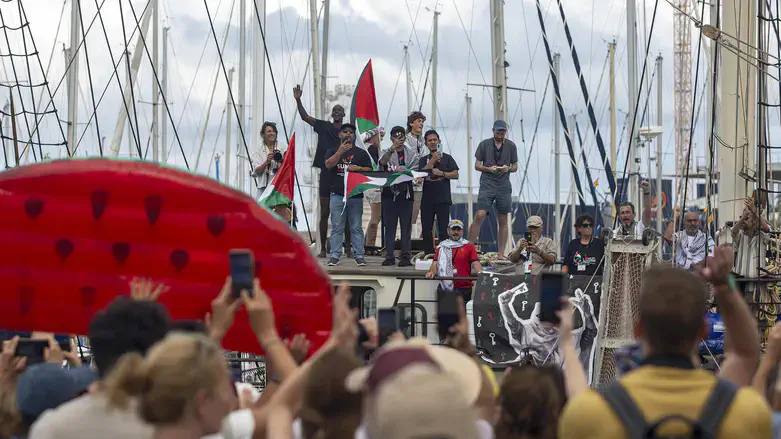
Its organizers present it as a humanitarian mission. Its supporters invoke international law and moral obligation. But when the language of humanitarianism is used to mask confrontation, it is no longer about helping others. It is something else entirely.
Two activists from the flotilla recently appeared in an Israeli court after being detained at sea. They are portrayed as humanitarians unjustly targeted. Yet the organizing framework behind them-the “Palestinian National Conference Abroad"-has been identified by Israel as operating in alignment with Hamas.
That fact cannot be ignored.
For months, a network of Palestinian “popular action" forums and “national conferences" has been presenting itself as the voice of grassroots reform. But their own statements reveal a consistent pattern: rejection of Israel’s legitimacy, opposition to disarmament, and a commitment to what they openly call “resistance."
The flotilla is not separate from that movement. It is part of it.
There is a fundamental difference between bringing aid and staging a confrontation. Real humanitarian work seeks practical solutions-coordination, delivery, and relief. It does not seek headlines. It does not engineer crises. And it does not align itself with organizations connected to those who perpetuate violence.
When humanitarian language is used to describe what is essentially political theater, truth is the first casualty.
The pattern is by now familiar. A flotilla sets sail. A confrontation is anticipated. When Israel enforces its security perimeter, the response is immediate: accusations of illegality, claims of “abduction," and a rapid mobilization of international outrage.
Then come the testimonies, the headlines, and the pressure campaigns.
This is not an unforeseen consequence. It is the objective.
The same networks behind these flotillas are tied to a broader ecosystem of Palestinian “popular action" initiatives. These groups do not seek to build a responsible, functioning state alongside Israel. They seek to remove every constraint that limits the continuation of conflict-whether those constraints are diplomatic, legal, or moral.
From a moral standpoint, this is the core issue.
A society that aspires to sovereignty must accept responsibility: responsibility for governance, for restraint, for the sanctity of life. It must educate its people toward building, not toward endless struggle. It must prepare for coexistence, not condition itself for perpetual confrontation.
When even the language of humanitarianism is enlisted in the service of conflict, that responsibility is abandoned.
The flotilla exposes a deeper truth: much of what is presented to the world as Palestinian Arab “civil society" is not independent of the politics of resistance-it is intertwined with it. Activism, diplomacy, and confrontation are not separate tracks. They are part of a single strategy.
This is a reality Israel understands all too well.
But the international community continues to cling to a more comfortable illusion-that beneath the rhetoric, these movements are laying the groundwork for peace and statehood. The evidence suggests otherwise.
When “humanitarian missions" are used as instruments of confrontation, and the language of compassion is turned into a tool of political warfare, we are no longer witnessing acts of aid. We are witnessing their distortion.
And a movement that builds itself on distortion cannot build a future of peace.
(Ed. Note: The flotilla was found to be carrying drugs and contraceptives, but no humanitarian aid.)