
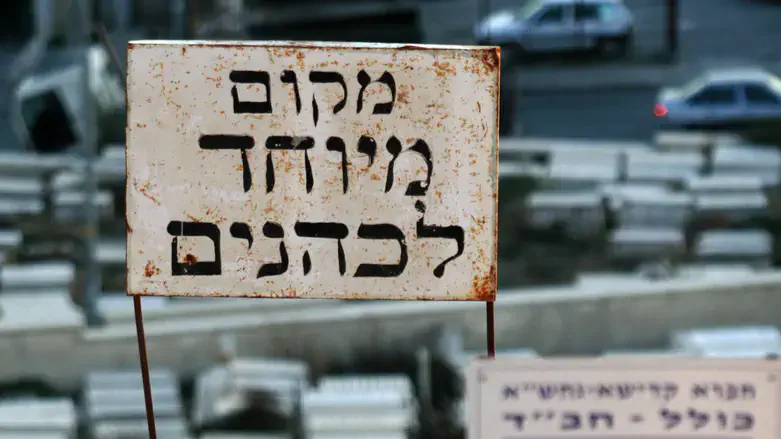
Our Parasha opens with Hashem’s command to Moshe:(18:1-3)
’Say to the Kohanim the sons of Aaron - you must say to them:Each of you shall not contaminate himself to a dead person among his people; except for the relative who is closest to him, to his mother and to his father, to his son, to his daughter, and to his brother, and to his virgin sister who is close to him...’
Rashi comments: Say to the Kohanim’:The verse uses a double expression :’say’, ‘you must say’- in order to obligate adults to take care that minors do not ritually defile themselves.
The Be’er Mayim Chaim adds: Apart from the commentary that Rashi brings, we could expound the double ‘say’, by that which Rashi brings, at the beginning of Parashat Acharei Mot, the example of a sick person who is visited by a doctor, who directs him not to eat certain foods - and whose visit is followed by that of another doctor, who also tells him not to eat those foods, but adds: so that you do not die, as another who ate them, died - which had more impact on him, than the words of the first doctor.
Here, too: when the Torah came to warn the sons of Aaron, as to the special mitzvot which applied to them, it mentioned the fate of the sons of Aaron who did not observe the mitzvot which they were commanded - and died, despite their greatness- this to warn the kohanim who were of lesser stature than them, to observe all the mitzvot which applied to them.
This is why the parasha starts: say to the kohanim ‘the sons of Aaron’, to remind them of that incident, and - after doing so - commands them:’to a soul not to contaminate themselves’ - except for those specifically permitted.
This is what the adults were adjured to warn the minors against.
Rav Moshe Sternbuch offers another explanation, as to the need for the double ‘say’: The duplication comes to teach, that the manner in which we say things to an adult, should be different than the manner in which we say the same thing, to a child - it is necessary to tell each one in the language appropriate to his age and understanding.
This is a critical lesson to every teacher, that he must speak to each individual in the way that will best be heard.
Ramban elucidates:’We find many instances in the Torah, where it states: And Hashem said:דבר: speak to Bnei Israel, ואמרת להם: and say to them - this, in parshiyot where there was a need to greatly warn the people, OR due to the severity of the subject matter, which they regularly transgressed.
Here, too - the reason being that in the mitzvot regarding the korbanot, the. Torah states:’Aaron and his sons’ - without mentioning their being ‘kohanim’, as those mattters concern lofty matters of kodesh - whilst here, where the warning is against contamination from contact with the dead at all times - even when they are not coming to the Sanctuary, which is their own level in themselves.
Hence the need to mention their being kohanim - to remind them that because they are the priests and servants of Hashem, it is incumbent on them to see to their honor in themselves - and to never be defiled.’
The Ktav Sofer sees the need for the double ‘warning’, specifically because the kohanim are ‘the sons of Aaron’.
He expounds: Aaron was known above all, for his love of peace and chesed - Bnei Israel, in general, and more so, the kohanim the sons of Aaron - were praised by our Sages, as ‘merciful ones, the sons of merciful ones’.
The Torah therefore saw a need to ‘double’ the warning against them, from defiling their sanctity, by contact with the dead - as we know that the chesed done with the dead, is ‘true chesed’, as they cannot ‘repay’ the chesed done for them.
To guard, and warn, the kohanim against defiling themselves by engaging in this true chesed - as their natural inclination would be to engage in it - the double warning, to adjure them not to defile themselves.
This mitzvah of true chesed is a great mitzvah, and the kohanim by abstaining from engaging in it - against their inclination - are rewarded for their abstention, as they do so unwillingly, and only because of Hashem’s command, abstaining because they serve ‘the bread of Hashem, in the Temple’.
The Kli Yakar - as is his wont - proffers yet another explanation for the two ‘says’: To tell them the first saying, that their kedusha attaches to them by virtue of their being ‘the sons of Aaron’ -who was the root of sanctity - ‘and say to them’, from yourselves - even had you not been the sons of Aaron - since you serve the Living G-d, it is not proper that you defile yourselves , and it is sufficient in this matter, that you are like your Master - as Hashem Himself, only engaged in the burial of those closest to Him - alluding to the burial of Moshe Rabeinu, by Hashem, in Gai (Devarim 34:6).’
The Ohr Hachaim notes that - unusually - the appellation כהנים is written here, before בני אהרן, and expounds: This can be elucidated by the Midrash (Tanchuma) :’Hakadosh-Baruch-Hu said to Moshe: It is not nice for one who goes and comes before Me, to look at the dead’.
This is why it uses the lofty language of ‘kohanim’ - meaning, because they are the priests - the servers who see the face of the King - their loftiness is that they should not defile their sanctity by contact with the dead - as the Midrash brings.
For this reason, the appellation ‘Kohanim, preceded mention of they being ‘the sons of Aaron’, which would not have been the case had it simply said: ‘the sons of Aaron’.
Rav Zalman Sorotzkin also emphasizes that they were sanctified to Hashem, commenting: After it had said in the preceding parsha, - regarding all of Bnei Israel -:’You shall be holy’, the Torah here said the ‘double saying’, and commanded the Kohanim:’You shall be holy to your G-d’, to be always ready to His service, in His Sanctuary.
Therefore, ‘to a dead soul they shall not contaminate themselves’, nor ‘make a sign of mourning on their face’ - not to act in the ways of those who serve in the houses of idolatry - and gave them many mitzvot concerning whom they may marry and other limitations.
The many mitzvot which they may not perform - due to their kehuna - in matters of chesed, such as in the matter of the dead, may cause outsiders to wonder - to obviate this, the ‘greater’ kohanim, are enjoined to explain to the minors among them, the over-riding nature of their sanctity, which requires this situation.
These limitations are to be said only ‘to them’ - the rest of Bnei Israel are commanded to do chesed with the dead.’
The Netivot Shalom adds:’The need for the double language - against contamination from the dead - is required, because the dark forces are always seeking to cause the Kohanim to be contaminated, as they - the Kohanim - are the conduit through which the prayers and service of the people rise Above, and for this reason the need for the double warning to the Kohanim, to protect the lesser amongst them, from being defiled.
Abarbanel preceded Rav Sorotzkin - whose commentary we brought - by a half millennium, in noting that the preceding parsha set out the matters that Hashem commanded Moshe to say to Bnei Israel, so that they should be holy, and merit that the shechina should dwell in their midst.
Now - in our parasha - Hashem warned Moshe that he should adjure the Kohanim - who were to serve Hashem - of their special mitzvot, beyond those that bound the rest of the people, saying:’Speak to the Kohanim, the sons of Aaron, and say to them..’.
Our Sages expound that the duplication of ‘say’, comes to warn the adults to guard the minors - but the literal meaning would appear to be, that Moshe was to assemble the Kohanim, and then ‘say to them’, the special mitzvot which applied to them - that, their sanctity required that they not defile themselves by contact with the dead.
‘To elucidate, the Torah expounded that they should not defile themselves, for a נפש בעמיו- this because, at death, the pure soul is still not completely separated from the impure גוף: body, and it was to avoid this impurity, that the Kohanim were warned against contact with the dead - except in the specified cases where they were permitted to do so, and where there was no-one else to engage in this ‘true chesed’ - this because, should he defile himself, he would be impure, and be precluded from performing his holy service to Hashem.’
A parting gem from the master of language. Haktav veHakabalah: The manner of looking after the minors - which our Sages deduced was the reason for the repetition of the word ‘say’ - was to elevate them, by they, too - like the adult Kohanim - being prevented from defiling themselves by contact with the dead - though they did not, at their age, serve in the Temple.
This, innovates the Rav, is the meaning here of ואמרת: not the primary meaning of ‘say’, but the meaning of elevation, as in the words (Ki Tavo 26:17): והשם האמירך היום להיות לו לעם סגולה:’Hashem has chosen you today to be a treasured people to Him.
So, too, in the case of the minor Kohanim.
לרפואת נועם עליזה בת זהבה רבקה ונחום אלימלך רפאל בן זהבה רבקה, בתוך שאר חולי עמנו.