
Amil Imani is an Iranian-born American and pro-democracy activist, a columnist, literary translator, novelist and essayist who speaks out for the people of his native land, Iran. He and his family escaped Iran after the radical Islamic revolution.
In the chilling winter of 1940, Paris had lost its light. The Nazi flag flew over the Eiffel Tower, and the machinery of the Holocaust was beginning to grind through the streets of France. While many diplomats packed their bags or looked the other way to preserve their careers, one man stayed behind in the Iranian consulate. His name was Abdol Hossein Sardari, and he was about to engage in a high-stakes game of legal gymnastics and moral courage that would save thousands of lives.
Often overshadowed by the story of Oskar Schindler, Sardari’s efforts were perhaps even more audacious because he operated entirely within the belly of the beast, using the Nazis’ own pseudoscientific racial theories against them.
When the Vichy government and Nazi occupiers began implementing anti-Jewish laws, they targeted anyone of Jewish descent. Sardari, a junior diplomat left in charge of the Iranian mission, we saw the impending catastrophe. He did not just see a humanitarian crisis; he saw a threat to Iranian sovereignty.
To protect Iranian Jews living in France, Sardari crafted a brilliant, if surreal, historical argument. He reached out to Nazi officials and claimed that Iranian Jews - whom he called Jugutis - were not racially Jewish in the sense defined by the Nuremberg Laws. He argued they were Mosaics, which he defined as Persians who followed the teachings of Moses but remained ethnically and racially Aryan.
It was a bold gamble. He was effectively telling the architects of racial purity that their definitions were flawed. Through persistent lobbying and the use of his personal wealth to host lavish dinners for German officials, he managed to secure an exemption. The Nazi racial experts, baffled by the complexities of Persian history, eventually conceded that Jugutis should be treated as Iranians and, therefore, as non-Jewish under the law.
The legal exemption for Jugutis was only the beginning. As the war progressed and the Vel d’Hiv Roundup saw thousands of Jews deported to Drancy and onwards to death camps, Sardari realized that legal arguments would not be enough. He needed to get people out of the country.
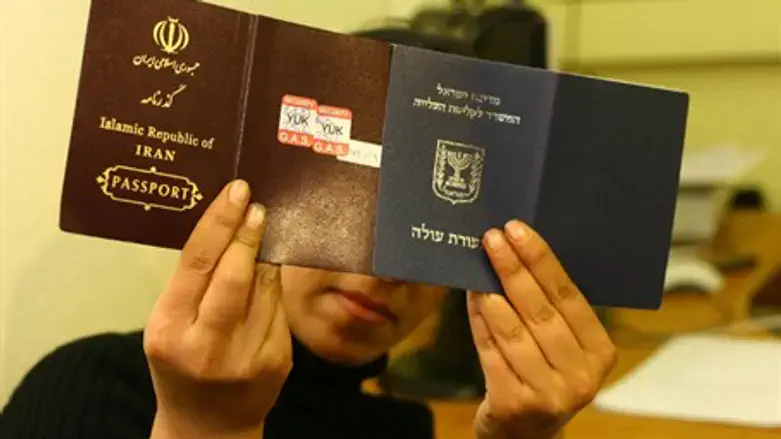
Without the authorization of his government - which had been invaded by the British and Soviets and was no longer paying his salary - Sardari began issuing blank Iranian passports. He stayed in occupied Paris at great personal risk, using his own funds to keep the consulate running. He issued over 500 Iranian passports, but the impact was much larger. Each passport was often used for an entire family, and many were given to non-Iranian Jews as well.
By providing these documents, he granted the holders the protection of a neutral state. When the Gestapo came knocking, a Persian passport was a shield that turned a target of the regime into a protected foreign national.
Sardari’s heroism was not without a price. When the war ended, his government did not welcome him home as a hero. In fact, he was investigated for embezzlement and for issuing unauthorized passports. It was not until much later that his name was cleared, though he never sought recognition for what he had done.
He lived out his final years in a modest flat in South London, having lost his property and pension during the Iranian Revolution of 1979. He died in 1981, largely forgotten by the world he helped save.
"When I was asked about the passports, I simply said I did my duty as a human being. If I had to do it again, I would." - Abdol Hossein Sardari
His story finally reached a global audience through the United States Holocaust Memorial Museum, which helped document his incredible defiance.
Estimates suggest that Sardari’s actions saved between 2,000 and 3,000 lives. While numbers are a common way to measure the scale of such deeds, the comparison to Oskar Schindler is less about the tally and more about the isolation of the act. Unlike Schindler, who eventually had a network of support, Sardari was a solitary figure in a diplomatic vacuum.
His story is a vital reminder that the Aryan identity, which the Nazis used to exclude and destroy, was reclaimed by an actual Persian to include and protect. He used the enemy's logic to dismantle their cruelty. Sardari proved that even in the darkest bureaucratic labyrinths, a single lamp of human decency can light the way to safety. He did not just save individuals; he saved the very idea of Iranian hospitality and the ancient bond between the Persians and Jewish people.