

Two months into its war with the US and Israel, Iran is facing a significant transformation in its leadership structure following the killing of Supreme Leader Ayatollah Ali Khamenei at the outset of the conflict.
According to a Reuters report, the Islamic Republic no longer operates under a single, dominant clerical authority, marking a departure from the system that has governed the country since 1979. In place of a centralized leadership, power has increasingly shifted toward senior figures within the Islamic Revolutionary Guard Corps (IRGC) and other security institutions.
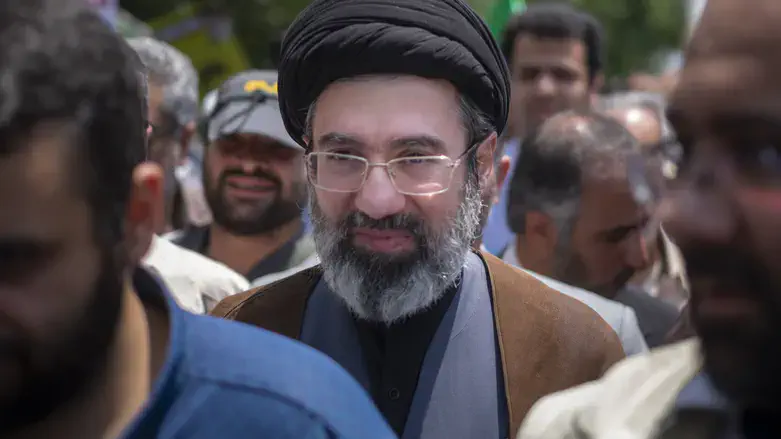
Mojtaba Khamenei, who was elevated after his father’s death despite being seriously wounded in the initial strikes, formally occupies the highest position. However, individuals familiar with internal discussions indicate that his role is largely limited to endorsing decisions rather than directing policy.
Sources cited by Reuters describe a wartime leadership structure in which authority is concentrated within a smaller group tied to the Supreme National Security Council, the Supreme Leader’s office, and the IRGC. This grouping now plays a central role in both military operations and broader strategic decision-making.
A senior Pakistani official involved in mediation efforts between Iran and the US said the absence of a unified command structure has slowed responses during negotiations. According to the official, it can take several days for Tehran to reply to proposals.
Despite this, analysts quoted by Reuters noted that the main barrier to an agreement is not internal discord, but rather the gap between US demands and the positions held by Iran’s security leadership.
Iran’s diplomatic engagement with Washington has been led by Foreign Minister Abbas Araqchi, alongside parliament speaker Mohammed Baqer Qalibaf, who has emerged as a key link between political and security institutions. Meanwhile, IRGC commander Ahmad Vahidi has been identified by multiple sources as a central figure in operational and ceasefire-related discussions.
Mojtaba Khamenei has not appeared publicly since the start of the conflict and is said to communicate through intermediaries due to security concerns.
Iran recently presented a new proposal to the US envisioning phased negotiations, with the nuclear issue deferred until after the war and maritime disputes are addressed. Washington has maintained that nuclear matters must be part of any initial discussions.
Experts cited by Reuters said both sides currently show limited willingness to compromise, each calculating that time may strengthen its position.
The evolving internal dynamics reflect a broader shift in governance, with security institutions exerting increased influence over policy. Analysts say that while differing views exist, decision-making has consolidated around these bodies, with Mojtaba serving more as a coordinating figure than an independent authority.
The growing role of the IRGC has also strengthened more hardline positions within Iran’s leadership, according to sources familiar with internal deliberations. However, there has been no indication of significant internal divisions or public unrest despite ongoing military and economic pressure.
The current structure suggests that strategic decisions are being driven primarily by security leadership, with a focus on maintaining leverage and managing the conflict without escalation into a broader war.