
Juda Honickman is Spokesperson for One Israel Fund
My neighbor and friend Sherri Mandell posted something a few weeks ago that I haven't been able to shake.
She was walking with her five-year-old granddaughter when they passed a dead bird. They stopped. They talked about it. And then the little girl looked up and said, "You know, you're going to die one day."
"Yes, you're right," Sherri told her. "But I hope it's not too soon because I want to be at your bat mitzvah."
"Yes," the granddaughter said. "I hope so too."
That's it. That's the whole exchange. And it contains more wisdom about what it means to live in this land than anything I've read in years.
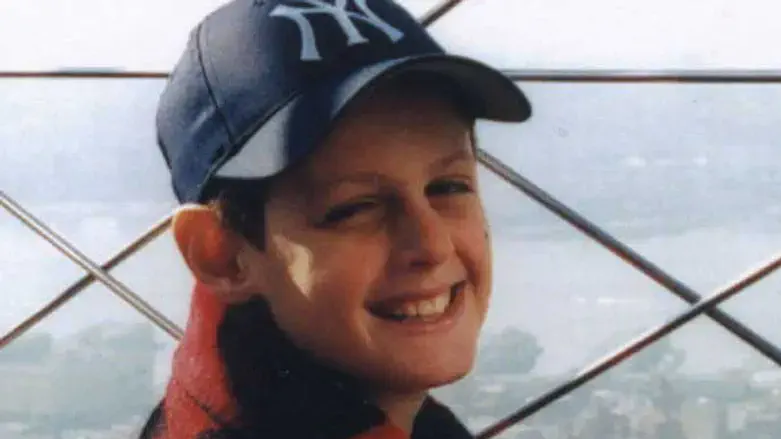
This child has already met death. Her friend's father, Yinon Fleishman, was a soldier who died in the Gaza war. And her Uncle Koby, Sherri's son, was barbarically murdered by terrorists in 2001. He was only 13.
Koby and my cousin grew up together. They were neighbors. His death doesn't live in the abstract for me. It never has.
I've been trying to put my finger on something since the day I made aliyah. There is an intensity here that hits you right away. Not in a dramatic way, but in a quiet, constant way. A Shabbat table that feels heavier and lighter at the same time. A hug between two people at a simcha who both know someone who didn't make it home. A mangal (bbq) on a random Tuesday that somehow feels like it means something more.
I grew up in New York. When someone died there, it was handled. The Chevra Kadisha stepped in, and the funeral home took over. People said the right things. You sat Shiva. Life always seemed to move on pretty quickly because it had to, because everything around you kept moving whether you were ready or not.
Here it doesn't work like that. Death doesn't get tucked away. It stays out in the open. Your kid comes home from school knowing the name of a classmate's father who was just killed in Gaza. Your five-year-old granddaughter already knows what death is because she lived next to it.
The grief is public. The shiva spills onto the streets - literally. The whole community shows up, every time.
And something about that changes you. It changes the way you sit at a table. The way you say goodbye to someone. The way a regular Wednesday afternoon feels when the sun is out and your kids are running around outside and you know, really know, not abstractly - that this moment is not guaranteed.
Sherri said it herself at the end of her post: "Maybe that's why we Israelis cling so ferociously to life."
She's right. But I'd say it's more than clinging. Clinging sounds desperate. What I see here isn't desperate. It's deliberate. It's loud and full and on purpose.
Every mangal (bbq). Every Friday night meal that goes too long and too loud. Every baby named for someone who fell. Every grandmother who doesn't change the subject when her granddaughter brings up death on a walk, who just tells her the truth and keeps walking. That's not people trying to forget. That's people who have decided that the answer to all of it is more life. More noise. More showing up.
There's a concept in Jewish thought, “v'Chai Bahem", that the mitzvot are meant to be lived by, not died by. Life is the point. But I don't think you feel that in your bones until you've been around people who've had it tested.
Not people who read about loss. People who carry it.
The ones I've met here who've lost the most are often the ones who live the loudest. Not because they've moved on. Because they haven't. But because they know exactly what's at stake in an ordinary afternoon.
That's not trauma. Or it's not only trauma. It's an answer. Given everything, and here everything means something, what do we do? We live. We really live. We make it count in the most ordinary ways possible, because the ordinary is what gets taken.
Sherri Mandell lost her son Koby twenty-five years ago. She has spent those years building the Koby Mandell Foundation, holding camps for bereaved children, writing, speaking, and showing up. And now she walks with her granddaughter, a little girl who already knows that grandmothers die, that soldiers don't always come home, that boys who go out innocently to collect wood for Lag Ba’omer don’t always come home.
She knows that the world has sharp edges, and that child still says, “I hope so too."
That's not innocence. That's something much harder than innocence. That's a five-year-old who has already absorbed the central lesson of this place: yes, and anyway.
Yes, the world is dangerous. And anyway, I hope you make it to my bat mitzvah.
I've tried for years to explain to people back in the States what it actually feels like to live here. The intensity. The weight. The way mourning and music exist right next to each other all the time without either one canceling the other out.
I never quite got there.
Sherri got there in a paragraph about a dead bird.
That's something that only a mother who buried her child can do.
Dedicated in memory of Koby Mandell who was tragically murdered in a terrorist attack in 2001. May his Neshama have an Aliyah.