
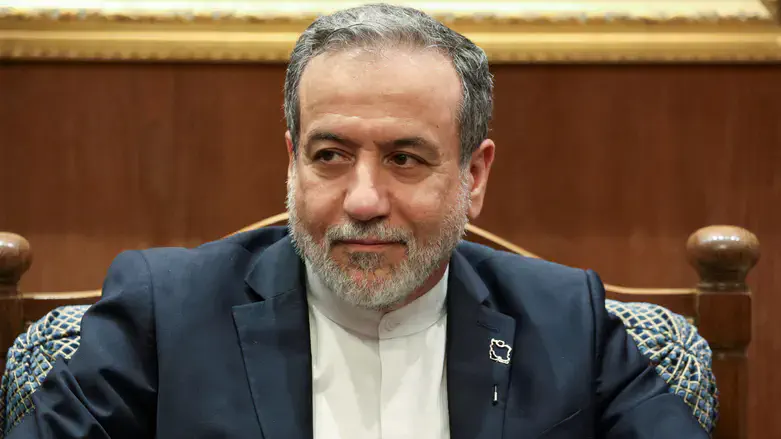
Kamyar Behrang is Senior News Editor at Iran International
A recent Bloomberg report suggests that officials in Tehran perceive renewed threats from Donald Trump as “humiliating," reducing their willingness to engage in negotiations. Yet framing the current moment in terms of humiliation obscures a more consequential reality. What the regime is experiencing is not primarily a matter of wounded pride, but the exposure of structural limits within a strategy that has defined its behavior for decades.
The Islamic Republic has long operated according to a calibrated model of confrontation that balances escalation with restraint. It raises tensions sufficiently to extract concessions, while avoiding direct risks that could threaten regime survival. This approach has been sustained through a combination of ideological positioning, proxy warfare, and controlled diplomatic engagement. It is not a reactive posture but an embedded governing logic, one that has enabled Tehran to convert pressure into leverage over time.
That logic, however, depends on a predictable environment-one in which external pressure remains incremental, negotiable, and ultimately reversible. When that environment shifts, the effectiveness of the model begins to erode. The current challenge facing Tehran is not the absence of dialogue, but the weakening of a framework in which dialogue could reliably be instrumentalized for strategic gain. When pressure is applied in more direct and material ways, particularly against economic infrastructure and coercive capacity, the regime’s room for maneuver becomes significantly constrained.
This helps explain why the language of “humiliation" has emerged in official discourse. For over four decades, the Islamic Republic has maintained a narrative of defiance, projecting strength through ideological slogans and regional posture. That narrative has remained sustainable largely because it has not been consistently tested under conditions that expose the gap between stated position and operational capability. When confronted with a negotiating environment defined by clearer demands and fewer opportunities for incremental concession, that gap becomes more difficult to manage.
At the center of this dynamic is the internal structure of the regime itself. While formal state institutions continue to represent sovereignty, a substantial portion of strategic leverage remains concentrated within the Islamic Revolutionary Guard Corps. This dual structure has historically allowed Tehran to maintain flexibility, projecting diplomatic engagement at the formal level while preserving coercive influence through parallel institutions. Under sustained pressure, however, this arrangement introduces friction rather than flexibility, as the divergence between institutional roles becomes more visible and more difficult to reconcile.
The implications extend beyond the immediate question of negotiations. What is at stake is the long-term viability of a strategy that has relied on ambiguity, delay, and controlled escalation. If the Islamic Republic can no longer translate confrontation into advantage with the same consistency, it faces a more constrained set of options. Escalation carries higher risks than before, while engagement increasingly occurs under conditions that the regime does not fully shape.
In this context, the language of humiliation is misleading. It reflects not a singular moment of pressure, but a broader shift in the strategic environment-one in which established methods yield diminishing returns. The issue is not whether Tehran will continue to negotiate; it almost certainly will want to. The more important question is whether it can adapt to a setting in which its traditional approach to managing pressure no longer produces the same outcomes.
That question goes to the core of the regime’s strategic identity. For decades, endurance has been framed as success, and survival has been recast as a form of victory. If those assumptions are now under strain, the challenge facing Tehran is not merely tactical. It is systemic.