

Juda Honickman is Spokesperson for One Israel Fund
People wonder how we do it. How we go from mourning to dancing in a single day. How a nation that is weeping at noon is celebrating by midnight. They think something is wrong with us.
But they’re looking at it backwards.
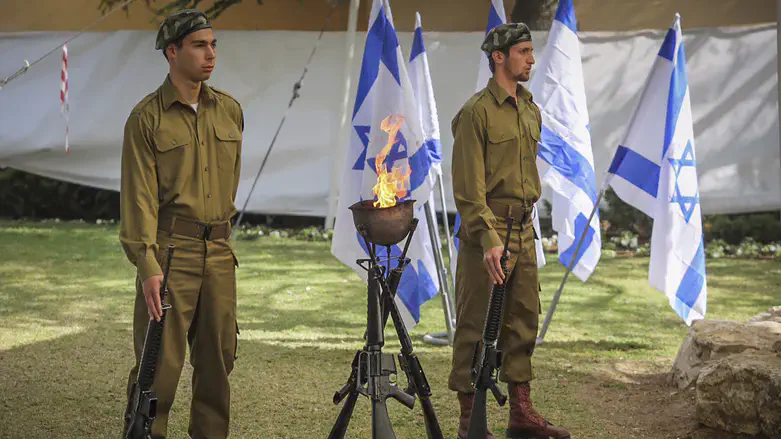
The first siren comes at 8 o'clock in the evening signalling that Memorial Day has begun. It sounds again at 11 in the morning and the whole country literally stops. Cars on highways. Men mid-sentence. Mom’s pushing babies in strollers. Children mid-run. Two minutes of stillness that contain everything.
And then the day begins. Long and heavy.
The gravesites. The memorials. The pictures. Heartbreaking.
But we don’t only mourn soldiers on Yom Hazikaron, though God knows we mourn them, every one of them, twenty-four thousand names since before this modern state had a name.
But we also mourn the farmer in his field in the Galil. The family driving home on a Friday afternoon. The grandmother in her kitchen. The people waiting outside of a nightclub. Children in their beds. A high-tech worker waiting at a bus stop. A new immigrant who got off a plane and didn’t live long enough to see his second harvest.
They weren’t all in uniform. They didn’t all carry rifles or even guns for that matter. What they carried was a Jewish identity. And that was enough. That was the whole reason.
This has never been a war against an army. It has been a war against a people. Against the idea that Jews have a right to exist here, to farm here, to raise children here, to simply be here.
Every victim; soldier or civilian, young or old, in a tank or in a supermarket, was targeted for the same reason.
Which means they are all our fallen. Brothers and sisters, every one of them. Not sorted by rank or role. One people, hunted for one reason.
That’s what the siren holds.
Here is something true that almost nobody says out loud: Most of the year, we can’t actually feel both things at once.
The grief is too deep to carry into every morning. So it gets buried, because you have to function, because life moves, because children need breakfast and work needs doing. And the joy, the genuine pride and love for this impossible country, sometimes feels almost inappropriate when the weight of what it cost is sitting right there underneath it.
So we split them. We live mostly in one or the other.
We manage.
But once a year, the calendar refuses to let us manage, and we aren’t alone.
Yom Hazikaron begins in the evening with ceremonies across the countries and continues in the morning with the siren. And then it sits. It lasts all day. You walk through it raw and open, knowing that at nightfall something is going to shift but unable to rush toward it. The hours between the siren and the torch are the whole point. You spend them broken.
And then the sun goes down and the brokenness turns into something else. The music starts and you can’t protect yourself from the joy.
The day does what the human heart cannot do alone. It forces the merge. Grief and pride, loss and life, the fallen and the living - all of it, simultaneously, in the same chest.
You don’t get to choose one. The calendar chooses for you.
That’s why the celebration isn’t disrespectful. That’s why it isn’t too soon. The dancing at midnight is not forgetting it is the only response that makes sense. If they died for being Jewish and being here, then being Jewish and being here, loudly and joyfully and together, is the only answer that honors them.
We don’t celebrate despite them. We celebrate for them.
We carry their names into the music. We bring their absence to the barbecue. We say their names in the same breath as Am Yisrael Chai, because that phrase only means something because of what it cost.
Seventy-eight years. Still here. Still improbable. Still alive.
The farmer and the soldier. The grandmother and the child and the new immigrant who never knew any other home.
All of them woven into this one day. All of them present tonight when the torches are lit and the flags go up and somewhere in every gathering there is a photograph passed quietly around on a phone screen.
This is what it means to be Israeli. Not to have resolved the grief. Not to have found a way to make peace with the cost.
Just to carry it and dance anyway.
Because that’s what they would have done.