
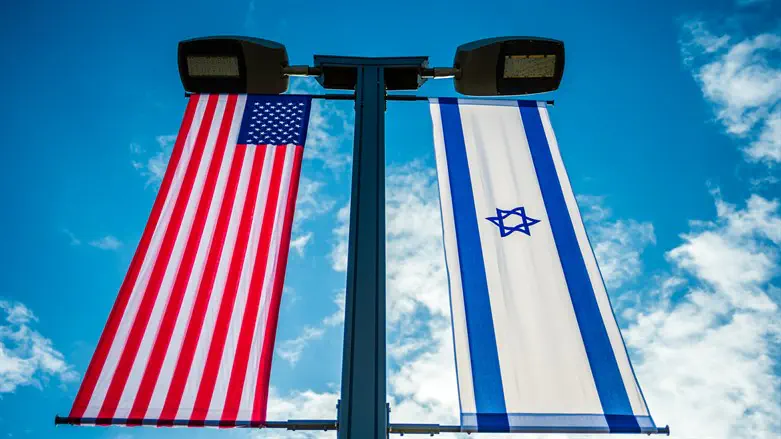
Recent polls in the US point to a significant decline in support for Israel, an issue that likely concerns the President Trumpm as well.
Yaki Dayan, former Israeli Consul in Los Angeles, explains that "there is a phenomenon in the US that reflects a broader global trend: the political center is eroding, while the extremes on both the right and the left are gaining strength."
Dayan notes that while there was once bipartisan consensus in support of Israel, today the more radical elements within each party are becoming increasingly influential. “Within these extremes, we see several troubling developments-antisemitism on both the progressive left and the far right, alongside growing anti-Israel sentiment. Together, these trends are damaging Israel’s standing."
Dayan adds that the reality of Israel being engaged in what it views as a war for its existence is not well understood by the average American-particularly among younger generations, who often perceive Israel as a militaristic state that does not actively seek peace. He also highlights the role of social media, where pro-Israel perspectives are frequently marginalized. On some platforms, such as Twitter, anti-Israel views dominate, delivering a steady stream of criticism that further erodes support.
Another troubling factor, he says, is the influence of foreign funding on university campuses. Qatar, in particular, has invested large sums of money, contributing to the rise of antisemitic and anti-Israel sentiments. “All of this adds up to a difficult reality for Israel. Among those under fifty, the situation is even more concerning-and especially so among people in their twenties. This has brought Israel and its supporters in the Jewish community to one of the lowest points we’ve seen since the state was established 78 years ago," Dayan says.
As for how this reality affects the White House, especially with midterm elections only months away, Dayan believes the impact is real. “The war with Iran is not popular, and political advisors are urging the president to bring it to an end. The effect may be somewhat less pronounced on Trump himself, who is not currently facing reelection and appears to view his role as part of a broader, perhaps even historic or divine, mission to reshape global order."
Can Israel take steps to change this trajectory? Dayan believes it can. “No process is irreversible, but it requires substantial investment and patience. There must be a stronger presence on social media, and a broader regional shift will also be necessary, though that will take time. Still, it is achievable. Israel needs to invest now. An exceptional public diplomacy effort is essential, one that serves as an additional front, supporting both the military and diplomatic arenas."
Dayan concludes by reflecting on the sacrifices of soldiers on the battlefield. “At a time when we remind ourselves that we must be worthy of their sacrifice, we should recognize that this responsibility extends to every arena. We must continue to stand up for the justice of our cause and confront global hypocrisy, not only on the battlefield, but in the realm of public diplomacy as well."