

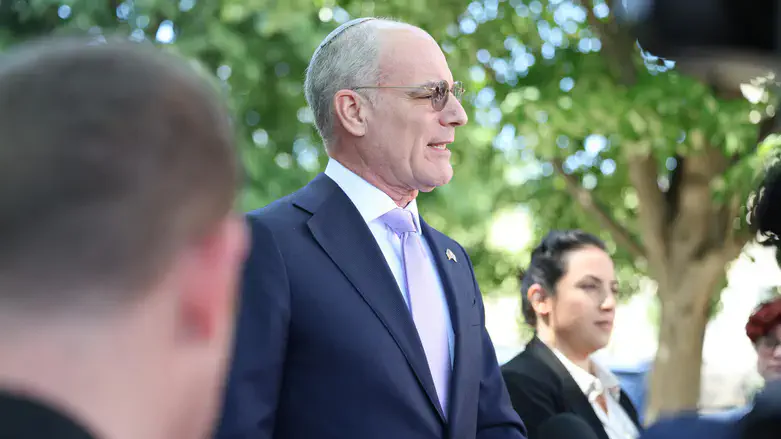
Israel’s representative to the ongoing negotiations with Lebanon in Washington, D.C., opened the talks on Wednesday with a message linking historical memory to present-day security concerns, emphasizing both resolve against terrorism and a willingness to pursue peace.
Speaking under US auspices, the ambassador noted that the discussions were taking place on Yom HaShoah, the day commemorating the Holocaust, as well as Yom HaGevurah, which honors Jewish courage and resistance.
“I sit before you today as Israel’s representative to peace negotiations with Lebanon under the auspices of the US," he said. “Today is Yom HaShoah… It is also Yom HaGevurah, the day of courage, when we declare, ‘Never Again.’ This phrase is a promise and a plan of action."
He stressed that the lessons of the Holocaust require vigilance in the face of threats, adding that Israel must take seriously declarations by its enemies regarding their intentions.
Referring to Hezbollah as “Iran’s top proxy," the envoy said the group has made clear its aim to destroy Israel and harm its citizens. “The Shoah teaches us to take that threat seriously, and we cannot hesitate to remove it from our borders," he stated.
At the same time, the ambassador emphasized that Israel remains committed to pursuing stability and cooperation. “We also have the courage to pursue peace through strength, and to work tirelessly for tranquility and prosperity for all," he said, expressing hope for improved relations with Lebanon’s diverse population.
He also praised Joseph Aoun and his government for resisting pressure from Hezbollah leadership, specifically referencing Naim Qassem. “Hezbollah belong[s] to the past; we are here for the future," he said.
Outlining Israel’s objectives in the negotiations, the envoy listed three primary goals: the dismantling of Hezbollah, the removal of Iran’s influence in Lebanon, and the establishment of “a real, lasting and mutually celebrated peace."
“I believe that we can, in good faith, accomplish these interrelated goals… for the benefit of our peoples," he concluded.