

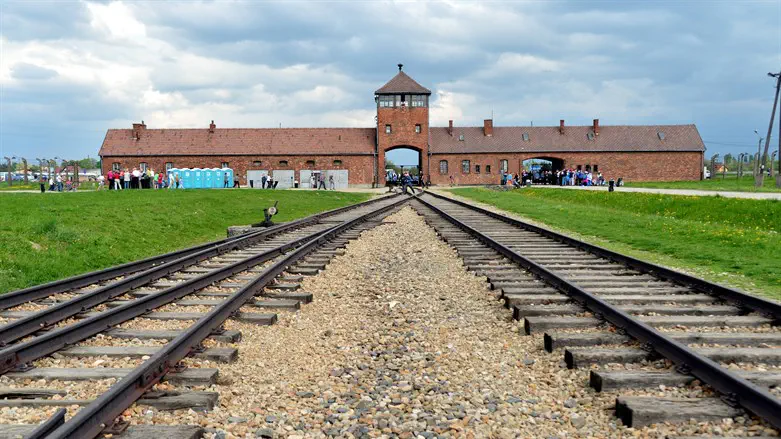
Meir Heller z" l was six when his life fell apart. Born in former Czechoslovakia in 1936, he was just six years old when he was deported to Auschwitz with his family. Meir was marked by the Nazi regime twice.
As a Jew, his fate under Nazi rule was already one of bitter persecution. But as a child born with an intellectual disability, he was also targeted by the Nazis’ eugenic ideology, which deemed people with disabilities “life unworthy of life", rooted in a distorted belief in “survival of the fittest." In Auschwitz, these beliefs led to the systematic abuse of people with disabilities like Meir, many of whom were selected for medical experiments carried out by Dr. Josef Mengele.
During the Holocaust, the Nazi regime systematically murdered an estimated 250,000 to 300,000 people with physical and mental disabilities. Through the Aktion T4 program in the early years of the war and in the camps until liberation, they were subjected to forced sterilization, medical experimentation, and killing methods later used on a mass scale, including the gas chambers.
As a Jew, as a child, subjected to this ideology, the odds of Meir’s survival were low.
But Meir beat the odds.
Four of his siblings were murdered. Meir survived alongside his parents, though in extremely poor health, requiring prolonged hospitalization after liberation. In 1949, he immigrated to Israel with his family. As he grew into adulthood, he began to work.
For many years, Meir was a valued and dedicated part of Israel Elwyn’s employment program for people with intellectual and other disabilities, and a valued member of our community. He was known for his warmth and sense of humor, and even as he grew older, he remained engaged, curious, and full of life. He would often joke that he planned to “live to 200."
And as he grew older, like anyone else, his needs began to change. Meir approached his direct support staff member and said simply: “I’m tired."
In that moment, Meir expressed something simple but fundamental. He was asking for the same autonomy and dignity afforded to other people: the right to rest, to define the parameters of his own life. He wanted to retire.
His words became the catalyst for change. From his simple request grew Israel’s first retiree program for people with intellectual disabilities. Spearheaded by Israel Elwyn and then later, by the Israeli Ministry of Welfare and Social Affairs, an official national framework for aging individuals with intellectual disabilities has been established in Israeli law. Today, these programs continue to expand, supporting meaningful community participation for individuals across the country.
As President of Israel Elwyn, I have seen how one person really can make a difference. Meir, who endured unimaginable hardship and went on to build a full life, did more than change his own life; he helped create new possibilities for others who followed. Our responsibility and privilege is to continue our work in helping build a society in which individuals with disabilities are citizens with equal rights and aspirations to determine their own future and way of life.
On Yom Hashoah, we remember that the Nazis sought to deny the right to live to Jews, and to those with disabilities. Meir showed us that they failed; and that one person really can make a difference, no matter how many challenges must be overcome.
David Marcu is the president of Israel Elwyn which serves over 5,700 individuals with disabilities, including toddlers, children, youth, young adults, adults and seniors.