
Juda Honickman is Spokesperson for the One Israel Fund
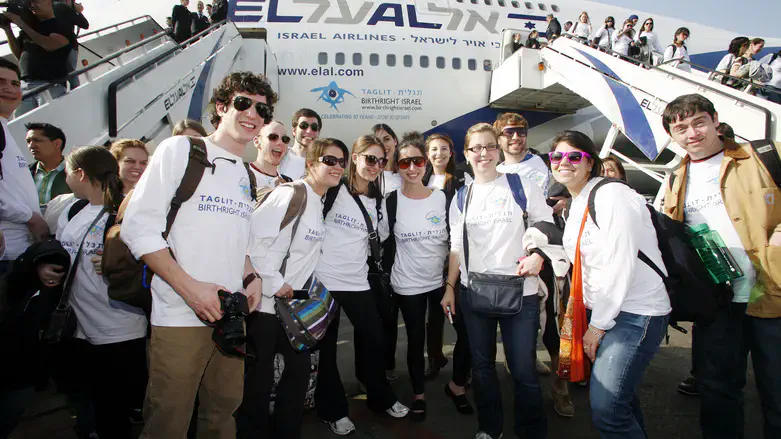
I did Birthright five times.
The first time was as a participant and then four others as staff.
The bus. The hotels. The late-night parties and discussions about what it even means to be Jewish. As a staff member I was watching other people discover Israel and what it means, which is its own kind of unique experience, on top of the trip itself.
As with every trip, one of the more intense stops that we make is Yad Vashem, the National Holocaust Museum. On this one particular trip it was arranged for us, and other groups, to join together to hear from a survivor.
We were a few hundred young Jewish adults packed into one room. The full cross-section of what Birthright looks like: kids from the coasts, kids from the midwest, the ones who showed up wearing Jewish stars and the ones who almost didn't come at all. The unifying factor, the only one, is the word Jewish. For a lot of them, that word is the whole of it. Not a practice, not a community, not a set of obligations. Just a word that describes them, the way a hair color describes them.
And then she walked in.
I won't try to describe what she carried into that room. I've tried before and I can't get it right. She was older and she was small and she began to tell us what had happened to her, slowly, in detail, with a kind of pain that exists outside of language. You could watch it move across her face. She wasn't recounting. She was reliving. You could feel it. Every word cost her something visible, something real, and the room, this loud restless room full of twenty-somethings, went completely silent.
I had heard survivors speak before. I thought I knew what it felt like.
I didn't.
When she finished, a young man raised his hand. He had told his group earlier in the trip that he wasn't religious, didn't practice and had come on Birthright more or less because it was free and his grandmother wanted him to. He asked her, quietly, with what sounded like genuine bewilderment, why she keeps doing this. Why does she keep coming back to rooms like this one, to tell this story, when it was obvious to every single person sitting there how much it costs her.
We had all just watched what it cost her. We could see it on her face, in the way her body tensed up and froze at different parts of her story.
The question wasn't provocative. It was honest.
She looked at him and she calmly said: I go around and tell my story, and relive the pain every single time, so that young people like you will know, if you marry a non-Jew, Hitler wins.
The room stopped breathing.
I've thought about that moment many times since. What made it so shattering wasn't the words themselves, though the words were extraordinary. It was who said them and what it must have taken to get to that sentence.
This was a woman who had survived the systematic murder of her entire world, who had made a decision at some point in the years that followed to take whatever time she had left and spend it walking into rooms full of strangers, tearing herself open in front of them, paying the price of memory over and over, not so that we would feel bad. Not so we would understand history, but so that we would live Jewish. So that we would marry Jewish. So the answer to what was done to her people would be more of her people.
She wasn't giving a lecture. She was placing a demand and challenging every single person in that room.
I've done five of these trips. I stood in that room as someone who had already heard survivors speak, who thought he understood what this “day-trip" was supposed to mean. And her words stopped me cold.
According to the Conference on Jewish Material Claims Against Germany, fewer than 200,000 Jewish Holocaust survivors remain alive in the world today. Their median age is 87. The organization projects that within six years, roughly half will be gone.
She may already be gone. I don't know. I don’t remember her name.
What I know is this: we are living inside the last years when a young Jewish person can sit in a room and hear it from someone who was actually there.
The window is closing. Not eventually, but in our lifetime.
We will be the last generation that had the chance to sit across from a witness, a survivor, and hear their story. Share their message.
She didn't come to Yad Vashem to give a history lesson.
She came back, every time, so that Hitler wouldn't win.
The question is what we do with that now.
May the souls of the six million kedoshim be bound up in the bonds of eternal life. May their memory be a blessing and their sacrifice never forgotten.
And to those still with us, the last witnesses, the ones still walking into rooms and paying the price of memory, may Hashem grant you length of days, strength of body, and the knowledge that it was not in vain.
Yehi zichram baruch. May their memory be blessed.
Best Wishes for a Blessed Day,