

The Ministry of Diaspora Affairs and Combating Antisemitism, today (Thursday), released a special report that examines American public sentiment regarding the war against Iran. The report analyzes its potential impact on the US political system, anti-Israel discourse, and the safety of Jewish communities.
While support for the campaign remains high among the Republican public, an anti-war discourse identified with isolationist currents on the American right, primarily "America First" and "America Only", is intensifying. This discourse does not stop at opposing military involvement; it frequently devolves into narratives such as: "Israel First", "Dying for Israel" and accusations of Israeli or Jewish "control" over US foreign policy.
According to the report (which covers the period up to April 1, 2026), online discourse reflects a sharp polarization: Establishment Leadership, Republican leaders, political officials, and mainstream conservative commentators frame the campaign as an essential necessity to curb the Iranian threat, ensure regional deterrence, and protect US allies. However, prominent figures in the populist and anti-establishment sphere frame the war as a violation of the "no more wars" promise, claiming it fails to serve American interests.
The report highlights a significant surge in anti-war messaging on social media, particularly on X (formerly Twitter). These messages are often accompanied by antisemitic tropes and conspiracy theories against Israel including thousands of mentions of terms like "Neocon", “America First" and "Dying for Israel" which attempt to link the war to domestic US political conspiracies.
According to the report, it also appears that while the majority of Republicans currently support action against Iran, this support is not unlimited. As the campaign lengthens, expands, or leads to significant economic costs, the rifts within the Republican camp may deepen, and voices opposing American involvement may grow stronger.
The Ministry of Diaspora Affairs and Combating Antisemitism emphasized that these trends may have direct implications not only for Israel-US relations, but also for the level of risk faced by Jewish and Israeli communities in the United States.
The ministry stated that past experience shows that when anti-Israel narratives are combined with accusations of "dual loyalty," "Jewish control," or "wars for Israel," the path to an increase in antisemitic incidents is particularly short.
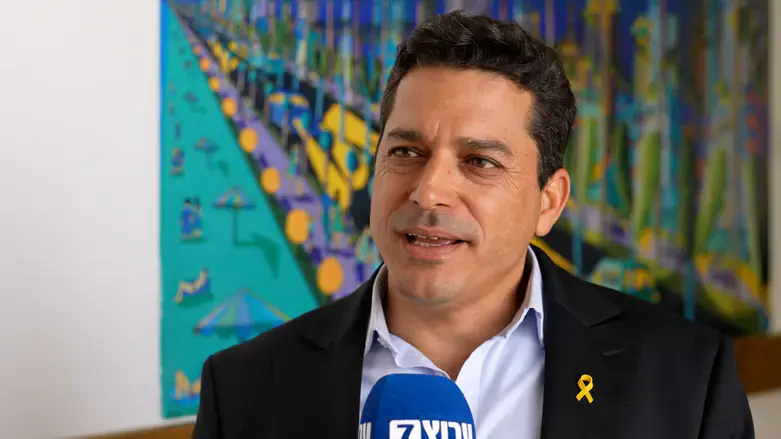
Amichai Chikli, Minister of Diaspora Affairs and Combating Antisemitism, said: "The picture emerging from the report is concerning: alongside significant American support for the war against the Iranian terror regime, a discourse is expanding in the U.S. that attempts to present Israel as acting manipulatively, as if it dragged the U.S. into war. This is a dangerous discourse that often devolves from political and diplomatic criticism into conspiratorial rhetoric with a sharp antisemitic aroma. Our role is to identify these trends in time, alert people to them, and act together with our partners to understand deep-seated trends and know how to prepare and respond to them."
Avi Cohen-Scali, Director General of the Ministry of Diaspora Affairs and Combating Antisemitism, added: "The report emphasizes how much the perceptual arena in the U.S. affects reality on the ground. We identify an increasingly tightening connection between internal political debate in the U.S. and the dissemination of anti-Israel and antisemitic messages online. The National Command Center of the Ministry of Diaspora Affairs and Combating Antisemitism continues to monitor developments, analyze the discourse in real-time, and provide updated assessments to relevant parties in Israel and around the world."
The Ministry of Diaspora Affairs and Combating Antisemitism noted that heading into this coming November and the U.S. midterm elections, the issue is expected to continue shaping the political discourse on the American Right. They emphasize the need for continued close monitoring of the evolution of narratives, their impact on public opinion, and the potential implications for Israel and American Jewry.