
In recent years, a troubling number of Jewish people have opted for cremation instead of traditional burial. The statistics are staggering - increasing each decade steadily and reaching unprecedented levels among secular Jews in America, Canada, and Europe. What makes this trend so tragic is not only its scale but also the profound misunderstanding surrounding it. Most who choose cremation are unaware of what they are truly doing - not only to their bodies but to their souls, heritage, and eternal destiny.
We live in a world filled with uncertainty, where war, destruction, and the fragility of life make death impossible to ignore. In such a world, it is natural for people to seek comfort, simplicity, or control as they face the end. But cremation is not a neutral or harmless choice. From the standpoint of Judaism, it is a painful break from the sanctity of the human body and from the eternal significance of life after death. A practice once unthinkable for a Jew is now often accepted casually, without serious thought about the spiritual, scientific, and moral harm it causes.
For thousands of years, Jews honored the body through burial, preserving a grave as a place of memory, continuity, and reverence, so that children and future generations could remember those who came before them. That is why Ethics of Our Fathers teaches, “Who is wise? He who sees what is born of his actions." True wisdom means looking beyond the moment and understanding that our choices affect the future.
Cremation is not a gentle act. Scientifically, it is a process of complete molecular disintegration. The furnace that consumes the body operates at about 1,800°F (980°C). At that temperature, all living tissue and organic molecules - including proteins, fats, DNA, and bone - are destroyed. The flame is not merely warmth; it is a violent region in space where molecules are torn apart, a process physicists describe as oxidation at the molecular level. The yellow glow of the flame - the part children often draw when sketching a candle - is not gas but floating particles of carbon glowing in intense incandescence as they die.
When a human body enters a cremator, the vast store of chemical energy that supported its life for decades is suddenly released in a violent burst of heat. The energy that, over the years, had powered heartbeat, thought, and breath, is abruptly freed and disperses into the atmosphere in moments. The body does not rest; it is not slowly transformed as in burial, where organic matter returns to the soil in harmony with natural cycles. In cremation, the change is catastrophic - the complete opposite of everything that life’s biochemical order signified.
The remains given to a family in an urn are not ashes in the typical sense; they are crushed bone fragments turned into powder. Most of the body has already left - into the air as gases: carbon dioxide, nitrogen, water vapor, sulfur dioxide, trace metals, and minerals. In just hours, 98% of what was once a human body has dispersed into the sky. Within weeks, these molecules spread through the hemisphere; within months, they circle the globe. The carbon that once made up a person’s heart might end up in a leaf on another continent, in a fish, or in the mouth of an animal.
From a purely physical perspective, cremation destroys the pattern - the organization - that was “you." You become molecularly fragmented, your body’s structure obliterated. Unlike burial, where the body as an extension of that particular person reenters the soil and decomposes, retaining its identity as part of creation’s sacred cycle, cremation forcibly tears that structure apart, scattering identity to the wind.
It is the difference between a melody gently fading into silence and an instrument smashed to pieces mid-song.
In Jewish thought, this act of scientific violence points to something much deeper - a spiritual wound. The Torah states, “For dust you are, and to dust you shall return" (Genesis 3:19). Burial is not just a tradition; it is a sacred command, symbolizing the gentle return of the body to the earth in holiness. The Midrash teaches that the body and soul are companions, joined in life to serve God together, and even in death, they part only with reverence and love.
Burial honors that final moment. It allows the soul to ascend while still faintly connected to its earthly companion, and it ensures the body rests with dignity in the ground. There, memory, prayer, and the merit of mitzvot continue to unite them, as if love itself refuses to break the bond.
Cremation violently breaks this relationship. Chassidic and Kabbalistic texts explain that, after death, the soul does not immediately leave. For days, sometimes longer, it stays near the body, still connected to its familiar home. This is why Jewish law insists that burial happen promptly: it gives the soul closure and helps it transition peacefully to the next world. When, instead, the body is burned, the soul suffers unimaginable pain. The bond it has with its vessel is torn away in flames. According to our holy sages, this act interrupts the soul’s ascent and causes deep spiritual unrest.
Furthermore, Judaism’s hope in resurrection - techiyat ha-meitim - is embedded in nearly every prayer and belief. The Prophet Ezekiel’s vision of the Valley of Dry Bones is not just poetic imagery but a promise: God will one day restore life to the dead, just as seeds buried in soil rot only to sprout again. Burial demonstrates our unwavering faith in that resurrection. Cremation, however, signifies its rejection. It proclaims that the body is finished forever, with particles scattered beyond recovery. To deny the possibility of being raised again is to reject a fundamental part of Jewish faith.
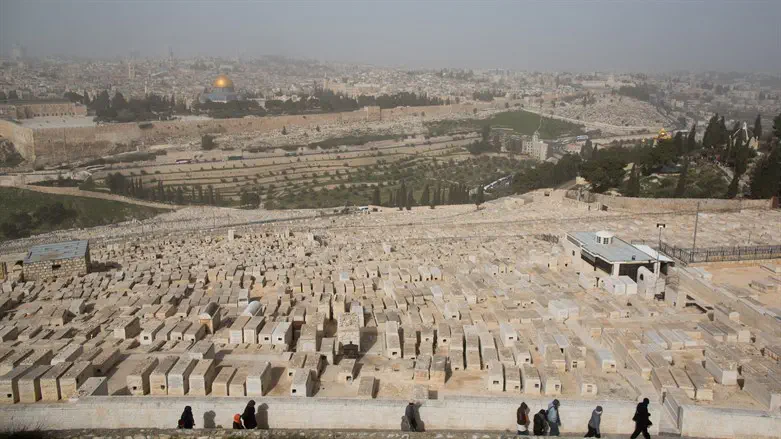
For this reason, our ancestors maintained burial practices for thousands of years despite persecution, exile, and poverty. The Mount of Olives cemetery, overlooking the Temple Mount, was sanctified so that souls might be “first to rise" when redemption comes. To cremate oneself is not merely a personal choice - it is to sever oneself from this unbroken chain of hope, the collective faith of a nation that has endured for millennia precisely because it believed that even death is not the end.
Throughout Jewish law, great importance is placed on respecting the human body. The Talmud teaches that leaving a body unburied or treating it disrespectfully is a serious sin (Sanhedrin 46b). The body is not just a shell to be thrown away but a sacred tool that serves a divine purpose. Every limb and organ performed mitzvot; each cell carried out a holy task. Burning it is to dishonor a vessel that once contained the Divine image itself.
When we carry out a proper burial, we recognize its holiness. We wash the body carefully, dress it in simple white shrouds, and gently place it in the earth - as if tucking it into bed after a long day of service. The Hebrew word kever (grave) comes from the same root as hakaravah (offering). The act of burial is a final offering - of body to earth, of life back to God.
Cremation ridicules this sacred process. It turns what should be an act of reverence into an act of destruction. The flames that consume the body do not “purify"; they erase. The human form that once housed the Divine presence is reduced to dust, and the spiritual energy that animated it is forced into chaotic dispersion. Even the urn, sitting on a mantelpiece, cannot represent peace for the body longs to complete its return to the soil. It remains unsettled, disconnected from its source, unable to fulfill the command of “to dust you shall return."
Our Torah and our Sages were not naive mystics; they understood both the sanctity of the body and the wisdom embedded in creation. The Torah’s command of burial is not only a spiritual directive but also one that resonates with the natural order of the world. In nature, return is gentle: the body is laid to rest in the earth, and through this sacred process, it is gradually absorbed back into its source. Jewish teachings explain that burial and the body’s return to the soil bring a measure of purification and forgiveness to the soul, as the physical vessel completes its mission peacefully and with dignity.
Cremation, by contrast, disrupts that sacred process. It separates the body from its natural return, releasing it into fire and smoke instead of allowing it to reunite with the earth in holiness. From both practical and environmental perspectives, burial-especially traditional Jewish burial that avoids chemicals and honors the body with simplicity-is the more life-affirming choice. It returns the person to creation as the Creator intended.
Ultimately, cremation is a double tragedy: a scientific breakdown of structure and a spiritual disconnection from eternity. It violates both the natural order and the principles of Torah. The cremation furnace is not a place of dignity but of rupture - molecular, moral, and metaphysical. It tears apart what was meant to remain whole, scatters what was meant to be gathered, and ends what was meant to continue.
When a body returns to the earth through burial, it completes its final mitzvah. It teaches humility-that we come from dust and return to dust, not as waste, but as sacred matter entrusted back to the Creator. It teaches hope that decay is not destruction but transformation, preparing the soul for renewal. And it teaches respect that even when breath has ceased, holiness endures.
Cremation promises release, but only through destruction. Burial offers a deeper truth: that what is entrusted to God is never truly lost, only returned in holiness. The Jewish soul belongs not to smoke and scattering but to the quiet dignity of the earth, where body and spirit await their proper peace. In the end, fire consumes; the earth receives. Fire disperses what it touches, but the earth remembers, preserves, and holds fast to what is sacred.
Please feel free to contact me at rsezagui@gmail.com