

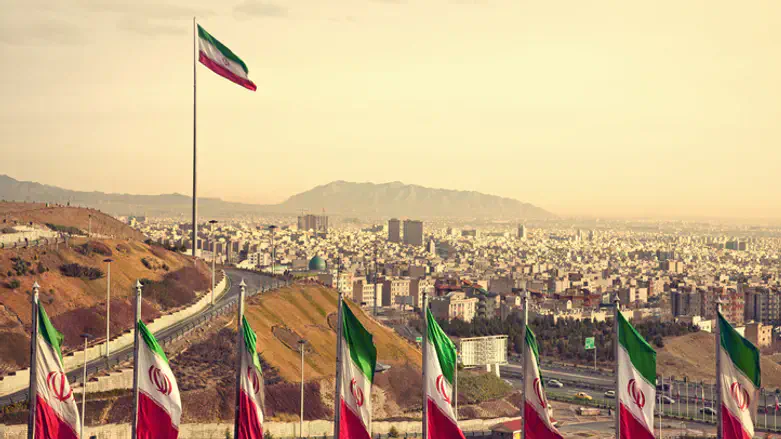
It was clear. To “win", all the Islamic Republic of Iran has to do was survive. It did that.
Those who hoped for an Iran without the Islamic dictatorship, without uranium enrichment and without ballistic missiles capable of striking Rome and Paris will have to wait and see.
Two weeks is the time Donald Trump, under internal and global pressure, has given himself to negotiate with the Islamic Republic.
Going from threats of “annihilation" to negotiating in Islamabad with the mullahs is not exactly ideal.
The killed the Supreme Leader father and turned the son into a ghost.
They eliminated dozens of key figures of the regime, at will, wherever, whoever, whenever they wanted.
They destroyed the Iranian Navy.
They degraded their missile stockpiles.
They took control of Iranian airspace more effectively than even Ryanair with its low-cost flights.
The United States and Israel should have stopped only after regime change had been achieved.
But that is the good news. Then there is the less good news:
-Iran is supposed to reopen maritime traffic in the Strait of Hormuz. But various reports indicate that Iran, and even Oman on the other side of the strait, may be allowed to collect transit tolls.
-The nuclear issue remains one of the biggest question marks. According to Trump, the solution is to bury enriched uranium and prevent Iran from accessing it.
-The missile threat has not been eliminated, but greatly reduced. Fears of hundreds of missiles per day have given way to sporadic launches. The possibility that it is impossible to completely prevent missile fire from Iran is one reason for reaching an agreement.
-If it secures an agreement that includes lifting sanctions, the Iranian regime will consolidate itself for generations.
-Another major question is how Trump will act if Iran refuses to accept U.S. demands. Washington does not appear eager to return to fighting.
Compassionate Western voices denounced an “escalation," as if 440 kilograms of uranium enriched to 60 percent in the hands of the Revolutionary Guards were not a threat to the entire planet. And even if the Strait of Hormuz had not been freed, for them-the party of expensive gasoline-it was trivial compared to “international law."
Egyptian Sawiris is worried:
“I don’t understand this ceasefire agreement. Does it not include the Gulf countries? Has America withdrawn and left the Gulf countries and Lebanon to their fate? An ambiguous, strange, unclear agreement that can only be interpreted as a victory for the Iranian regime, especially regarding the Strait of Hormuz, which was an open international passage before the war and is now recognized as dependent on Iran! It’s true: those who cover themselves with America remain naked..."
Nor do I consider 'opening the Strait of Hormuz' a war objective, given that Hormuz was open until America and Israel tried to sweep away Allah’s regents on earth (ayatollah means “sign of Allah").
A month and a half ago, Iran controlled 4% of the world’s oil. Now they effectively control 20%.
Since the beginning of hostilities, the Lincoln aircraft has retreated over a thousand kilometers, realizing that in the era of drone warfare an aircraft carrier is just a large target. There were more American casualties in Panama and Grenada: was this just a "drôle de guerre"?
The Islamic dictatorship chose to rot standing rather than fall to its knees. For now, it seems to have succeeded. But the rot does not stop. It advances.
Tehran has gained time, control over oil and Western-Islamic narratives of “resilience." It has lost allies and proxies, nuclear momentum and internal legitimacy.
Washington has discovered the dramatic limits of air war without boots on the ground-a taboo after Iraq and Afghanistan. And “Titanic Europe" has once again revealed its strategic cowardice.
Despite all the damage inflicted by the U.S. and Israel, the regime seems unbroken and functional.
There has been no mass uprising, thanks to brutal repression following January’s bloodbath: 657 executions in 2026, not counting tens of thousands massacred-7 hangings a day. Not bad in wartime.
Closing the Strait of Hormuz required minimal military effort but exerted maximum leverage on the global economy while boosting oil revenues (how fragile “happy globalization" is). The war is unpopular in the U.S. Trump’s social media posts sound increasingly chaotic.
The “free world" preferred to display hostility toward Trump and Netanyahu, while Islam is rejected in Iran but advances in a soft Europe, especially apathetic France. The paradox: this resistance to Islamic totalitarianism is not supported by Western public opinion. The rebellious Iranians remain forgotten.
"Drôle de guerre" is the name of the prelude before the fall of the Maginot Line and Nazi occupation of France, followed by what historian Marc Bloch named the “Strange Defeat".
Emmanuel Macron refused overflight to U.S. planes carrying weapons to Israel. These acts of appeasement allowed Cécile Kohler and Jacques Paris, detained in Tehran, to return to Paris. Pacifism and surrender pay…
Official France, with its deference to political Islam, has lost its taste for freedom.
Another example?
Spain, under socialist Sánchez, blocked U.S. base usage and had already secured permission from Iran to pass through Hormuz.
I don’t know who will win the war. But I am sure that Europe lost it.
Giulio Meotti is an Italian journalist with Il Foglio and writes a twice-weekly column for Arutz Sheva. He is a fellow at the Middle East Forum and the author, in English, of the book "A New Shoah", that researched the personal stories of Israel's terror victims, published by Encounter and of "J'Accuse: the Vatican Against Israel" published by Mantua Books, in addition to books in Italian. His writing has appeared in publications, such as the Wall Street Journal, Gatestone, Frontpage and Commentary.