
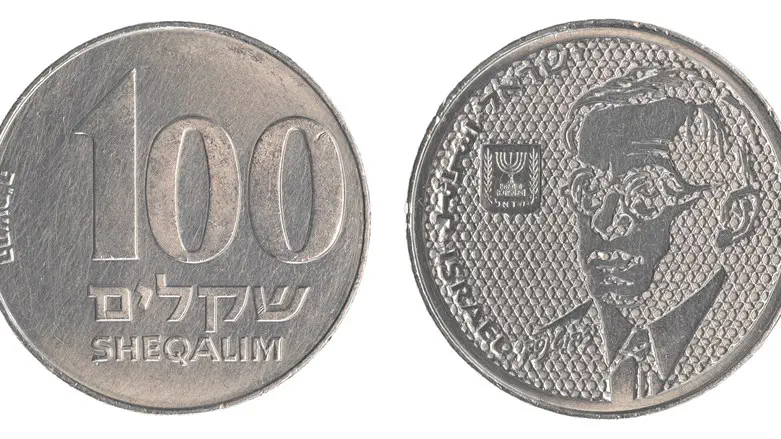
In 1911, on the eve of a century that would test the Jewish people in ways even he could scarcely have imagined, Ze’ev Jabotinsky - the Revisionist Zionist leader - turned to the Passover seder not as ritual alone, but as a living framework for understanding Jewish character, continuity, and responsibility.
In his essay “Four Sons," Jabotinsky did not merely reinterpret a familiar passage; he recast it as a reflection on how different individuals adapt - psychologically, emotionally, and morally - to the same shared history. A study in how Jews respond differently to pressure, belonging, and identity across generations. Jabotinsky’s story is said to be adapted to the psychology of four typical children across generations of Jewish life. Each son reflects not just a personality, but a posture toward belonging, memory, and obligation.
Jabotinsky wrote: “The first [son] is clever, the second is impudent, the third a simpleton, and the fourth ‘such that he doesn’t even know how to ask.’ And each must be answered in order, according to his tastes and measure of understanding."
The Clever:
“The clever boy wrinkles his high forehead, gazes searchingly with his big eyes and wants to know what really the matter was. Why did they first love his forefathers in Egypt, welcome them with open arms, and then begin persecuting and tormenting them, and, so queerly they kept on persecuting and tormenting them and throwing the baby boys into the rivers, but wouldn’t for anything let them go. What was the explanation, Daddy?’ - asks the clever boy."
Here Jabotinsky recognizes the intellectual instinct that has so often defined Jewish survival: the refusal to accept narrative without interrogation. The clever child is not satisfied with miracle; he demands coherence in history, even when history itself resists coherence. His response is adaptation through inquiry - a need to make sense of contradiction, to reconcile acceptance and rejection, emancipation and persecution. His question echoes forward into modernity, into politics, into every effort to understand a world that has always treated Jews differently.
The Impudent:
The second boy is ‘impudent’ - there he sits -back in his chair, crossing his feet and grinning ironically - and asks - what are all these funny customs and memories which should have been forgotten long ago!
“‘Blunt his teeth’ says the ritual of the Passover concerning this son. But I doubt if his teeth can be blunted … for nothing is more unvanquishable than indifference. Nothing can touch him, once he says of his own people, ‘you,’ you can give him up … He will go on grinning at you with all his teeth, and nothing that you can do will blunt them.
And, indeed, you should not blunt the teeth of this son. Let him go on his way with strong teeth. Poor fellow, he will need them in the encampment of the triumphant whither he is drawn. He will have to crack hard nuts there, and the hardest will be the nut of contempt. Often and often will he have to take kicks in answer to loving speeches, be spat upon in answer to his flattery …"
The impudent son represents another form of adaptation: detachment. Jabotinsky’s insight cuts deeper than moral judgment - he identifies indifference, as a great danger. The rupture is linguistic as much as emotional: the shift from “we" to “you." And yet, even here, Jabotinsky resists easy condemnation. He understands that this, too, is a response to pressure - an attempt to assimilate, to escape, to redefine oneself outside the collective. But the world this son runs toward, he warns, will not embrace him as fully as he imagines.
The Simpleton:
The third boy is the simpleton. His eyes are honest, clear and direct. For him the world is simple and indisputable. He loves to believe and worship with the simple faith of the primitive man … an artless, single-minded trustfulness.
“‘Daddy,’ he says, and planting his elbows and pressing his chest on the table, he stretches out his neck and turns to you … believing already everything you will tell him, for he wants to believe, ‘Daddy, when will a better time come?’
“Then tell him gently and simply about everything that is happening now in the great illimitable Diaspora. Tell him how in a thousand different places, the newly scattered temple of the undying people is being raised by a thousand hands. Tell him how gradually the hitherto scattered national will is being unified before our eyes, how again a real people is being created … like all healthy nations … Tell him how everywhere, with every day the pride and respect for our own individuality grows. … Tell him what wonderful poets are now writing in our tongue, and how beautiful … this tongue is. … And tell him further how gaily the colonist’s children are chattering in this language in Palestine. And how … by great labour … through a thousand obstacles … something new is rising and growing there."
If the clever son adapts through questioning, the simple son adapts through trust. He does not demand explanation; he seeks reassurance. Jabotinsky answers with vision - of renewal, language, land, and collective will. This is a different kind of strength: the ability to believe in a future that must be built deliberately, against odds that are neither hidden nor denied.
The One Who Doesn’t Know How to Ask:
“The fourth boy does not know how to ask. He sits at the table sedately, does everything properly and it does not even enter his head to ask what it is all about and why. According to the ritual, you should not wait for his questions but tell him of your own accord. I disagree. … [T]here is sometimes a higher wisdom … in that a man takes something from the past without question, without curiosity as to causes or effects. … According to the ritual, you should tell this son about everything that he does not ask. But I think, let the father too be silent and … kiss this son on his brow, the surest keeper of the sacrament."
Here Jabotinsky offers the concept that preservation and instinct are also part and parcel of who we are. Simply carrying forward what was received. This Passover, these categories are no longer confined to the Haggadah; they are visible all around us - in bomb shelters and schools, in grocery stores and on campuses, in headlines and in the arguments within and beyond the Jewish world.
We are not just telling the story; we are living inside its questions.
It is a very hard year to be a Jew.
In Israel, our sons and daughters are spread out, fighting from Lebanon to Gaza, carrying the burden of defending our great Jewish state. Across the diaspora - from New York City to Australia, from Toronto to Paris - Jewish communities face a climate that feels increasingly precarious and uncertain.
Jabotinsky anticipated this recurring need to answer, to defend, to explain - and sometimes simply to endure.
As Jabotinsky wrote in another essay, “What Are We to Do?":
“[O]ne permanent assignment that is entrusted to each of us, old and young, men and women, educated and ignorant, as a group and as individuals … is the defence of our people’s honor."
The seder ends, as it always does, with a forward glance - not only toward redemption, but toward responsibility. The questions of the four sons do not disappear when the evening is over; they follow us outward, into a world that continues to demand response in different voices, with different kinds of courage.
This year, all year, even more than ever, we must embrace our tradition, our sons and daughters, our customs and beliefs.
Chag Pesach Sameach. Am Israel Chai.
Ronn Torossian is an Israeli-American entrepreneur, author and communal leader.